







































)
UGR simply explained
Avoid glare in living and working spacesThe term UGR stands for Unified Glare Rating and describes how strongly a light source is perceived as dazzling. In short, a low UGR value causes less glare, which leads to greater visual comfort. A high UGR value generally causes more glare, which makes the eyes tire more quickly. The scale typically ranges from 10 (hardly any glare) to over 30 (very annoying).
Why is glare a real problem? Glare is not only unpleasant, it also has real consequences. These include faster eye fatigue, reduced ability to concentrate, poorer vision on screens and possibly headaches after prolonged exposure.
Why luminaires dazzle
The decisive factorsWhether a light source causes glare depends on several factors, which is why some lights cause more glare than others. The relevant glare factors include
Luminance of the light source: Small, very bright LEDs without a cover are particularly dazzling.
Beam angle: Narrow light beams often appear more glaring than widely diffused light.
Environment: Reflective surfaces can reflect the light unpleasantly, which can lead to more glare.
Direction of view: Directly visible light sources in the field of vision significantly increase the glare effect.
Why do LED light sources sometimes dazzle more than "old" light sources? LEDs are so-called point light sources. They have a very high luminance in a small area, which is quickly perceived as glaring. Without a suitable cover or diffuser, the light has a pointy and unpleasant effect. Modern luminaires solve this problem using diffusers or indirect light, for example.
Glare-free light
You have to pay attention to thisThe importance of glare-free lighting is often underestimated, especially in working environments or home offices. When buying a new luminaire, many people pay attention to the brightness, i.e. the luminous flux in lumens, but rarely to the absence of glare. It is also easy to determine how dazzling a light source is perceived to be, regardless of a specific UGR value.
)
Matt covers
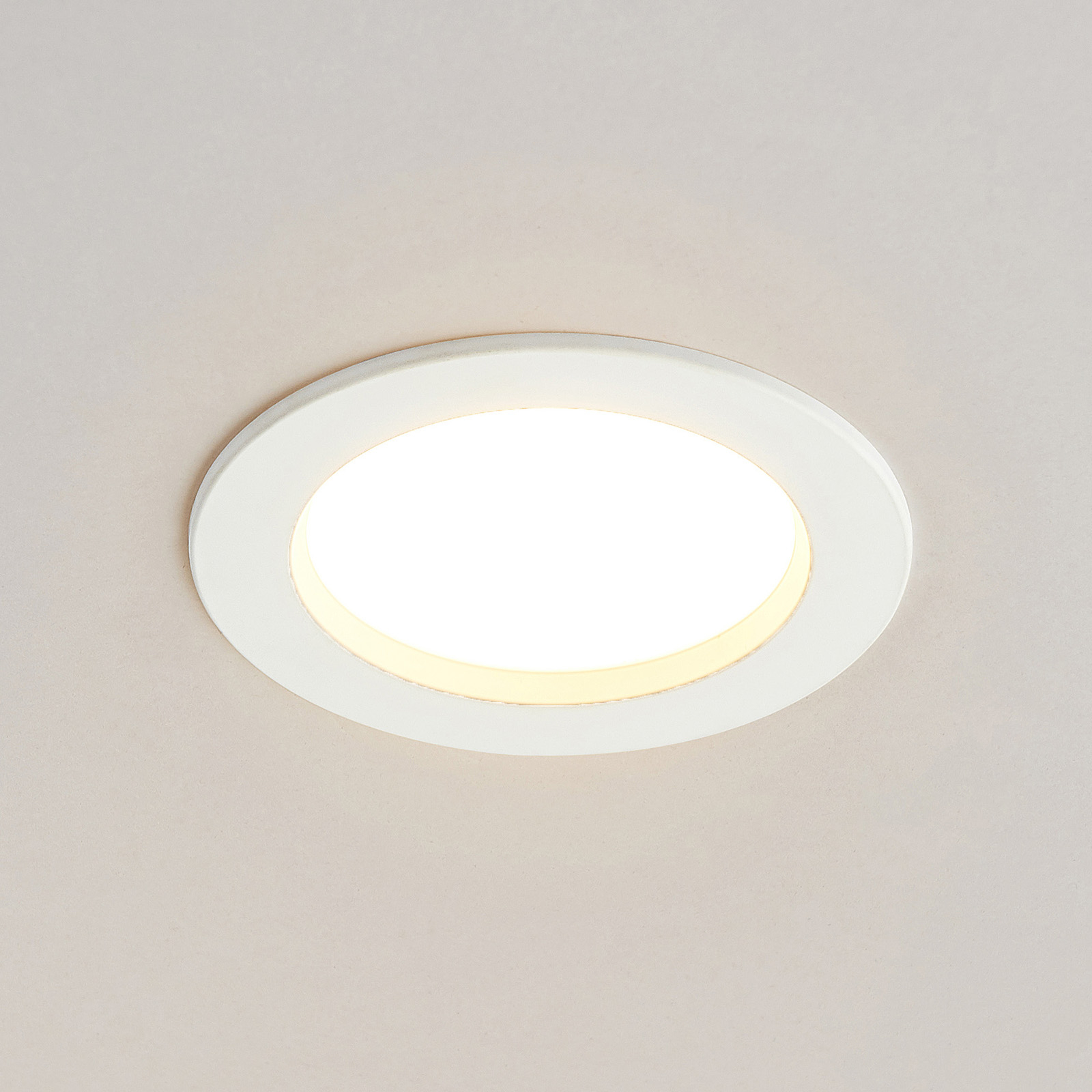
Translucent, semi-transparent covers, also known as diffusers, ensure that the light is pleasantly diffused - even without a specifically stated UGR value.
)
Flexible alignment
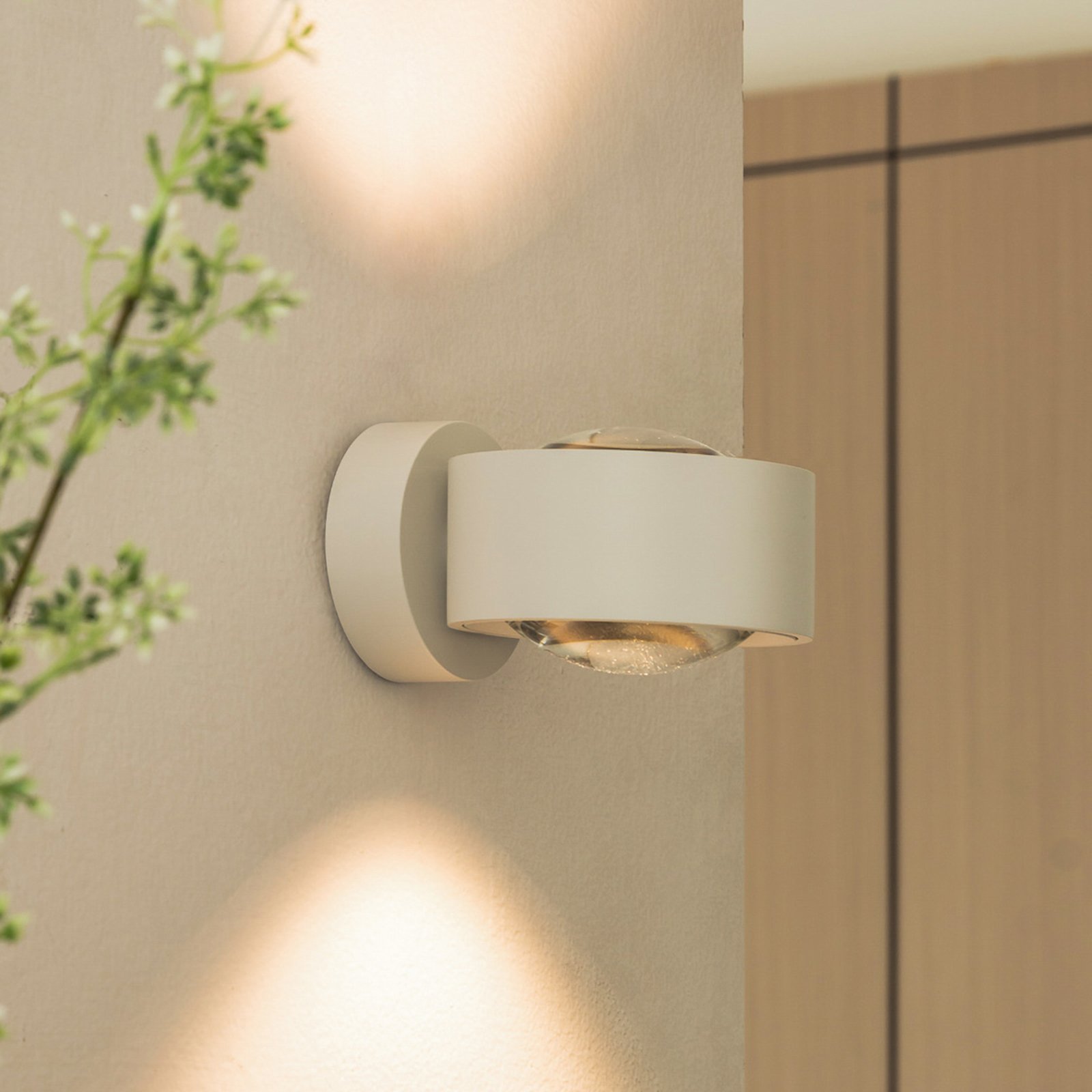
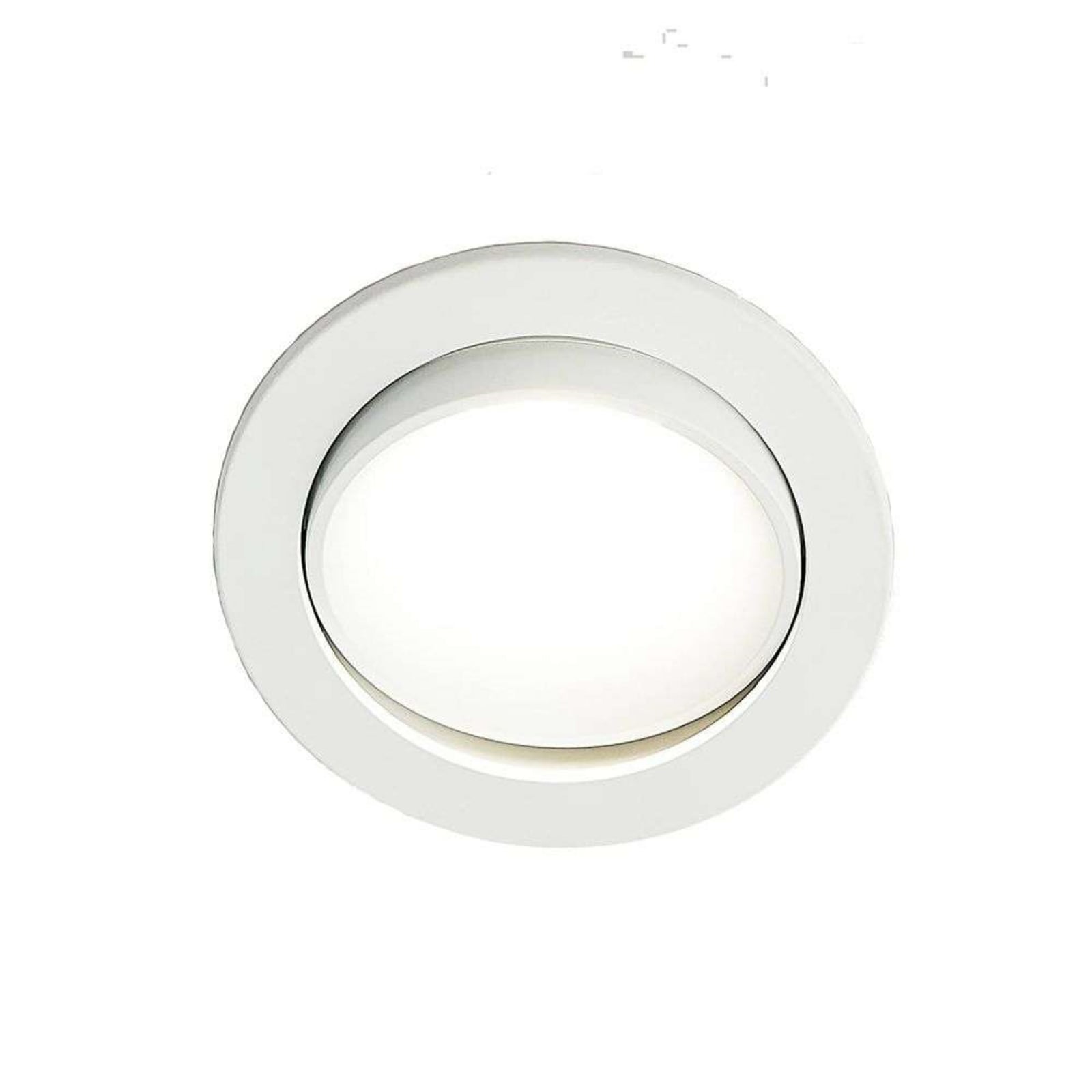
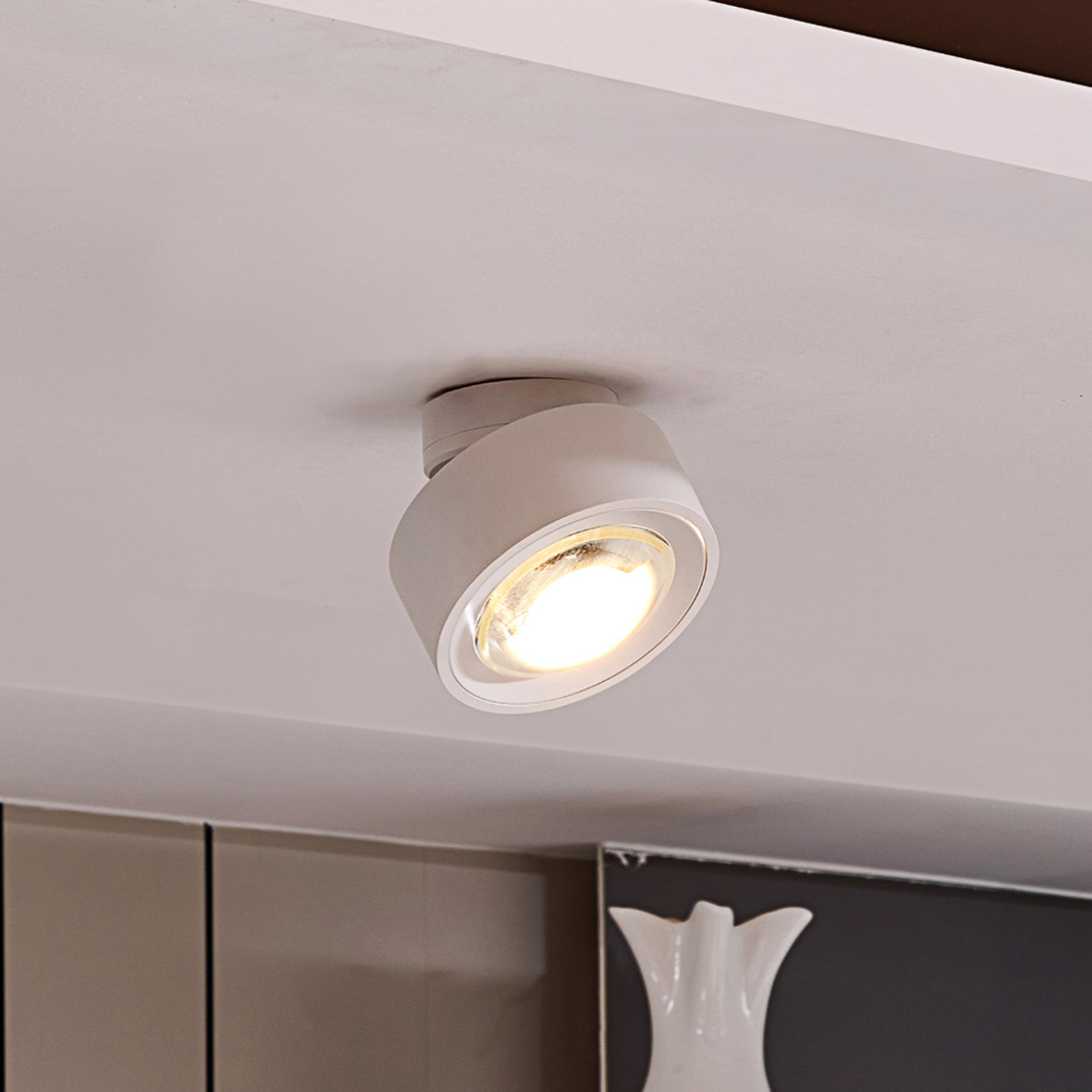
Luminaires that can also be aligned after installation can be easily adjusted to avoid glare. Recessed spotlights also make this possible - these models are called gimbal spotlights.
)
Dimmable light
The convenience of a good dimmer is often underestimated: If the brightness can be adjusted flexibly, a brightness level that is not annoying can be found at any time.
)
Pay attention to design
Modern lighting solutions use a variety of techniques to reduce glare, including lenses, microprisms and aluminium louvres. Pay attention to such properties in the product description.
)
Homogeneous illumination
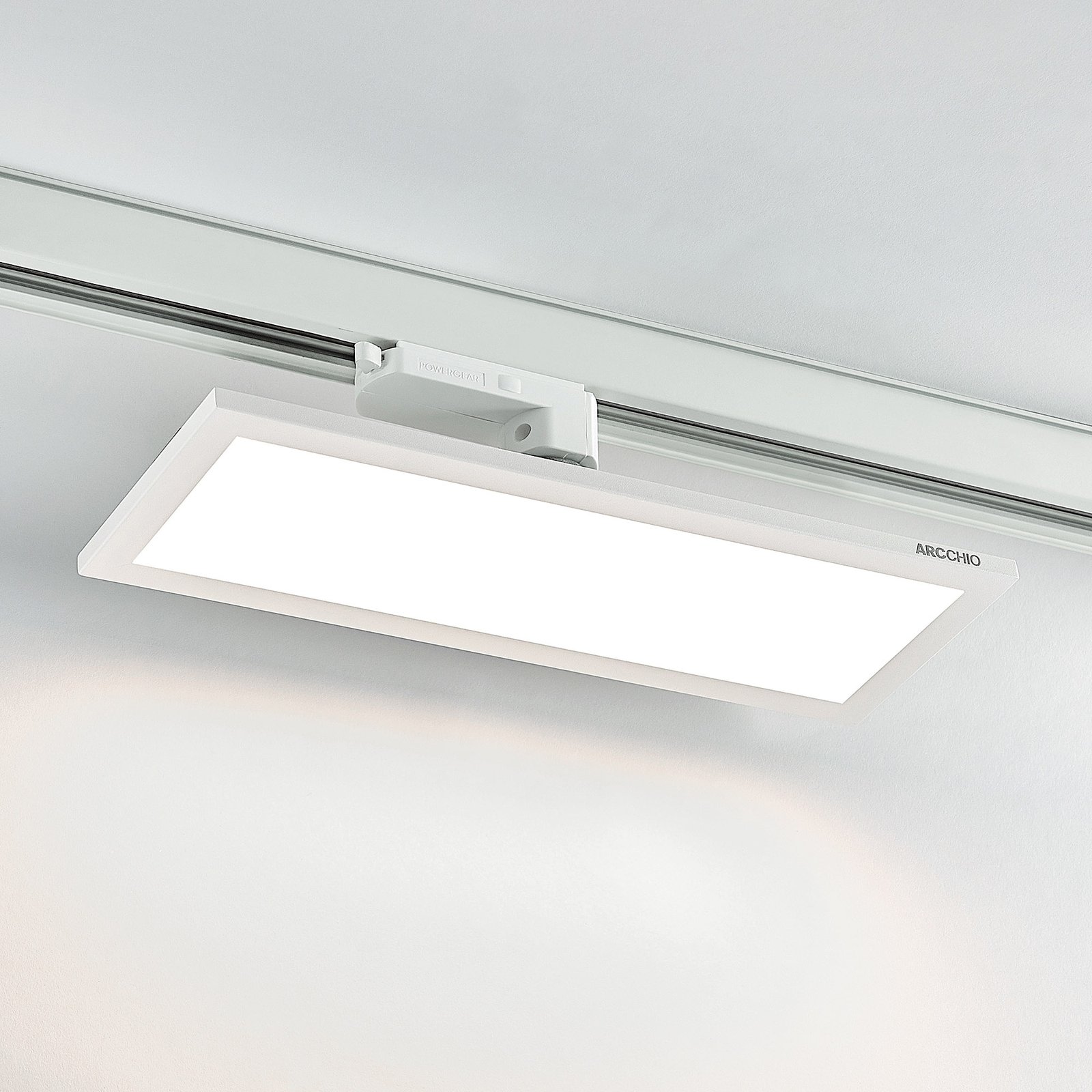
If the light source is distributed over one surface, not only is homogeneous room illumination possible, but glare is also reduced. LED panels are a particularly popular option.
)
UGR value specified
If the UGR value is indicated directly on the luminaire, this provides clear information about the glare effect or absence of glare. However, if the UGR value is not specified, it is easy to judge the luminaire on the basis of these criteria.
Designing glare-free rooms
Which UGR value is recommended where)
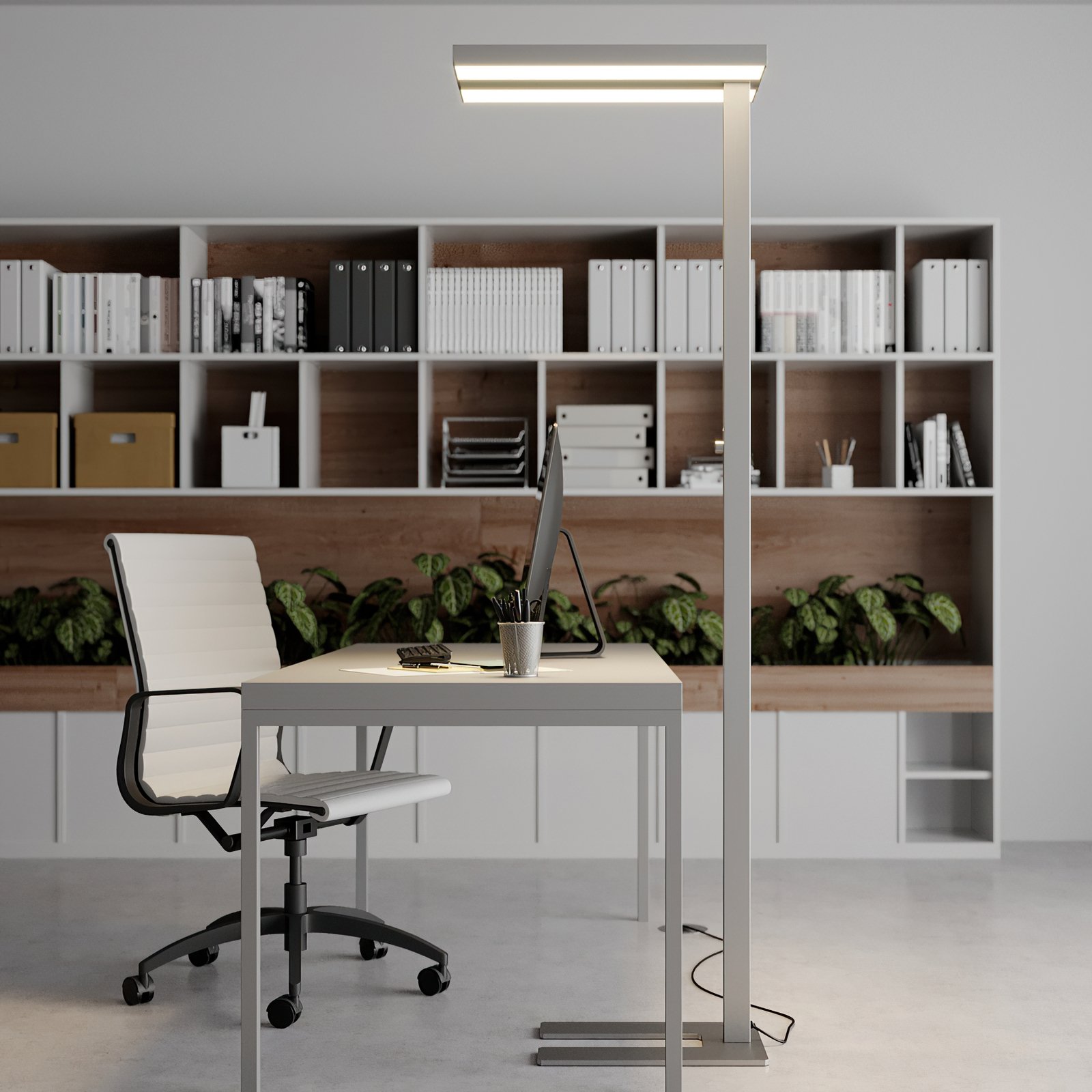
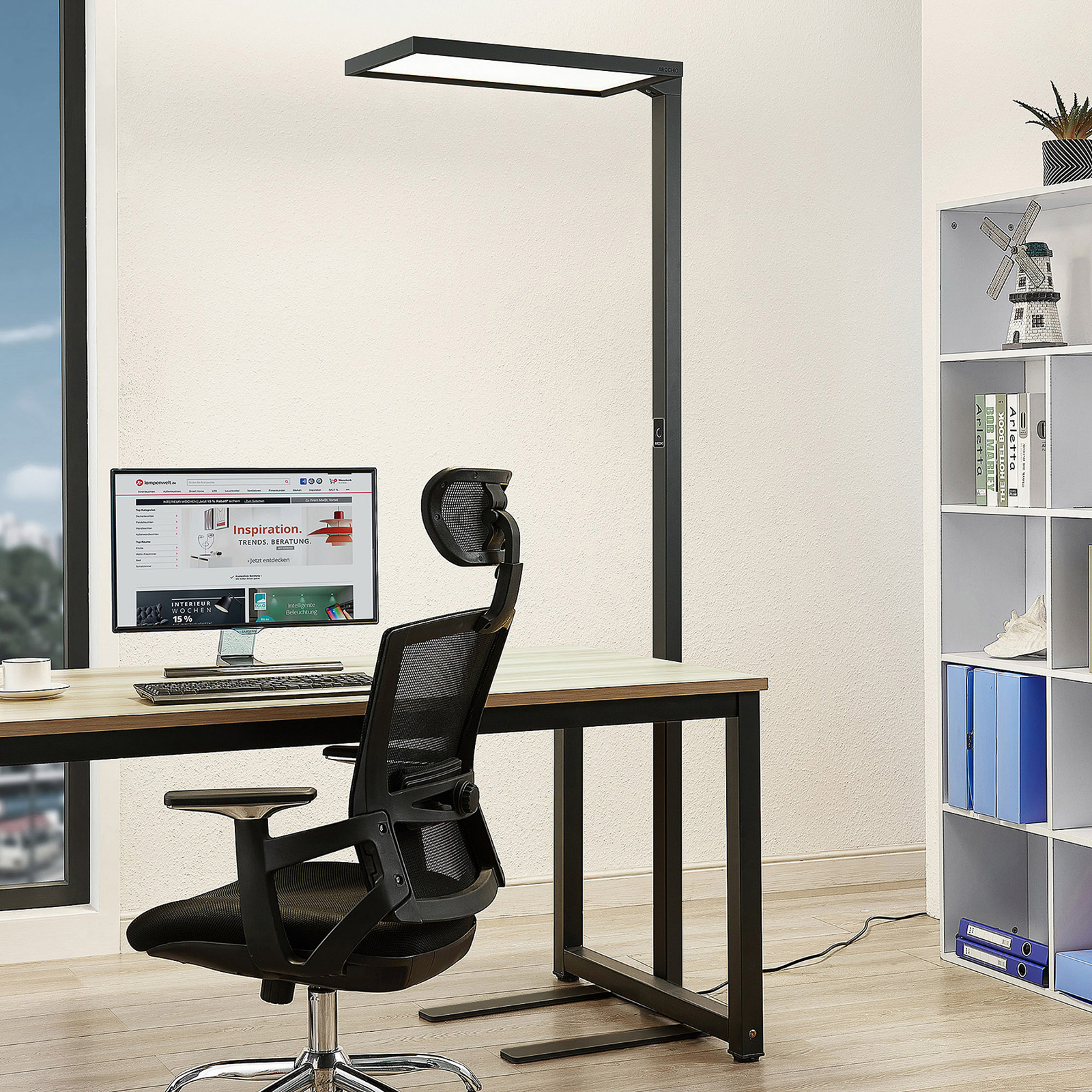
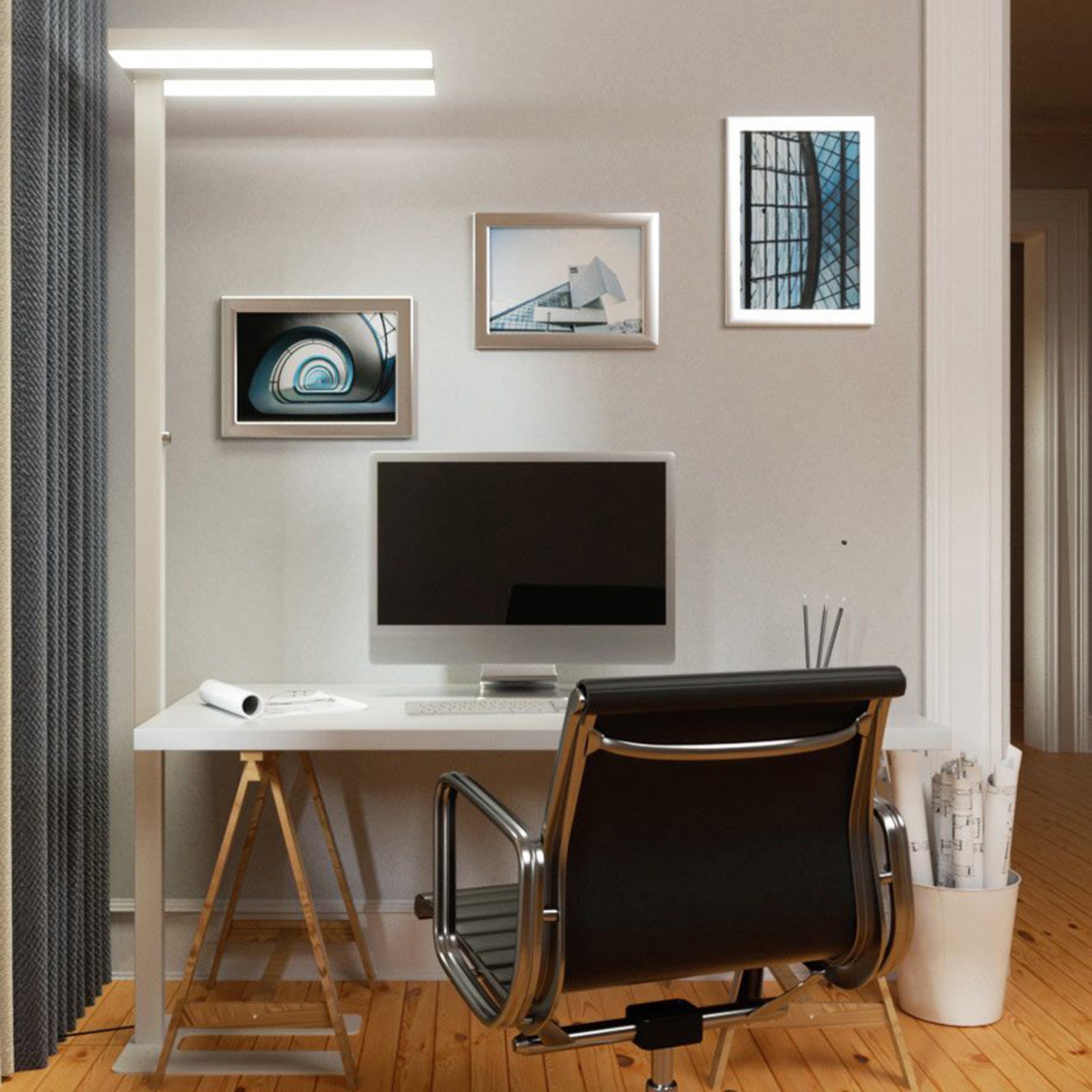
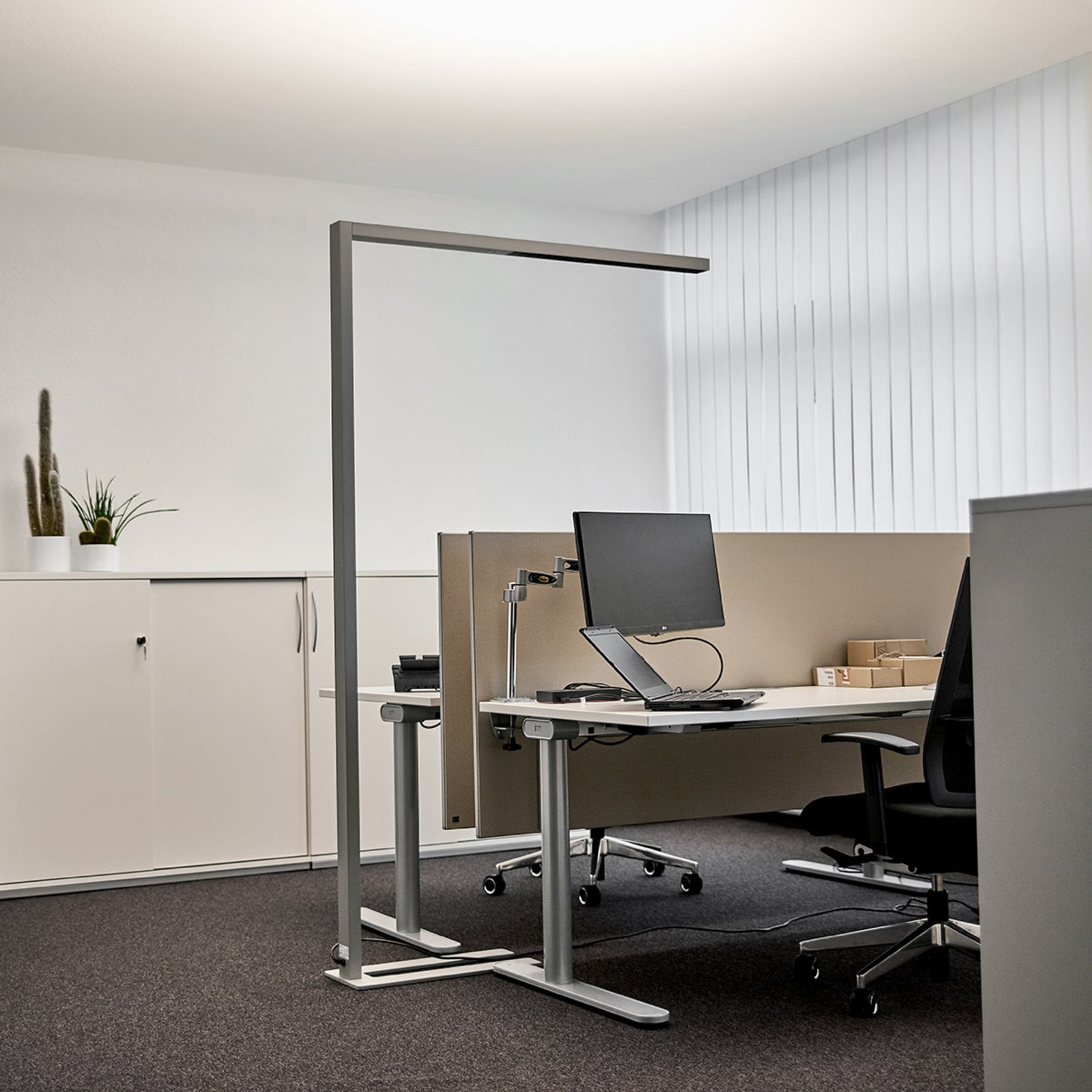
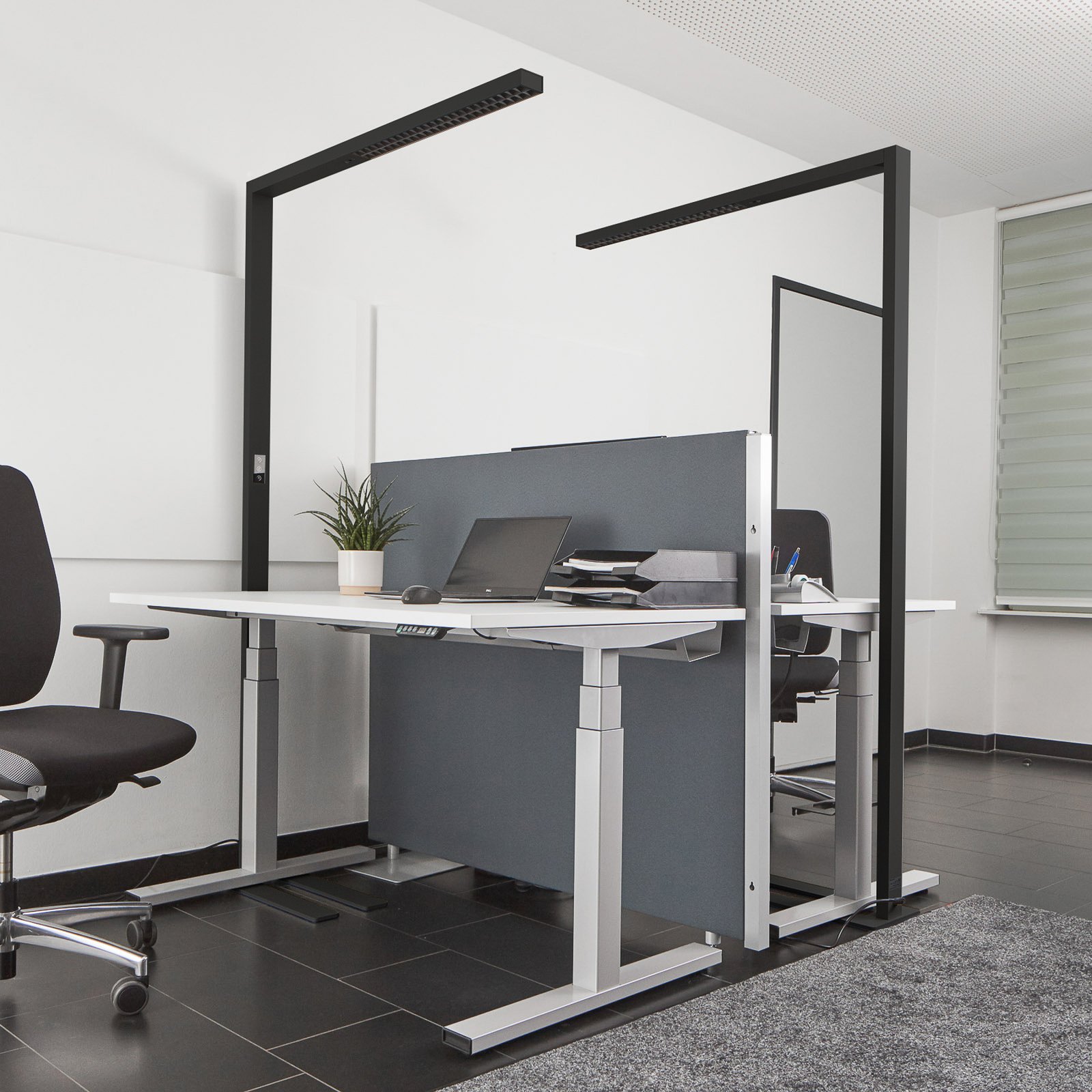
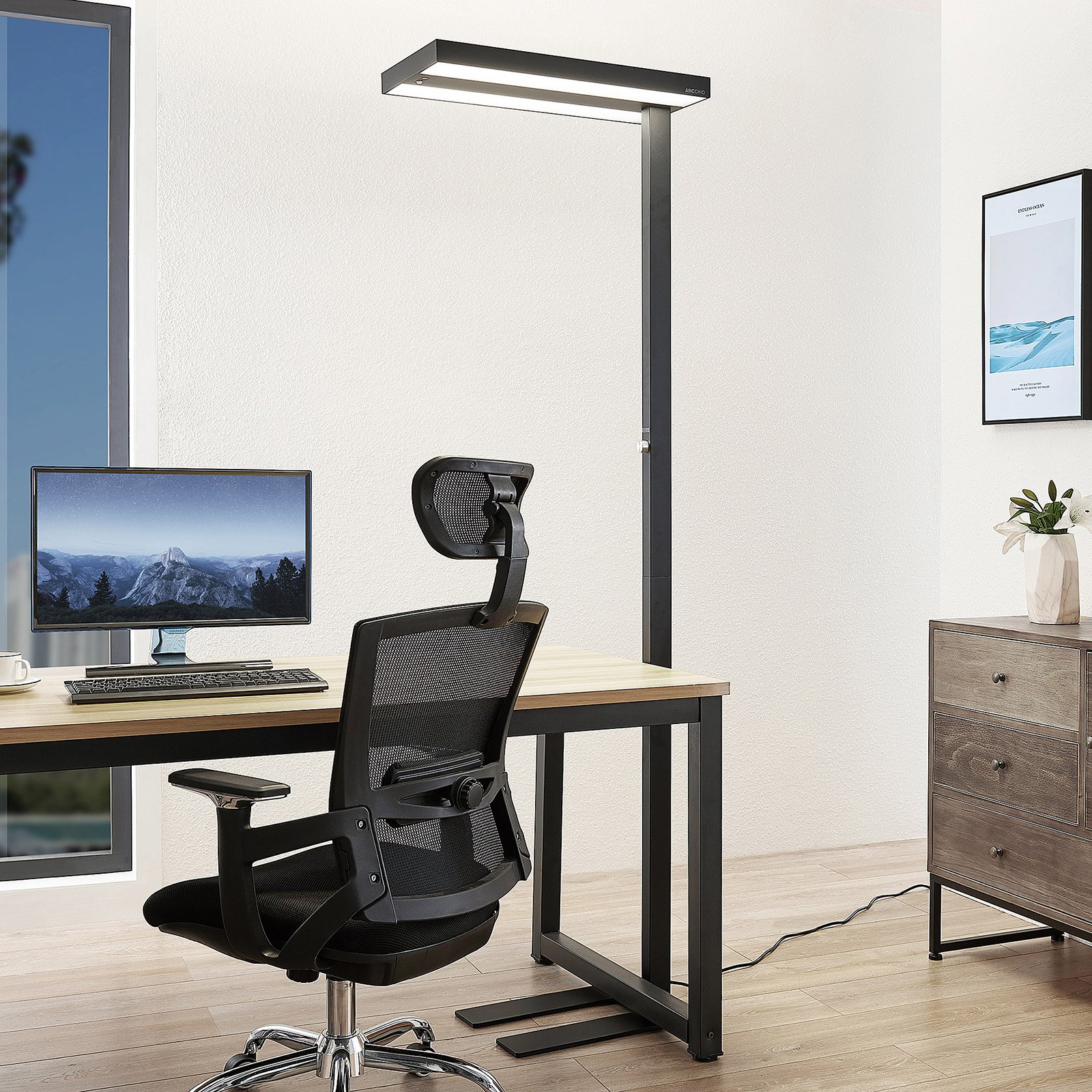
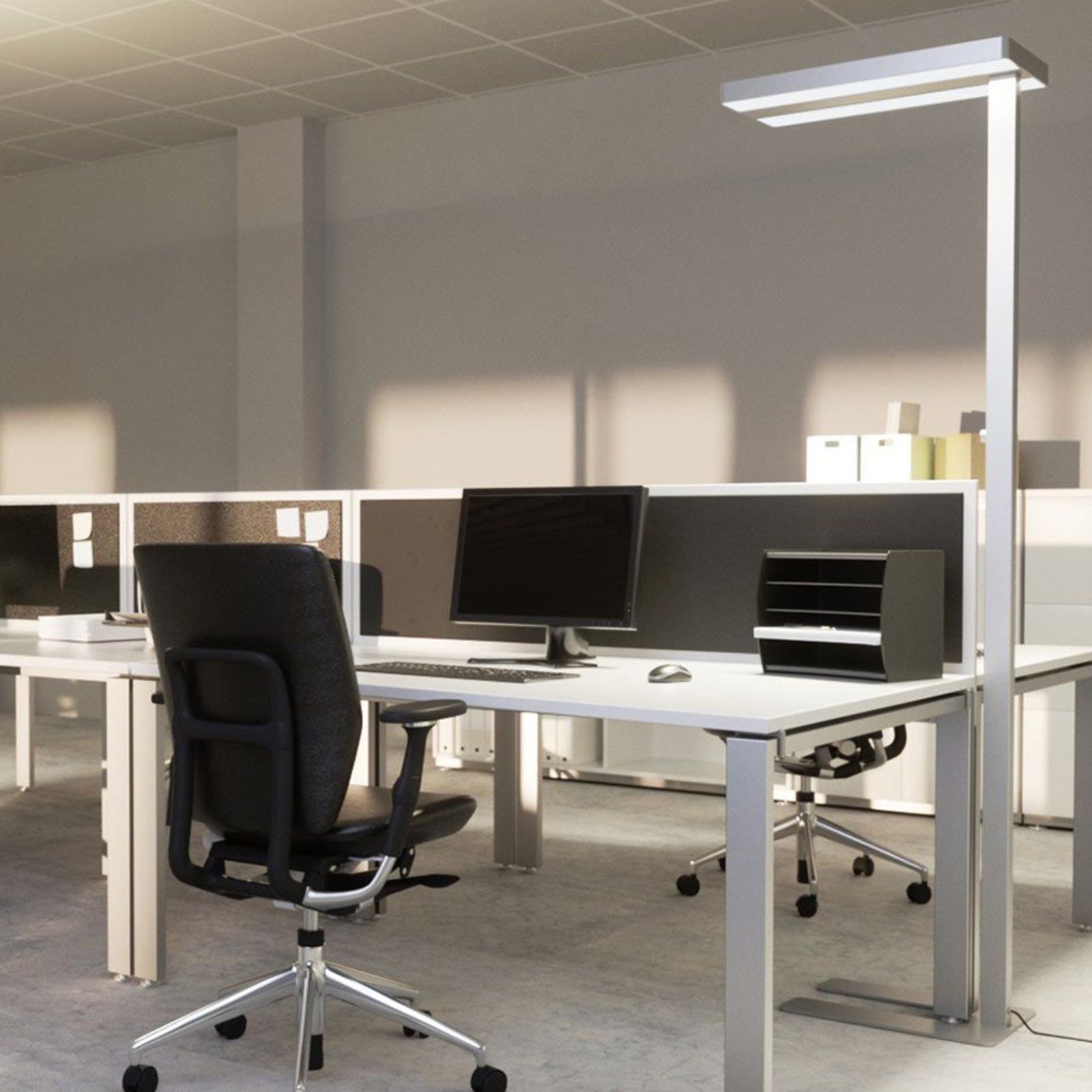
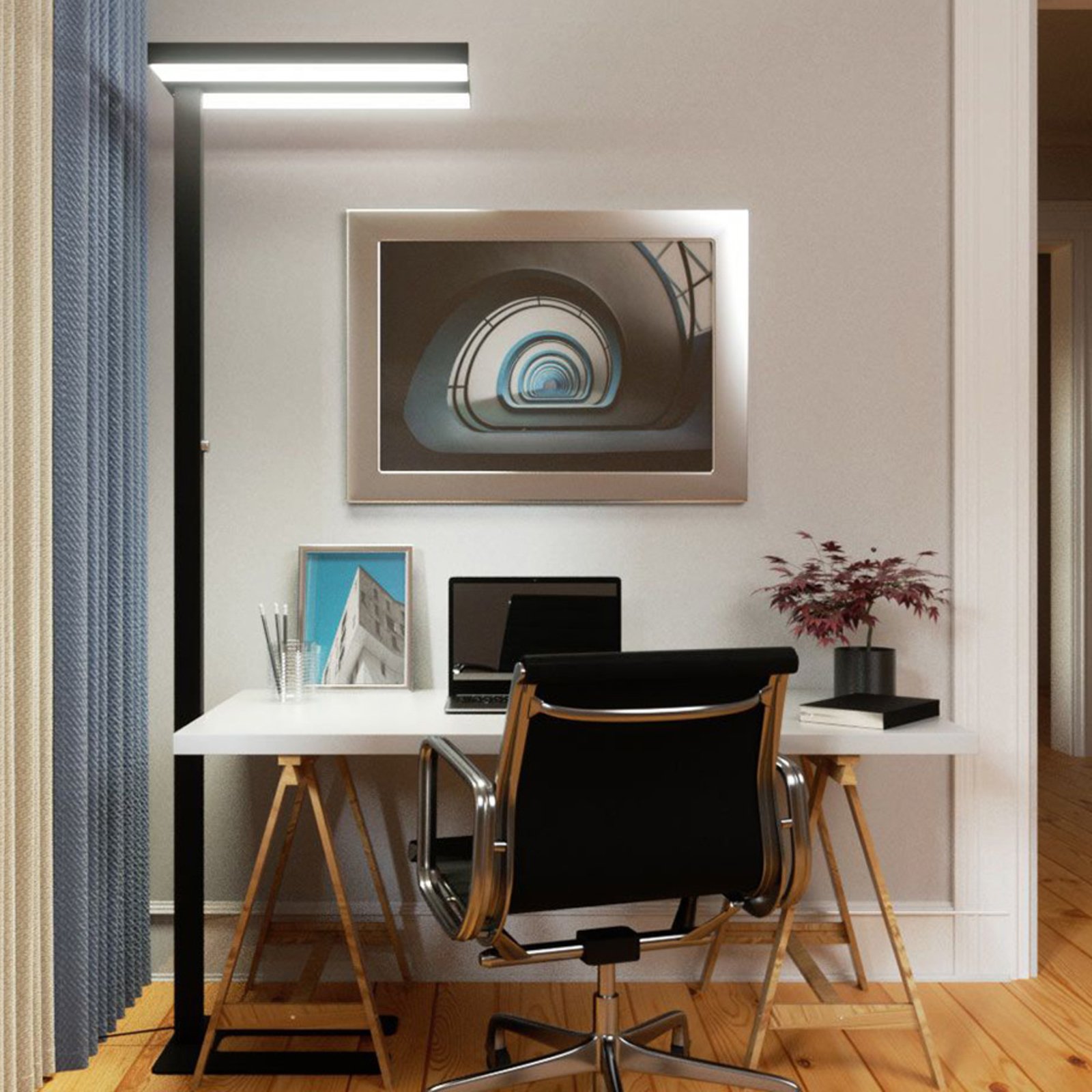
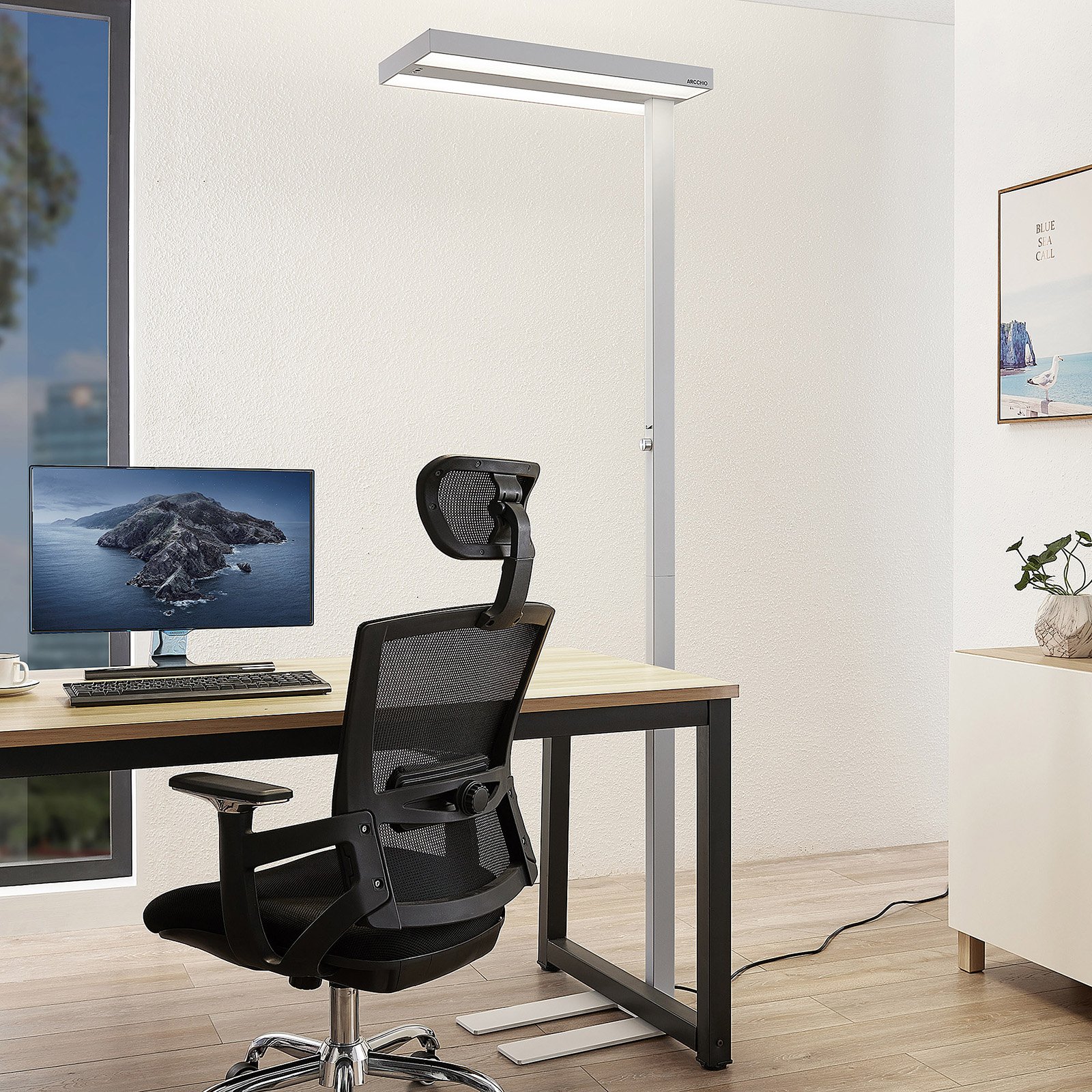
In working environments, glare-free lighting is essential to be able to concentrate and work for long periods without strain. Wide-area lighting without harsh brightness contrasts is achieved, for example, with LED panels with UGR < 19, whose light shines homogeneously and evenly into the room through the diffuser. Low-reflection surfaces in the desk area are also important.
)
In living areas, the UGR value is often not critical. It is much more important to position light sources in such a way that glare is avoided. This includes ensuring that light does not reflect off reflective surfaces such as glass cabinets. Otherwise, indirect, warm white and diffuse light from several light sources is the best choice for cosy living areas.
)
Good lighting design is essential for commercial projects. As soon as you leave the private sphere, lighting requires compliance with standards and guidelines. This also includes permissible UGR values. In principle, targeted zone lighting and glare-free ambient lighting with UGR < 22 are a good guideline: customers stay longer and feel more comfortable.
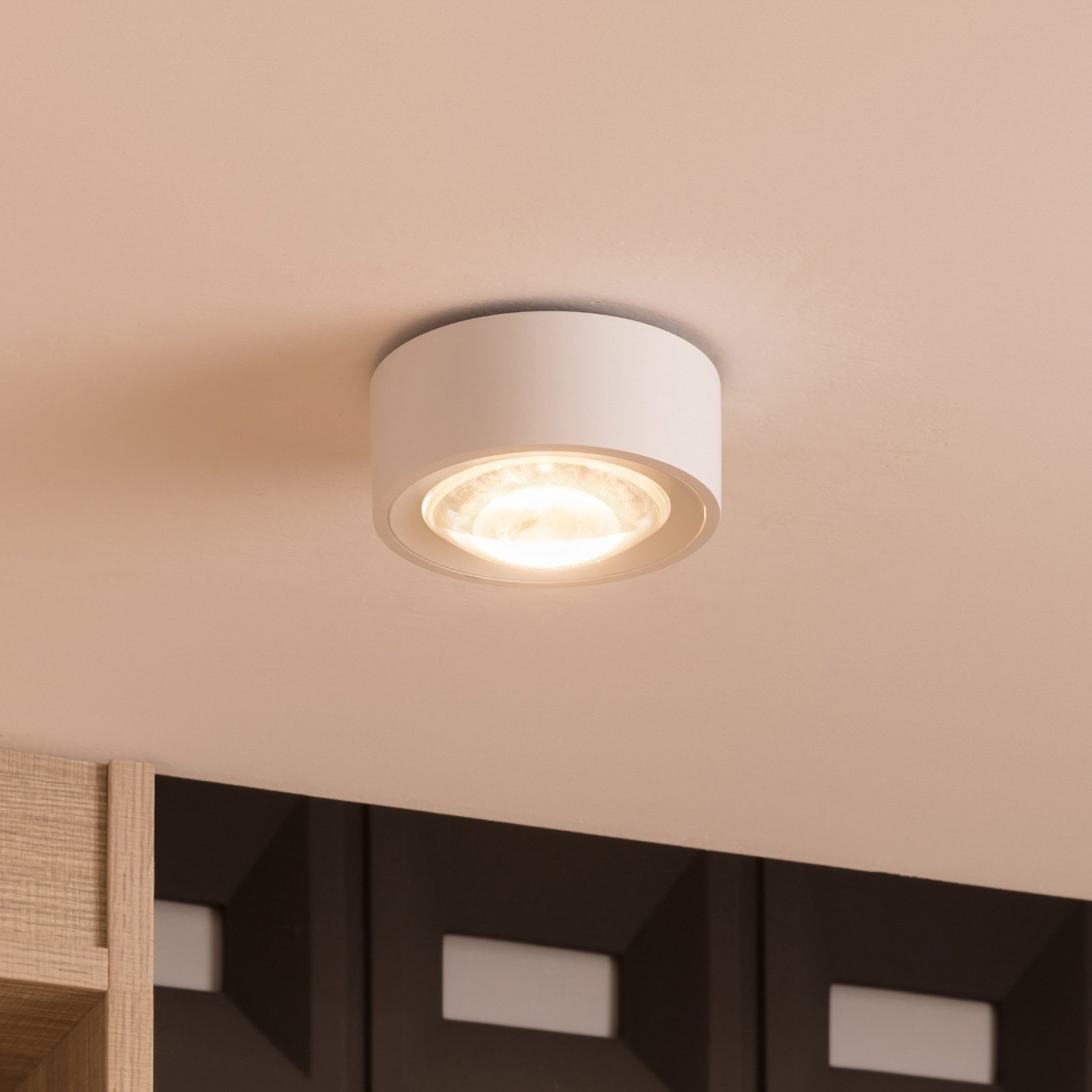
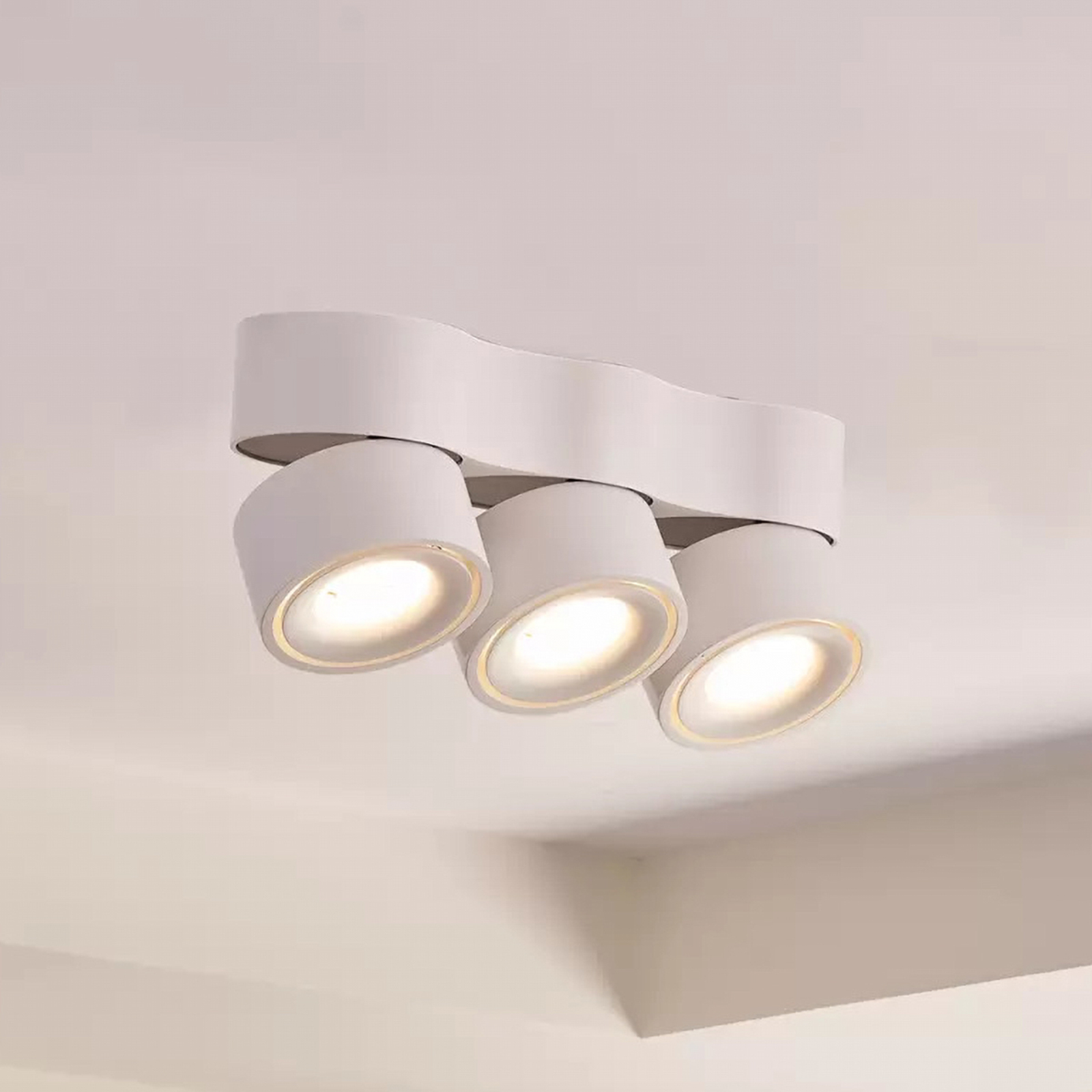
A typical error during installation: Suppose you buy a multi-flame ceiling spotlight with clearly visible LED reflector light sources, a narrow beam angle and high lumen output. This luminaire can illuminate the room magnificently, but it can also happen that the spotlights are directed in such a way that they dazzle, for example when a spotlight shines directly onto the couch. You won't notice the glare effect when you're standing up, but you will when you go to relax on the couch. During installation and alignment, care must therefore be taken to include all possible activities so that glare is avoided.
Avoid common mistakes
in the design of glare-free rooms- Avoid excessively bright spotlights without diffusion; instead, choose diffuse or shielded light sources
- Avoid light directly in the field of vision; instead, use indirect or side lighting
- Pay attention not only to the number of lumens, but also take the entire design into account when assessing your new luminaire
:format(jpeg) "Lighting expert")
Lighting expert at Lights.ie
Expert tip
"UGR value or not: glare is often not due to the luminaire itself, but to its position in the room. Many customers consciously look for a luminaire with a good UGR value and still have the feeling that the light is unpleasant - especially when working at a computer screen. Then a simple test is recommended: sit at your desk, look straight at the screen and see if a light source is visible anywhere in your field of vision. If you can see the light source - even just at the edge - there is a high probability that it will dazzle you in the long term. This applies even if it is actually "low glare" according to the data sheet. Our eyes are simply very sensitive to bright spots in the field of vision. The solution is often much simpler than you think: instead of buying a new light, it is often enough to change its position. This is a typical issue, especially when working from home, because many workplaces are not planned, but just happen somehow."
 "Dimming made easy")
 "Ceiling lights guide")
 "LED panel")
 "Light colours simply explained")
 "Dimming made easy")
 "What is Lumen")