





















Setting up a home office
Work productively and still feel at homeAnyone who wants to set up a home office faces a special task: The workplace should allow for focused work while seamlessly integrating into the home. Especially when the desk and laptop are in the living or bedroom, after work, it shouldn't feel like you're still in the office. At the same time, the workspace must be arranged so that one doesn't yearn too much for relaxation or get distracted by personal items from the job.
A successful home office therefore combines functionality with coziness: In the morning, it creates the right environment for focused work; during the day, thoughtful lighting supports the work zone, and in the evening, the workspace can once again become part of the personal living space.
When setting up a good home office workplace, it's not just about the desk or office chair: Light, room layout, storage space, and personal furnishings interconnect and determine how pleasant and harmonious the workplace actually feels.
Plan the home office workplace correctly
Before selecting furniture and lights, it's worth considering the actual usage:
- Is work done daily in the home office, or only on specific days?
- Is a fully functional workplace needed?
- Or is a small solution for the laptop sufficient?
- Is a separate office room available?
- Or must a work corner be integrated into an existing living space?
These questions influence how much space, storage, and working surface are needed.
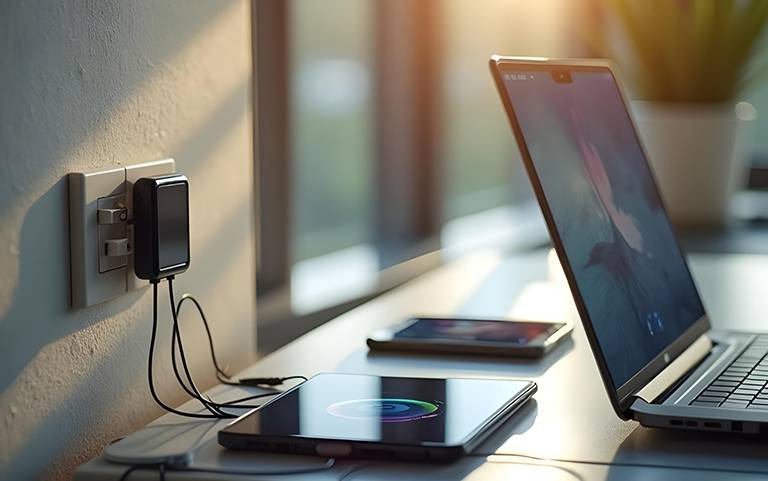
Choosing the location involves several factors: daylight, sockets, quietness, movement space, and the opportunity to store documents or work materials. Ideally, the desk should be near a window without direct sun shining on the screen.
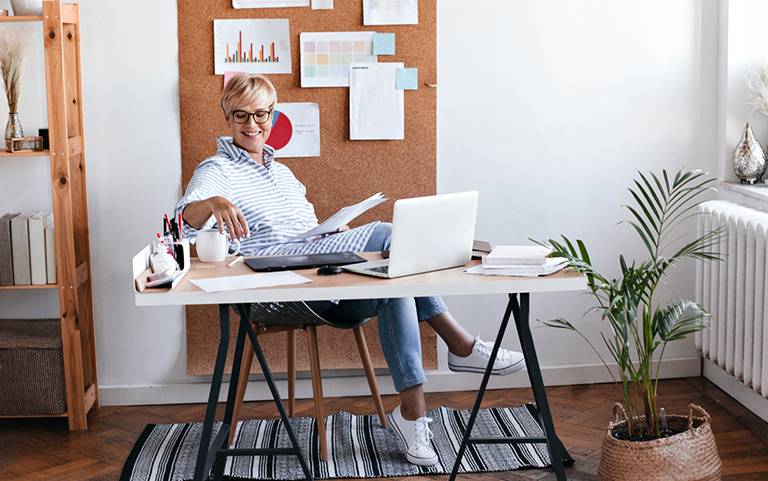
Especially in the living room, the work zone should be noticeable without feeling like a separate office. A carpet, a pin board, a particular wall color, or a separate lighting zone can visually define the area. Structural separation is not necessarily needed.
The desk in the home office should be located as close as possible to the window, avoiding direct sunlight and distracting reflections on the screen.
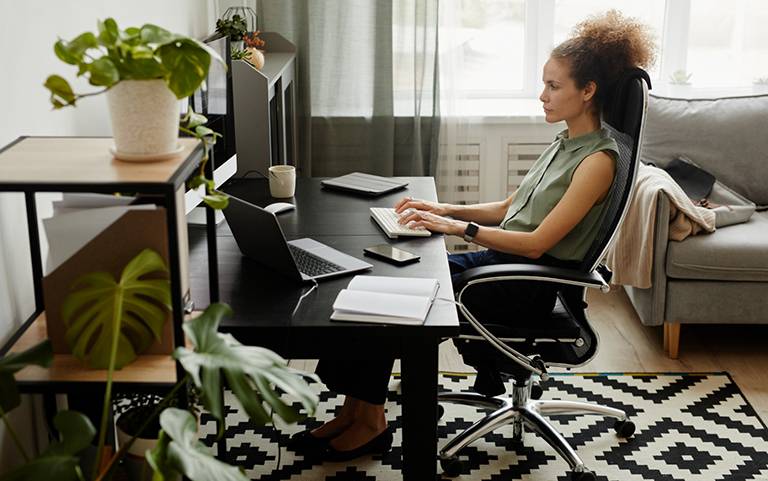
Ergonomic foundation for a comfortable workplace
A comfortable workplace starts with a functional basic setup: Desk, office chair, and screen should be viewed as a unit. The desk surface should be sufficiently large for actual use, not just for the laptop, but also for documents, keyboard, notebook, or naturally a cup of coffee.
The position of the screen and an upright, comfortable sitting posture also play a crucial role. Height-adjustable furniture or flexible solutions can help adapt the workplace to different body sizes and working methods to avoid health risks such as back and neck pain, which often arise from an inadequate home office solution.
Only when the functional basis of the home office is right, which also includes the lighting of the workplace, do decorative elements and accessories come into play. This keeps the workplace not only beautiful but also functional in everyday life.
Cleverly design small home offices
Not every home office needs its own room. A home office without a dedicated office room can be set up with a clearly defined work zone in the living room, bedroom, or a niche, defined by suitable furniture and its own lighting.
Especially with limited space, however, do not only use the floor area but also incorporate the walls. A narrow desk, a wall desk, or a folding table can create a functional work surface.
For lighting small workspaces, solutions that don't require their own stand are ideal.
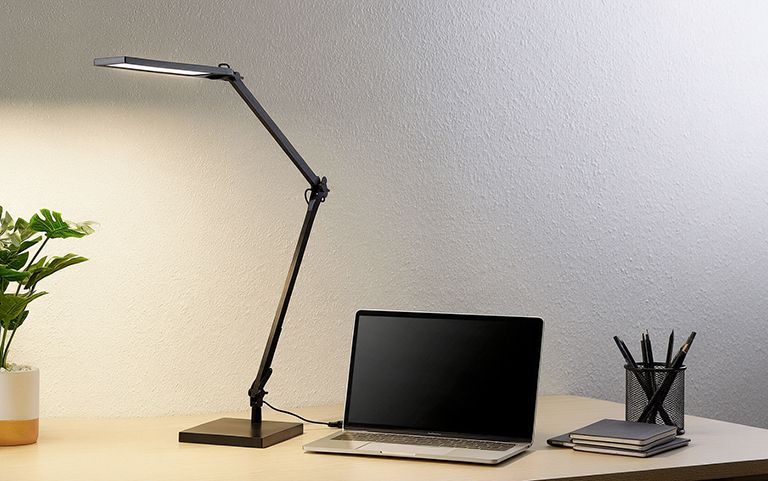
Ideal when there's still some space available on the desk despite the small surface. A compact lamp provides direct work light and can be moved on the desk surface.
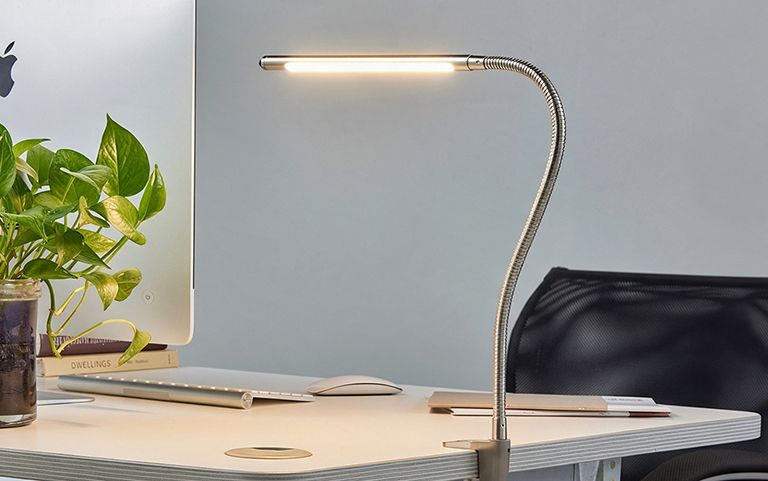
Especially practical for very small desks or shelves. It is attached directly to the table edge or a piece of furniture and therefore doesn't need its own stand.
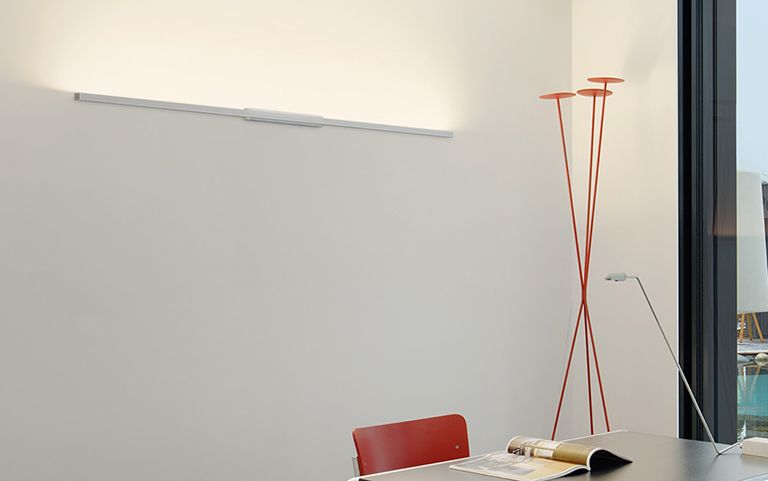
A good solution for work niches and wall desks. The light comes from the side, front, or above while keeping the entire desk surface free.
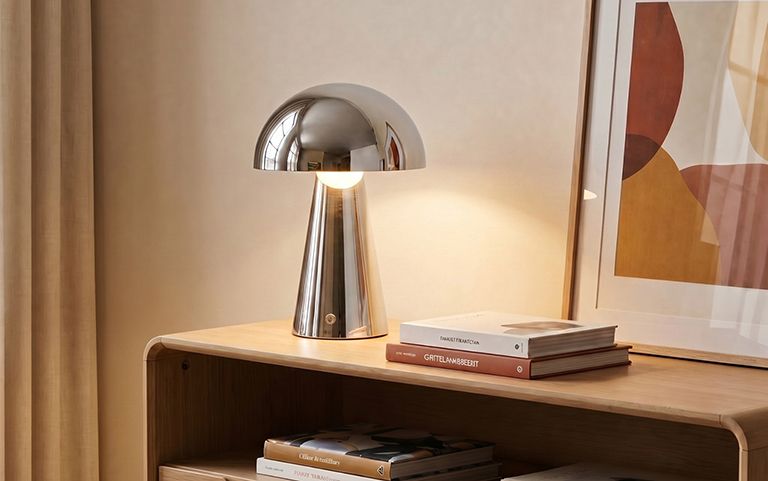
Interesting for flexible workplaces that are not permanently used as office zones. It can be used where work is currently being done and used elsewhere after work hours.
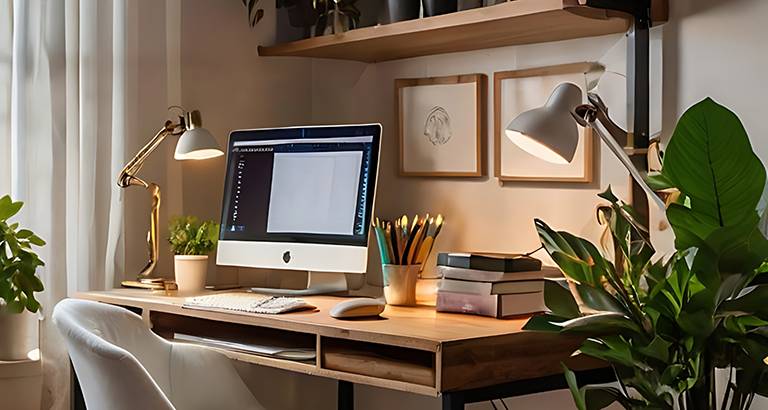
It is crucial not only where the light is positioned, but also how it falls onto the work surface: A flexibly adjustable work lamp can be positioned to uniformly illuminate the keyboard, documents, and desk, while avoiding distracting reflections.
The right light for the home office
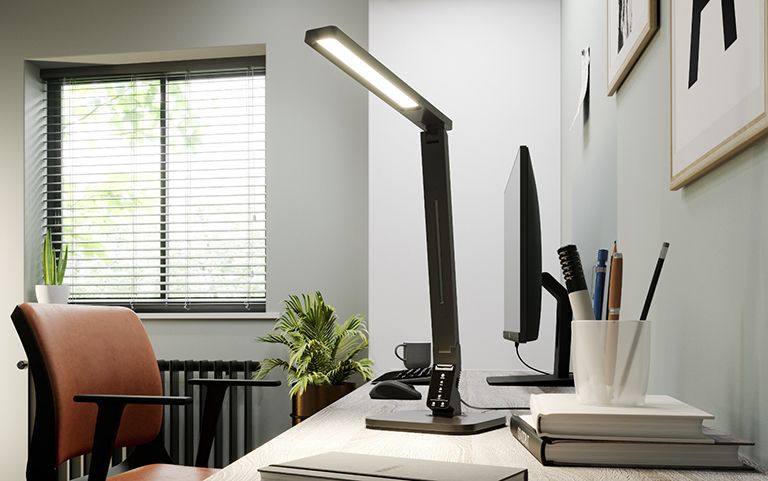
Lighting is part of the functional basis of the home office. Instead of just planning a single light, it's worth considering a layered lighting concept:
- Daylight as natural base brightness
- Ceiling lighting for general brightness
- Directed work light for the desk
Especially daylight provides a pleasant natural atmosphere during the day. However, it is not always sufficient, particularly on dark days or in the morning and evening hours.
Dimmable lights make the transition between concentrated work light during the day and cozy atmosphere after work especially easy: The work light can be used more specifically and brightly during work hours. After work hours, the brightness can be reduced and combined with indirect or decorative light.
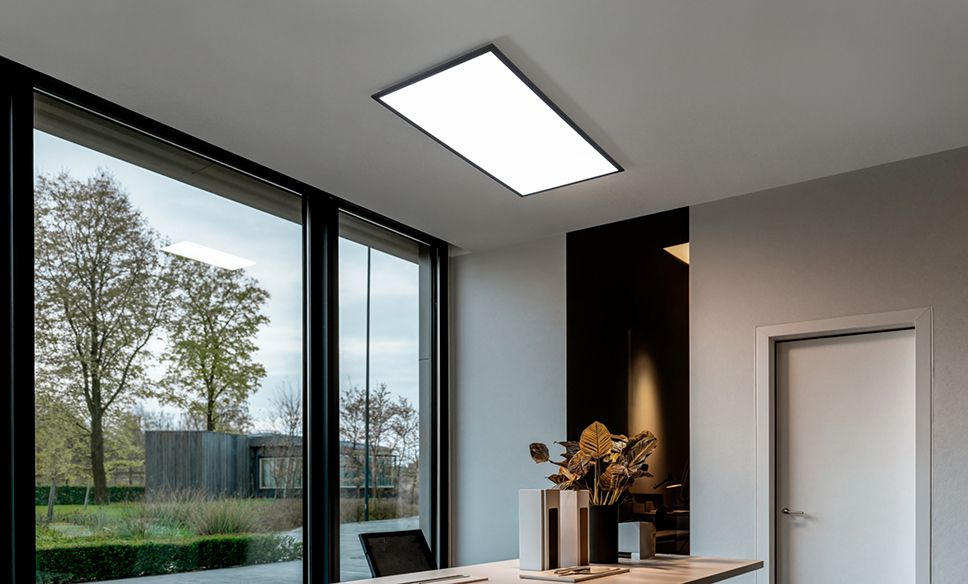
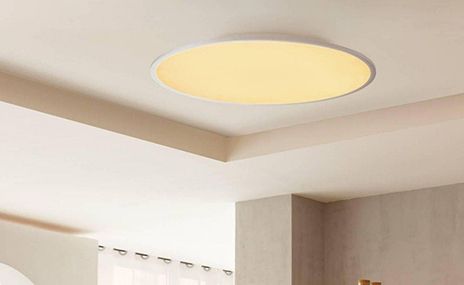
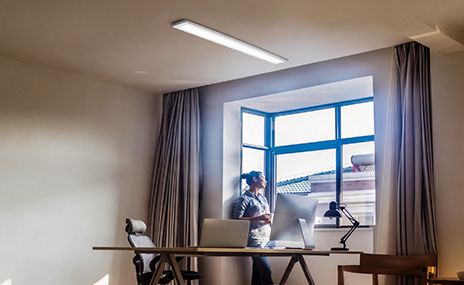
Ceiling lights create the base brightness
A ceiling light ensures that the entire room is sufficiently bright. This is especially important during longer screen phases, as a very bright work surface in an otherwise dark room can create a strong contrast in brightness and cause eyes to tire prematurely. In the office, ceiling lighting can form the basis, while a desk, wall, or floor lamp specifically complements the work zone.
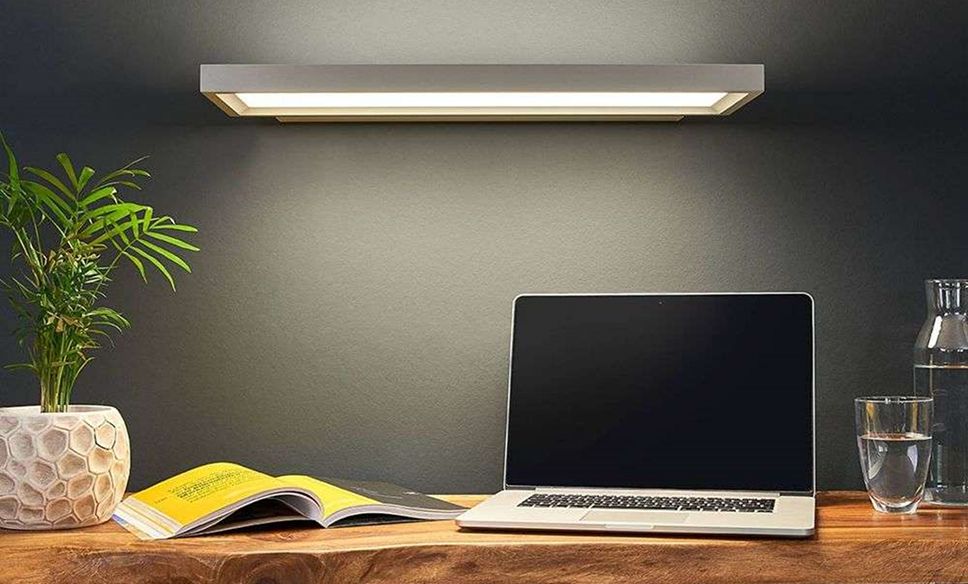
Wall lights save space
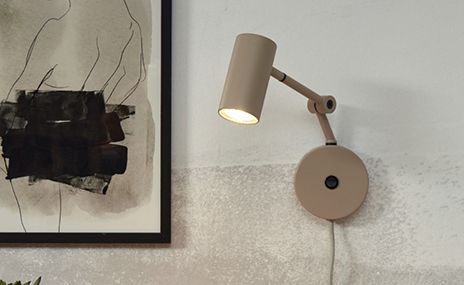
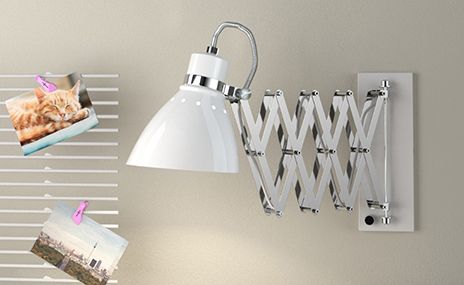
Wall lights are especially interesting if the desk is small or directly against a wall. They provide additional light without taking up valuable table space. Swivel or adjustable models offer a practical advantage: their light can be directed specifically at the work surface and adjusted as needed.
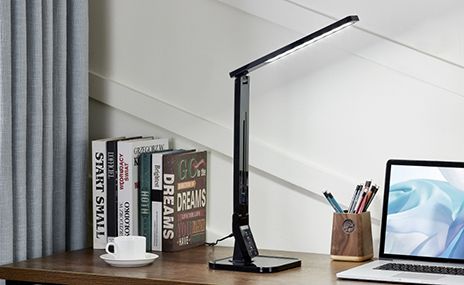
Desk lamps provide light where needed
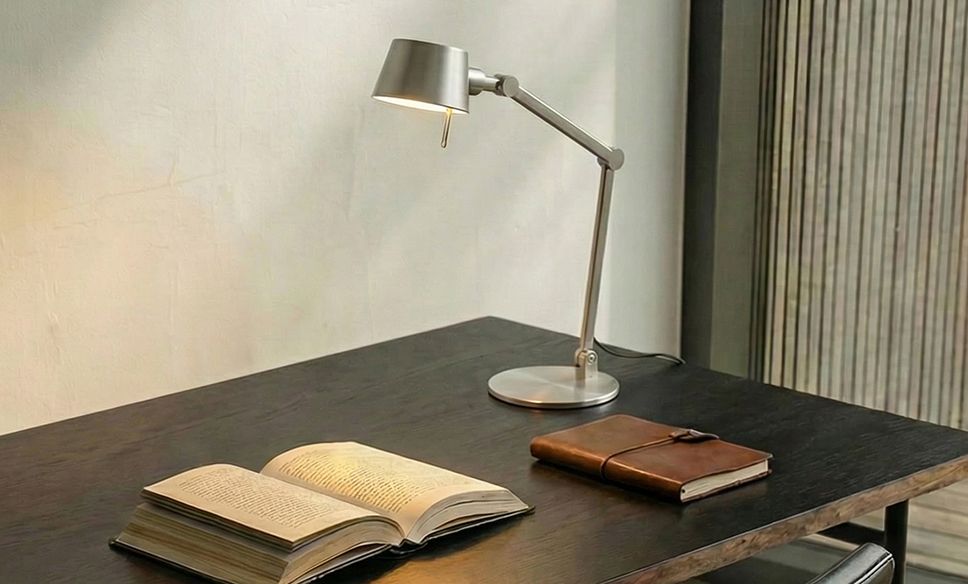
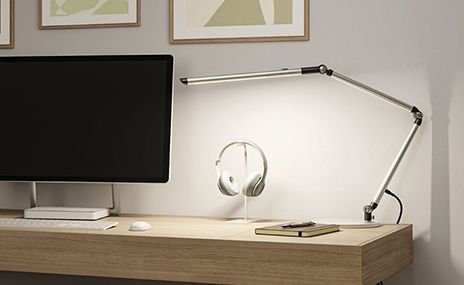
A flexibly adjustable desk lamp can be directed at the keyboard, documents, or a specific area of the desk depending on the task. For right-handers, a work lamp positioned on the left is sensible, and for left-handers, the other side. This can reduce annoying shadows when writing and typing.
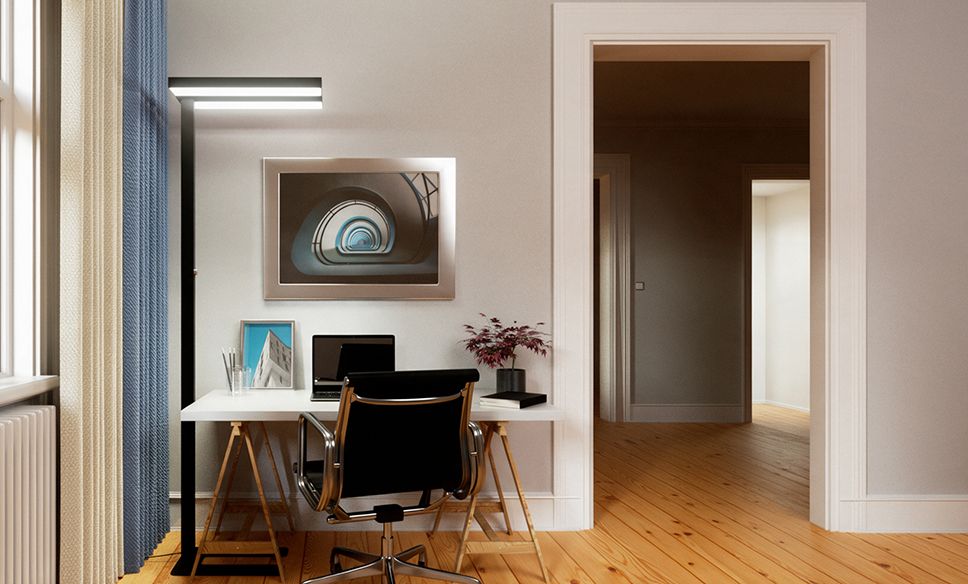
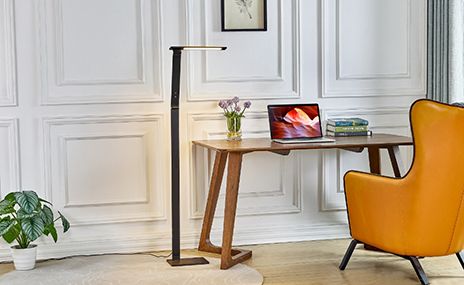
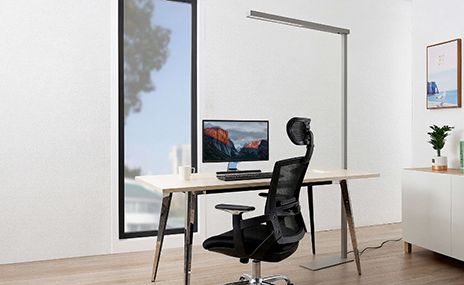
Floor lamps for larger work and living areas
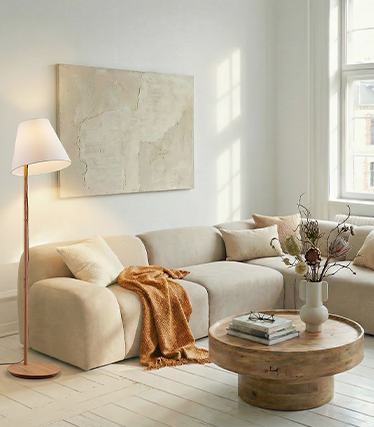
In a spacious office or a combined living and working area, an office floor lamp can clearly mark the work area and create a custom adaptable light zone. In particular, floor lamps that emit both direct and indirect light provide a pleasant working environment and good eye relief by adjusting both general room brightness and spot lighting. Of course, targeted workplace lighting and the parallel use of a ceiling light for basic lighting are also sensible.
Order, storage space, and calm at the workplace
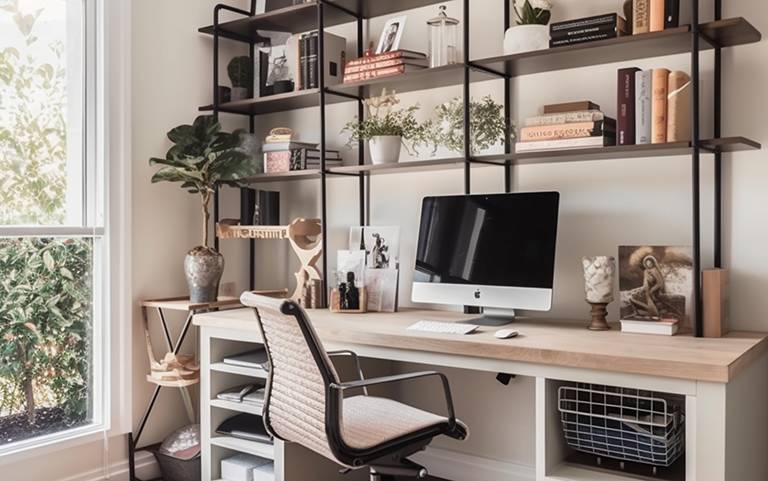
A good home office workspace doesn't need to be completely empty. What's important is that items regularly needed have a fixed place.
Cables should be routed as unobtrusively as possible. Depending on the scope of work, closed cabinets, roll containers, wall shelves, or racks can create additional storage space.
Especially in open living spaces, closed storage is interesting: laptop, documents, and office materials disappear from view after work and make the room appear more like a living space again.
Create order on a small home office workspace by targeted storage, thought-out cable management, and the use of wall surfaces for shelves, boards, or lights.
Design a modern home office
Colors, materials, and interior stylesWhen designing your own home office, you don't necessarily have to choose a cool, purely functional look. A modern and cozy home office can be designed with neutral or natural colors like white, beige, gray, and black, as well as materials like wood, metal, glass, and textiles. Warm, flexible lighting complements the design.
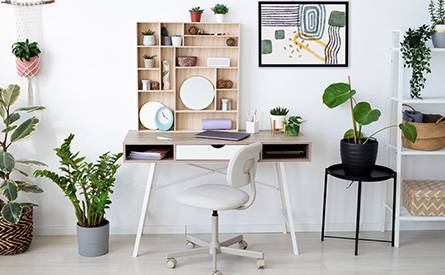
A minimalist home office thrives on clean lines, calm colors, and as little visible clutter as possible, like stacks of paper or folders. White, beige, and black meet reduced furniture and discreet lights. The atmosphere appears tidy.
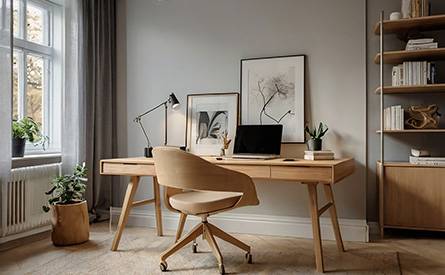
Light wood, natural colors, textile materials, and plants make the workspace friendly and homely. A lamp with warm light and natural or subtle materials supports this character.
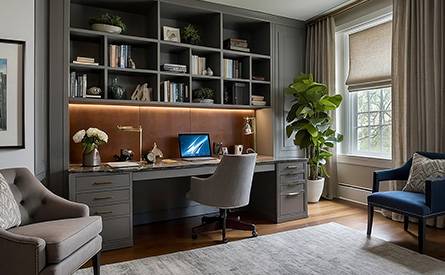
Dark surfaces, glass, metal, and selected design objects give the workspace an elegant, sophisticated atmosphere. Here, the lamp can also stand out as a design element, for example with gold accents or an extravagant design.
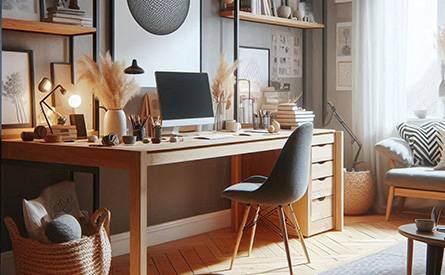
Warm colors, textiles, homely materials, and functional lighting make the workspace particularly cozy. Especially in a living room or bedroom, an atmosphere can be created that also works after the workday ends.
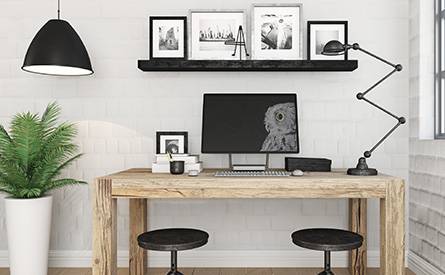
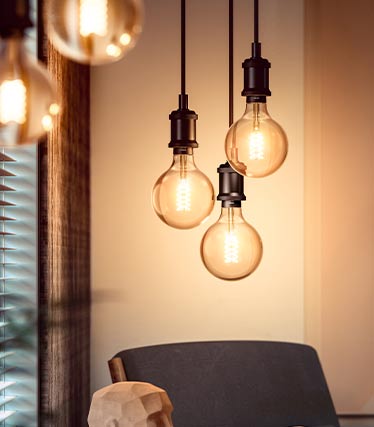
Metal, dark surfaces, and visible structures characterize the Industrial look. Here, the lighting can intentionally be part of the design and, for example, correspond with black metal surfaces or other industrial materials.
Flexible lighting for work, video calls, and after hours
Colors, materials, and interior stylesIn the home office, very different situations occur at the same workstation. Emails are answered in the morning, followed by concentrated screen work, a video call in between, and maybe a short task in the evening. The light, therefore, doesn't always have to look the same.
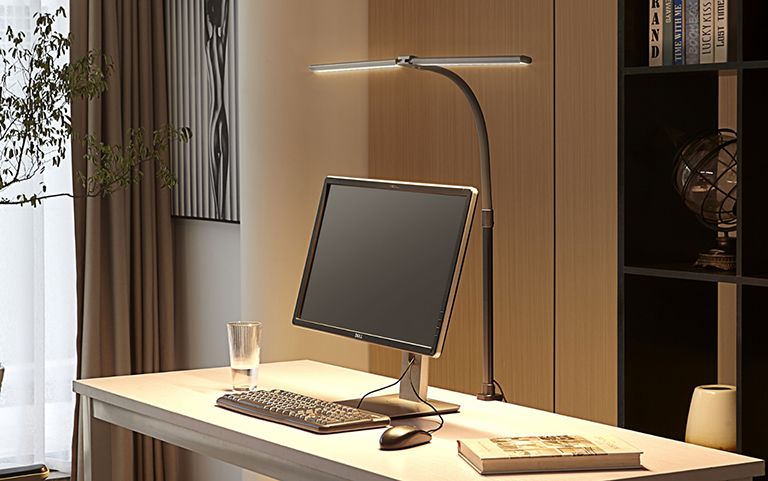
For video conferences, a soft light source from the front or slightly lateral is suitable, while strong backlighting from a window behind the seating area should be avoided, as it makes the face appear significantly darker on screen.
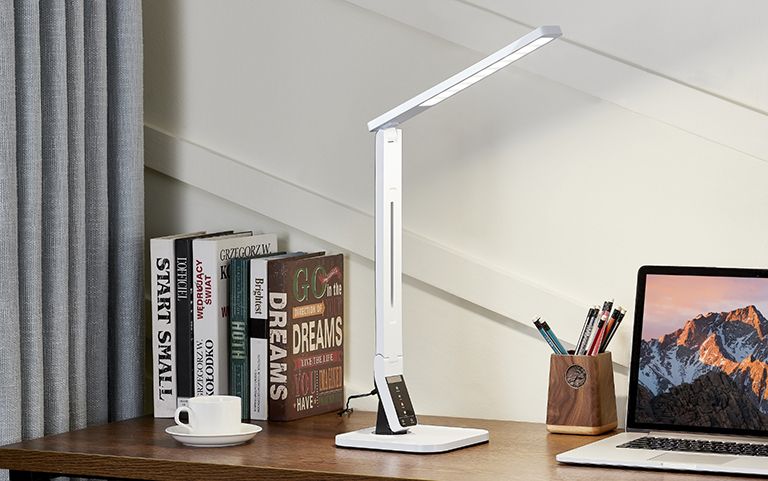
During work, the light should specifically support the work area. An adjustable lamp can be directed at the keyboard and documents, while the general room lighting remains on.
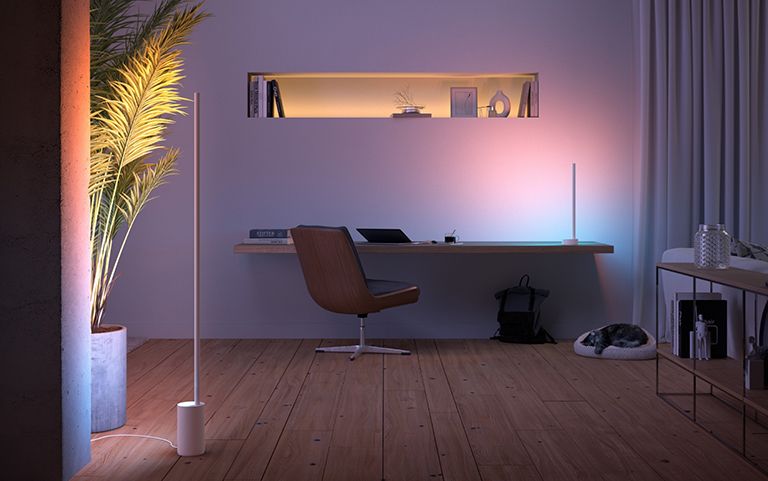
After work, the functional lighting of the home office should take a back seat. Instead, a floor lamp or indirect lighting with color-changing or dimmable LED strips creates a homely atmosphere.
Smart light sources are particularly comfortable in the home office: Scenes like "Work" and "After Hours" can be stored with different brightness and light moods, depending on the system. Especially in a home office in the living room, this offers an important advantage: The workspace doesn't have to disappear to feel like a living area again after work.
Avoid typical mistakes in home office design
When setting up the home office, it is worth paying attention not only to suitable furniture and lighting but also to avoiding typical planning mistakes.
- Choosing the workspace based only on the available corner: Not every free space is automatically suitable for work. Lighting conditions, power outlets, quiet, and movement space should also be considered.
- Using only a bright ceiling light: A single light source can illuminate the room but does not automatically replace targeted work lighting at the desk.
- Positioning the screen unfavorably to the window: Direct sunlight or reflections can be disturbing on the screen. Therefore, window position and workspace should be coordinated.
- Misaligning the work lighting: Even a high-quality desk lamp can be disruptive if it directly glows or reflects on the screen. Flexible alignment helps adapt the light to the respective work situation.
- Planning too little storage space: If documents, cables, and work materials have no fixed place, the work zone quickly becomes a permanently visible office area.
- Decorating too much: A home office can look personal. However, too many items on the work surface can make actual use difficult or distracting from work.
- Creating a pure office look: Especially in living spaces, the workspace should not appear foreign. Materials, colors, and lights can help integrate it with the rest of the furnishings.
- Not separating work and leisure areas: Even a small visual separation can help consciously perceive the work zone. A separate light zone or a carpet is often enough for this.
Make your home office "disappear" visually after work, by storing your laptop and work materials and replacing the functional work light with cozy, dimmed lighting.
Conclusion
A home office that fits both work and homeA good home office does not emerge from cramming as many office elements as possible into a room. The key is the interplay of function, ergonomics, lighting, and personal living style.
The desk should match actual use, the work zone should offer enough space, and the lighting should support both functional work and different times of the day. At the same time, the workplace should remain part of the personal home.
Especially light connects both sides: A targeted work lamp creates the necessary functionality, while ceiling, wall, and floor lamps provide balanced room lighting. Dimmable or smart solutions make the workspace additionally flexible.
This creates a home office that enables focused work in the morning and seamlessly integrates back into the home after work.
A small workspace in the living room can be harmoniously integrated into the living area with a narrow desk, wall secretary, or folding table, and space-saving clamp or wall lamp.

Lighting expert at Lights.ie
Expert tip
"Plan your coffee corner lighting not only after the machine and accessories have found their place, but think about the light from the start. A strategically placed under-cabinet or wall lamp ensures that the workspace and coffee machine are evenly illuminated and that no disturbing shadows occur during preparation. For a cozy atmosphere in the evening, you can complement the functional task lighting with a dimmable table or battery light with warm white light. Wireless lamps are particularly practical if there is no additional power connection at the desired location. This way, the coffee corner combines functional light for daily use with a pleasant atmosphere for relaxed coffee enjoyment."