

































:format(jpeg) "Discount for newsletter registration")
:format(jpeg) "Outlet")
:format(jpeg) "Christmas trends")
:format(jpeg) "Fairy lights for Christmas")
:format(jpeg) "Christmas tree lighting")
:format(jpeg) "Contact a customer advisor")
Christmas lights for outdoors are used during the dark season around the house and garden to highlight different areas. On the balcony, a compact solution is often sufficient, while in the garden larger areas, trees, or paths can be included. The house wall, terrace, and entrance area also offer opportunities for coordinated Advent lighting. What's important is not just the form of the lighting. The location, light effect, power supply, and suitability for outdoor use determine which solution suits the particular situation.
The available space sets the framework for selection. On a small balcony, a clearly defined lighting arrangement usually appears calmer than lighting that is spread across many individual areas. Balcony railings, boxes, or the area around a door can be treated as a cohesive zone. In the garden, the distances are greater. There, individual trees, shrubs, paths, or a defined seating area can be illuminated separately, without all areas needing to be lit simultaneously.
For terrace lighting at Christmas, proximity to living spaces also plays a role. Light visible through windows and terrace doors should not unnecessarily overlap with indoor lighting. On a house wall, facade, or garage, the effect from a greater distance is more important. A clearly arranged lighting setup is easier to grasp there than many small light points. The entrance area is also suitable for targeted outdoor Christmas lighting because it is regularly used and perceived up close. Balcony, garden, facade, and entrance area are typical locations for outdoor Christmas lighting.
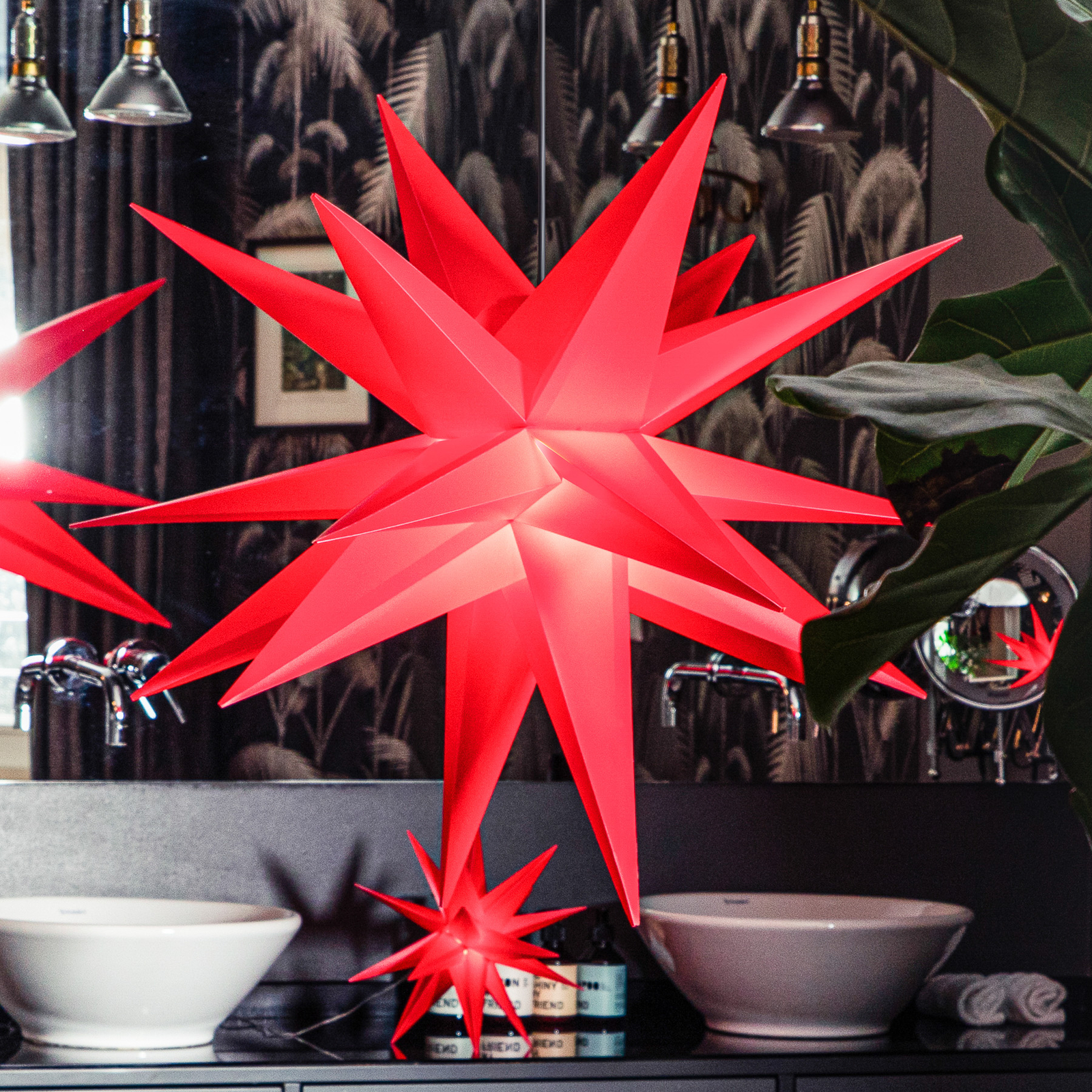
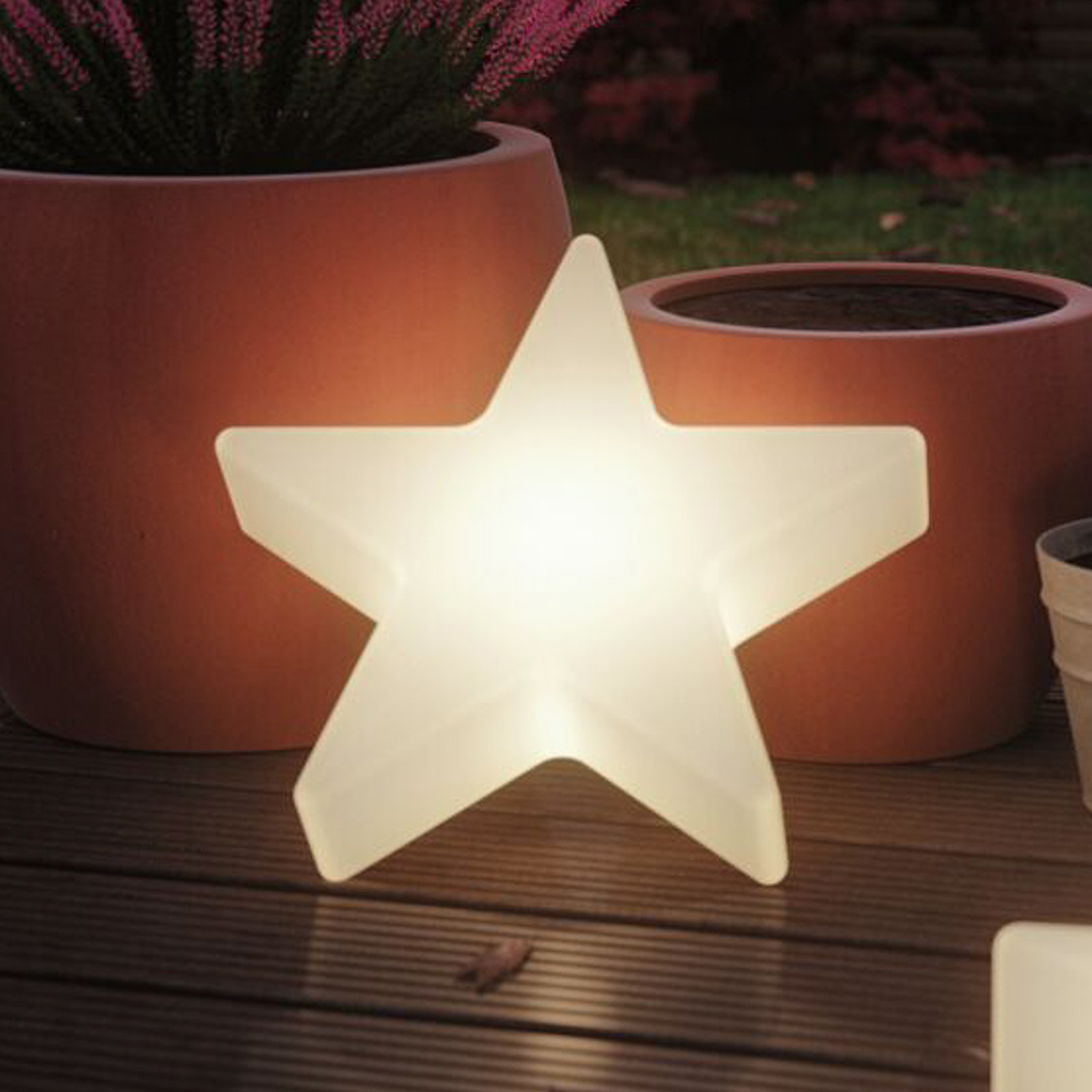
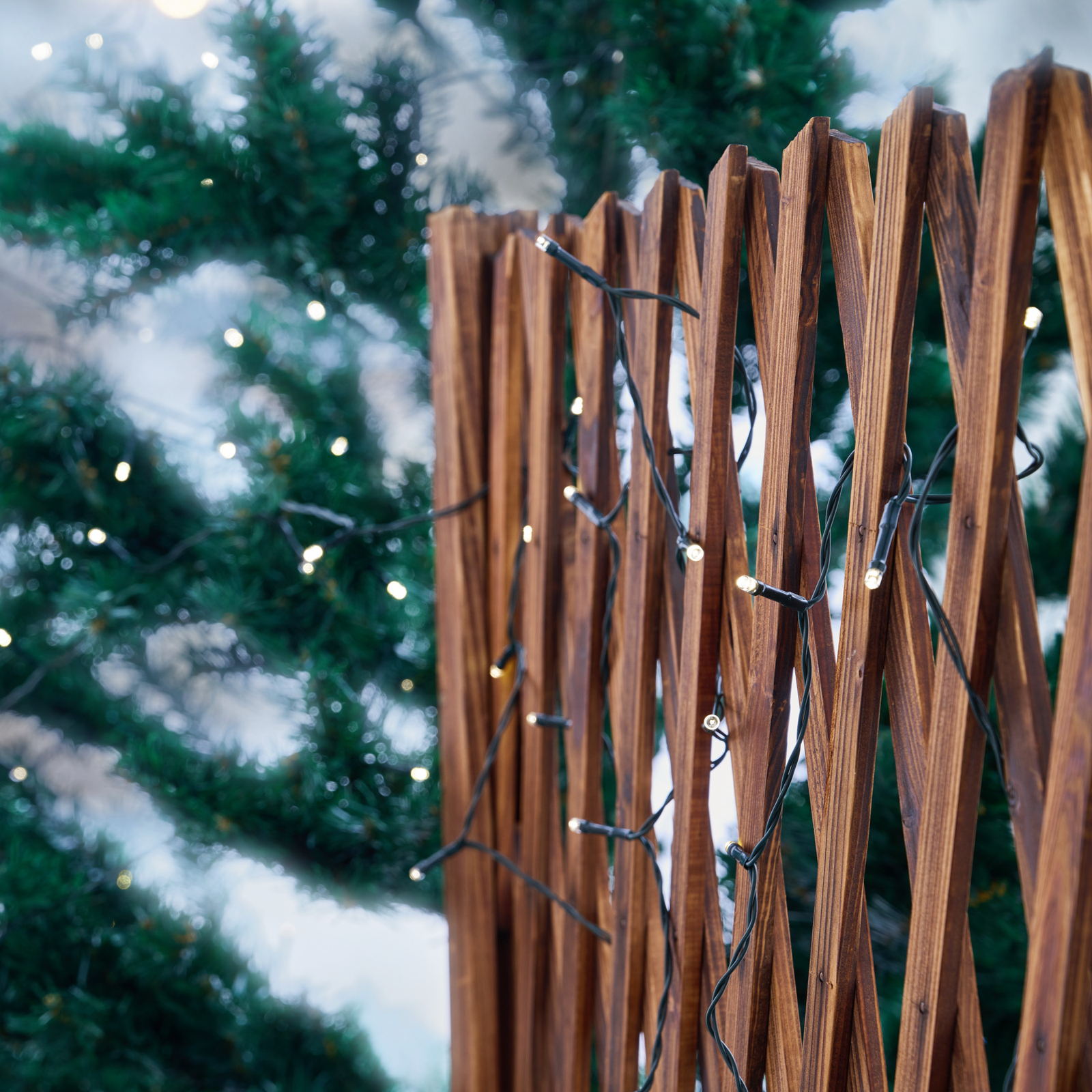
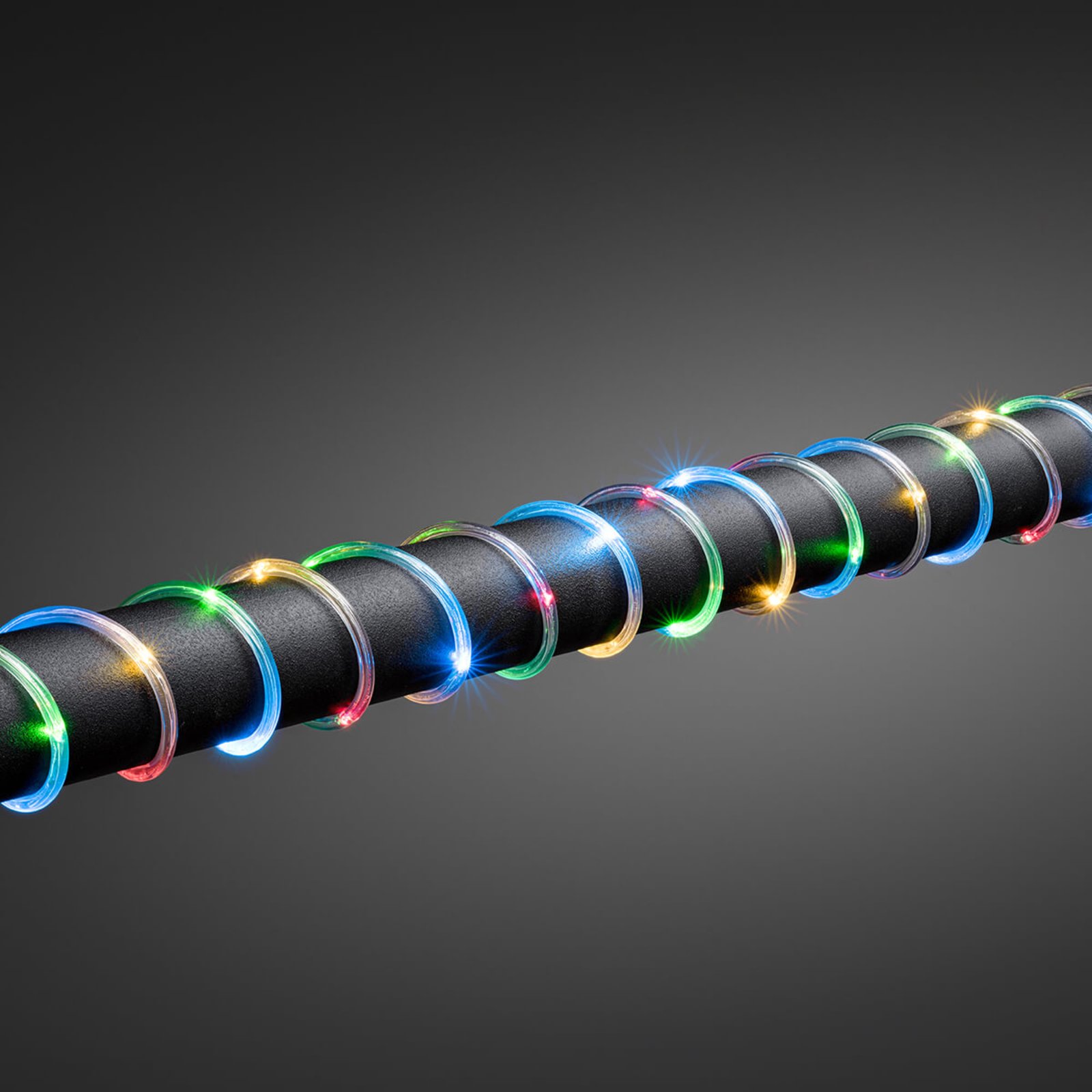
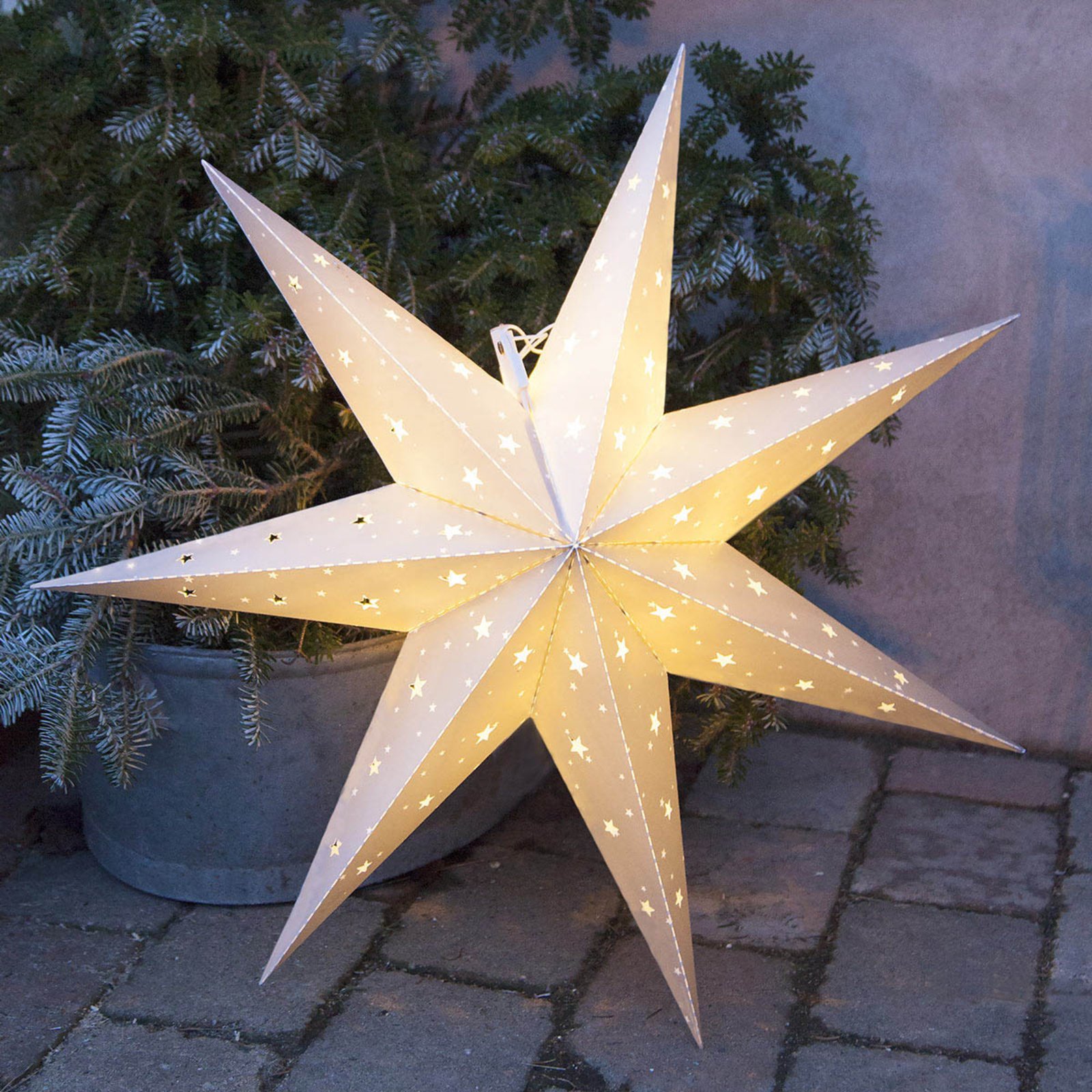
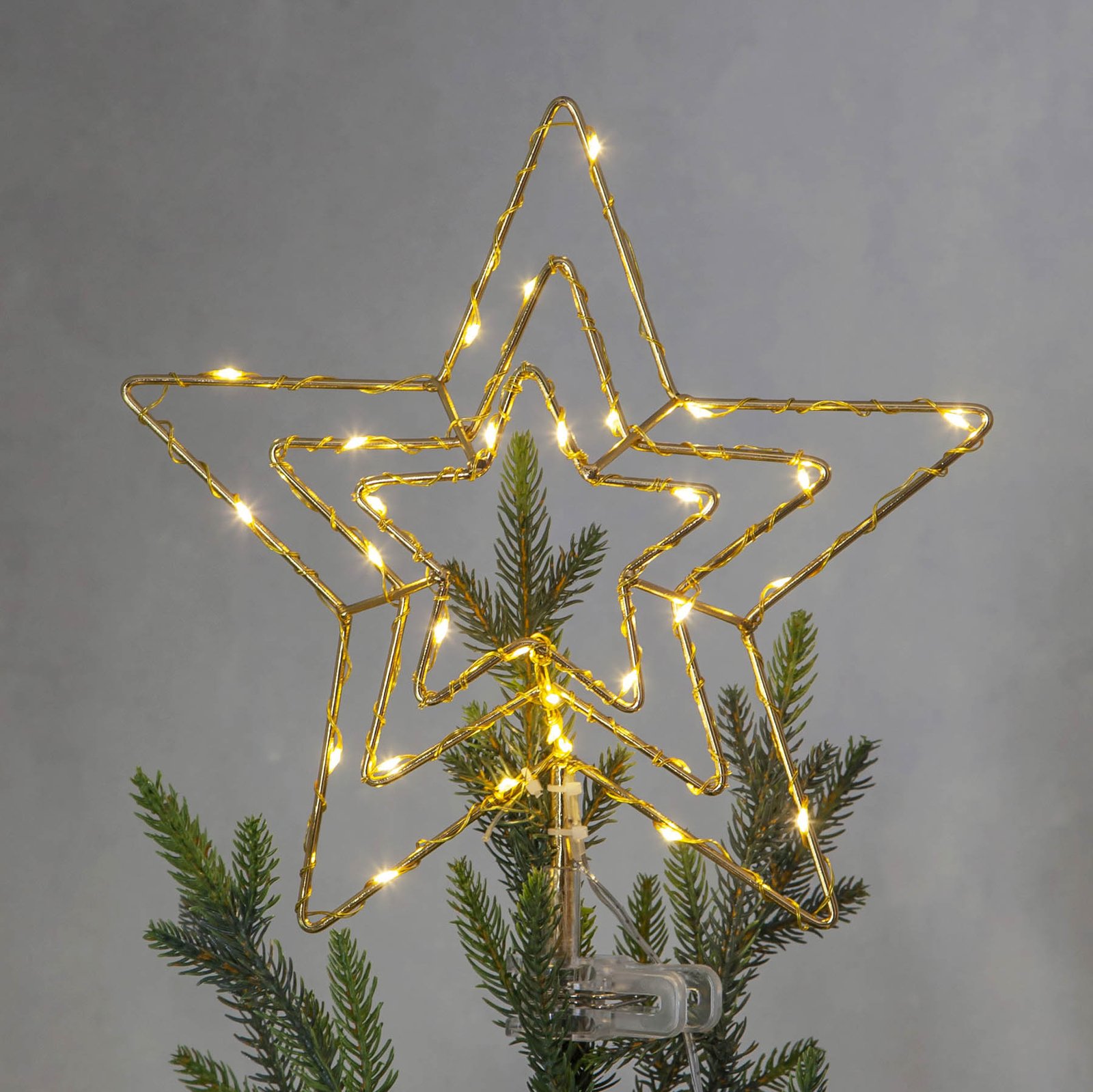
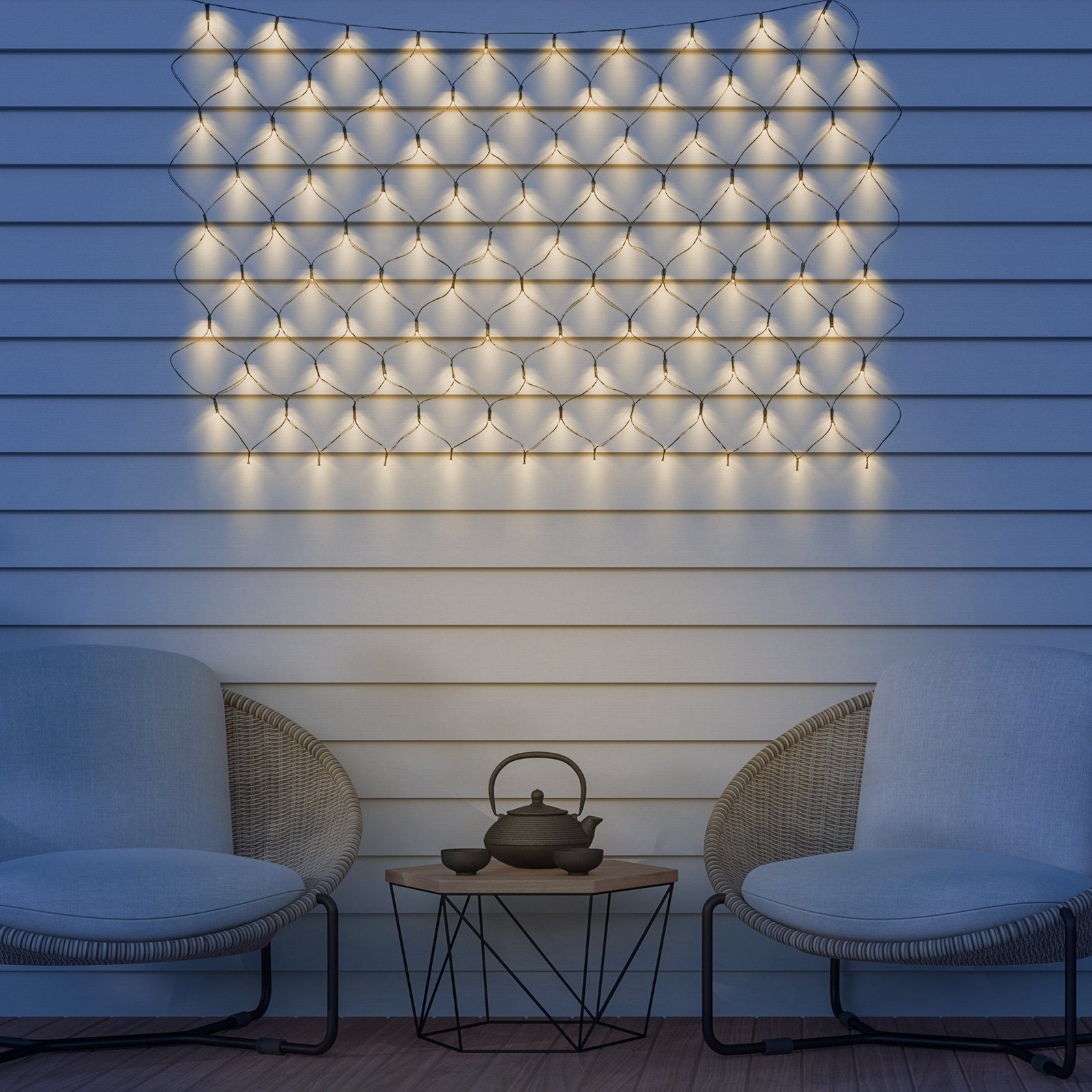
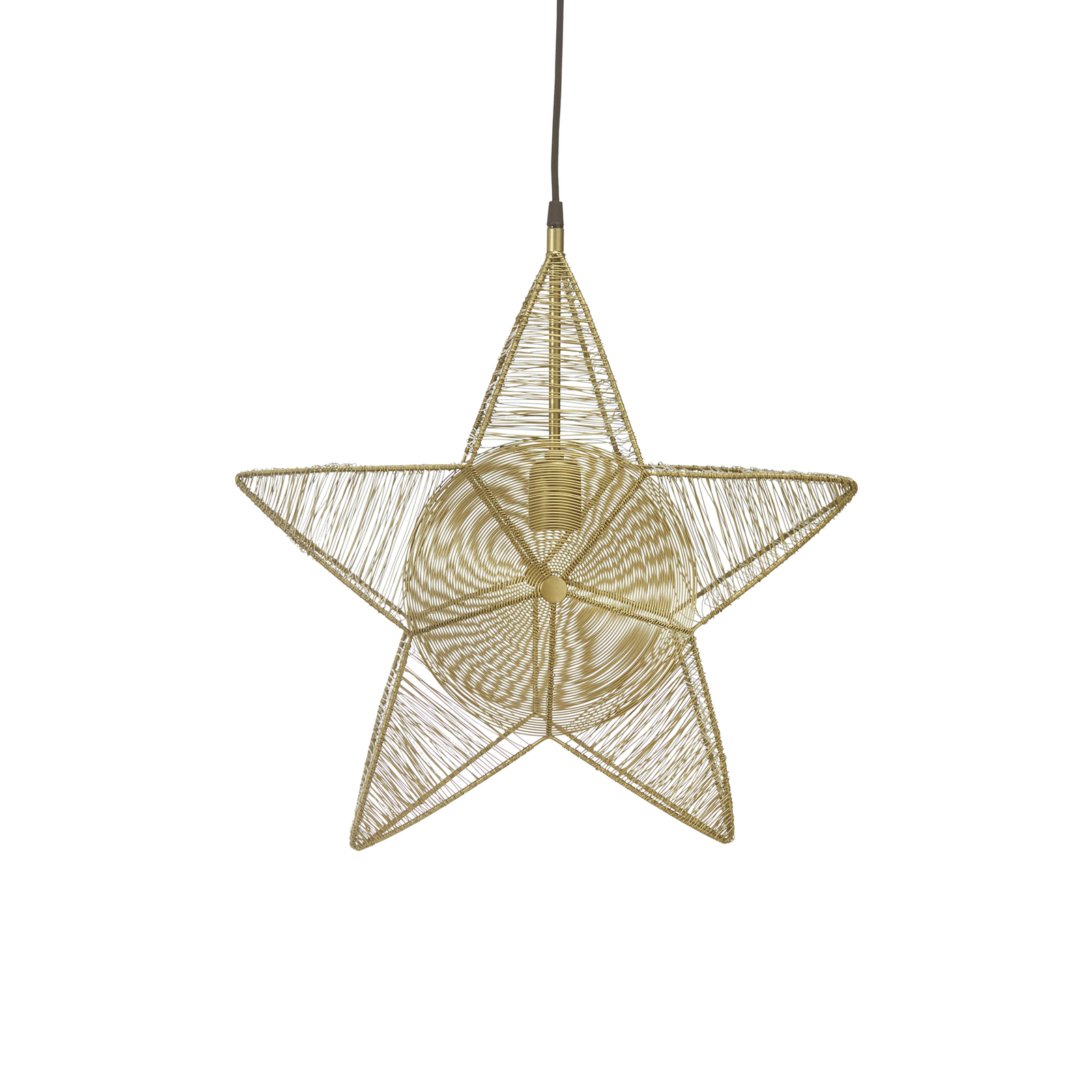
The design determines which area will be lit with Christmas lighting. A classic light chain can be guided along railings, branches, or contours and thus adapted to different shapes. A light curtain, on the other hand, covers a larger, contiguous area and can be used on a straight wall or railing. Stars and glowing spheres serve as individual light points and therefore require less space.
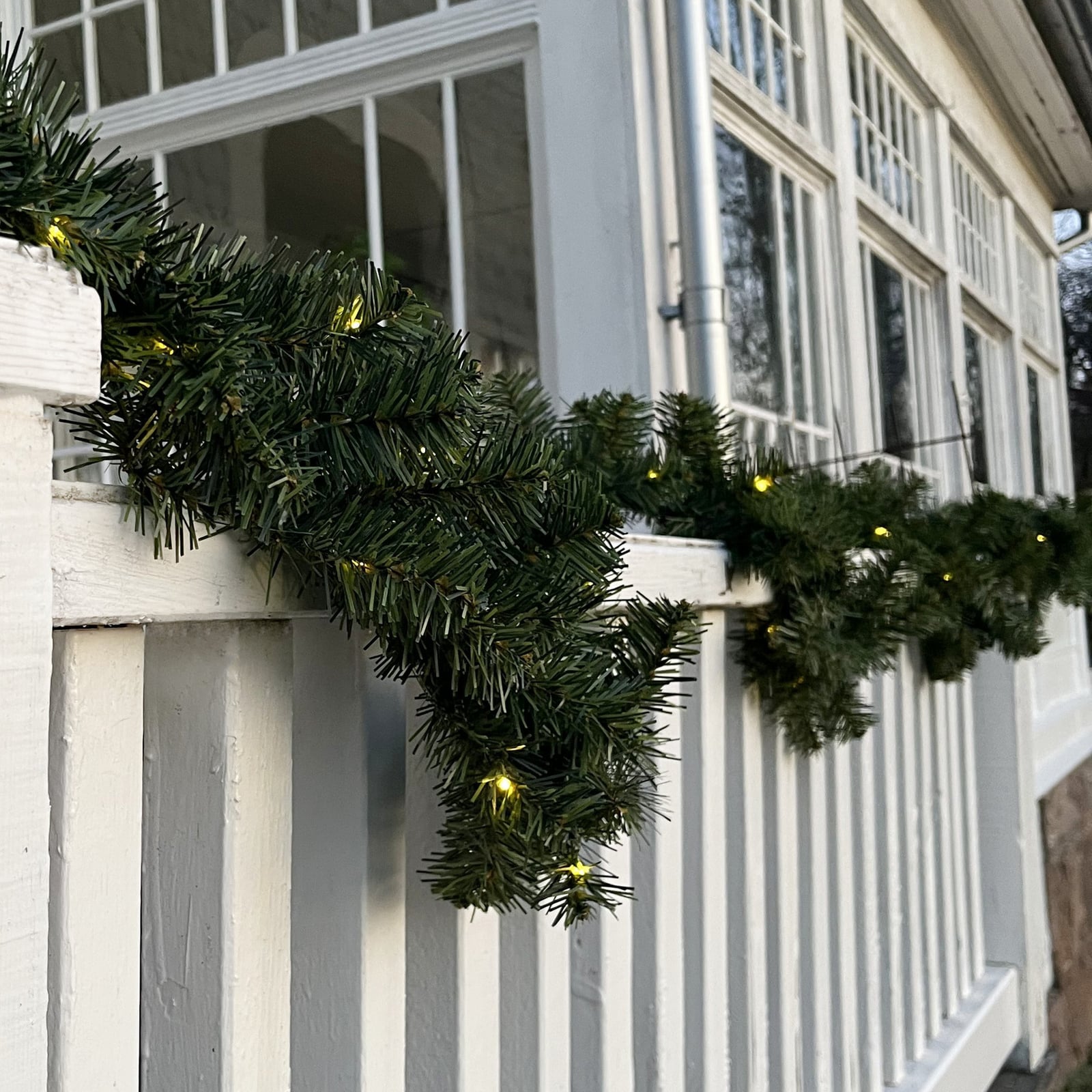
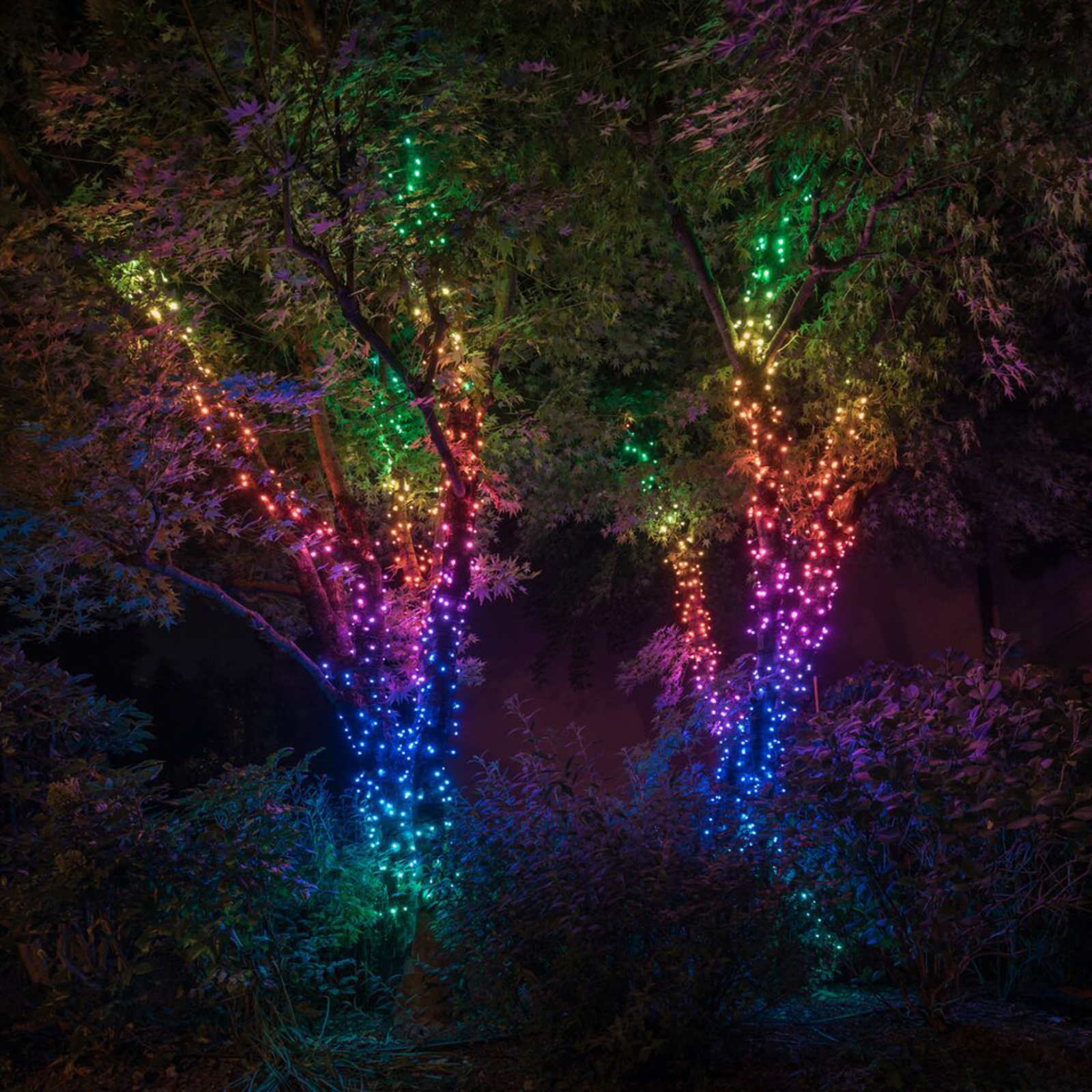
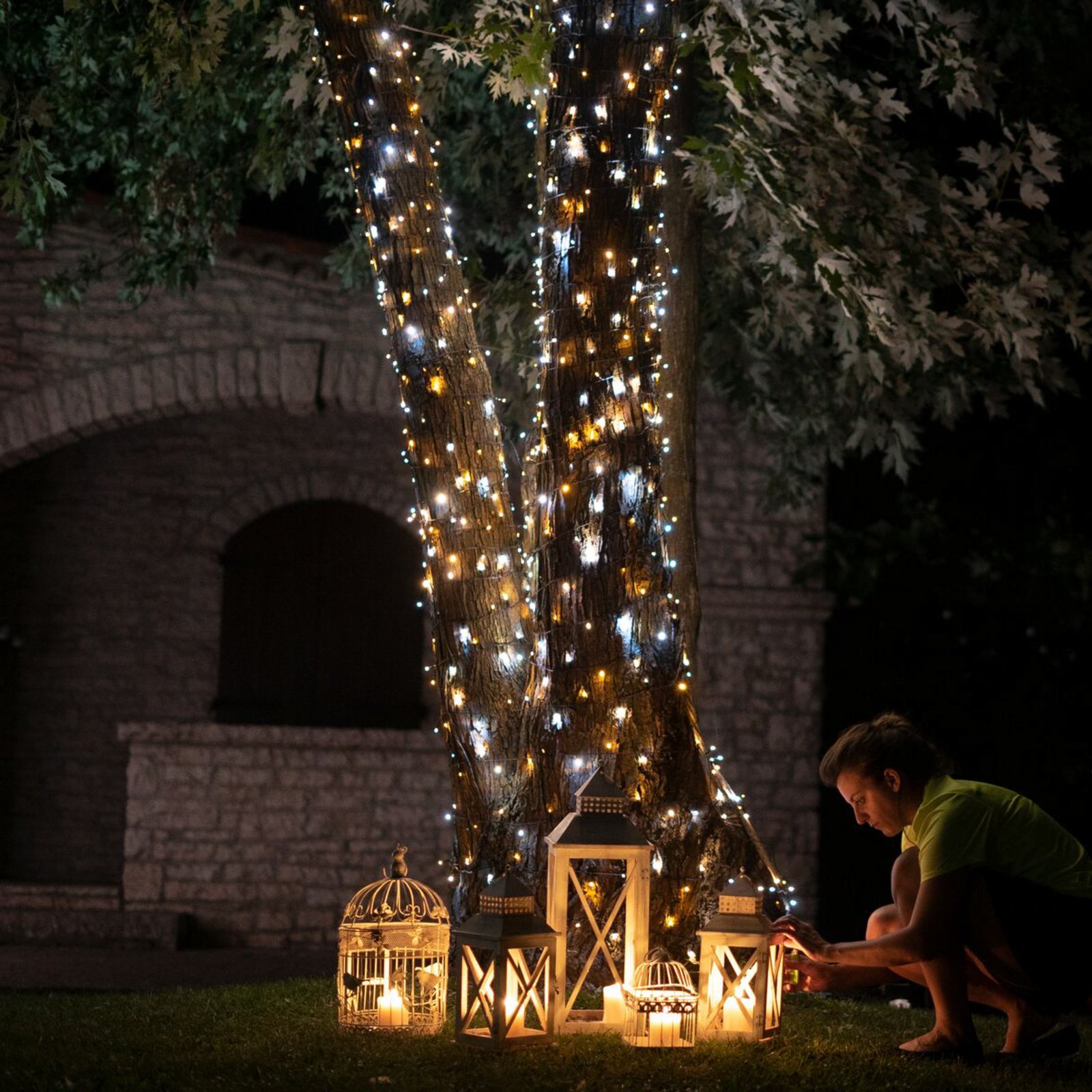
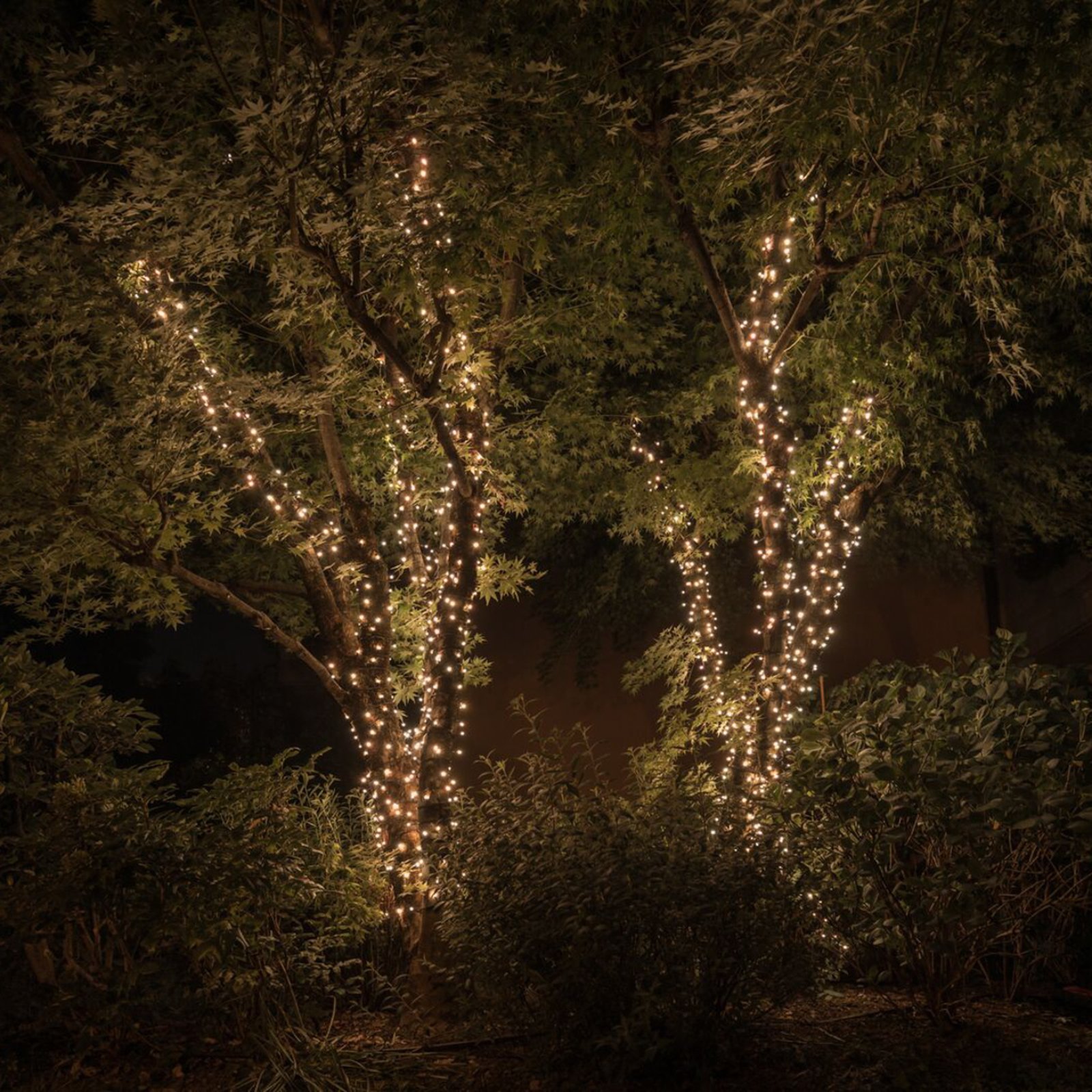
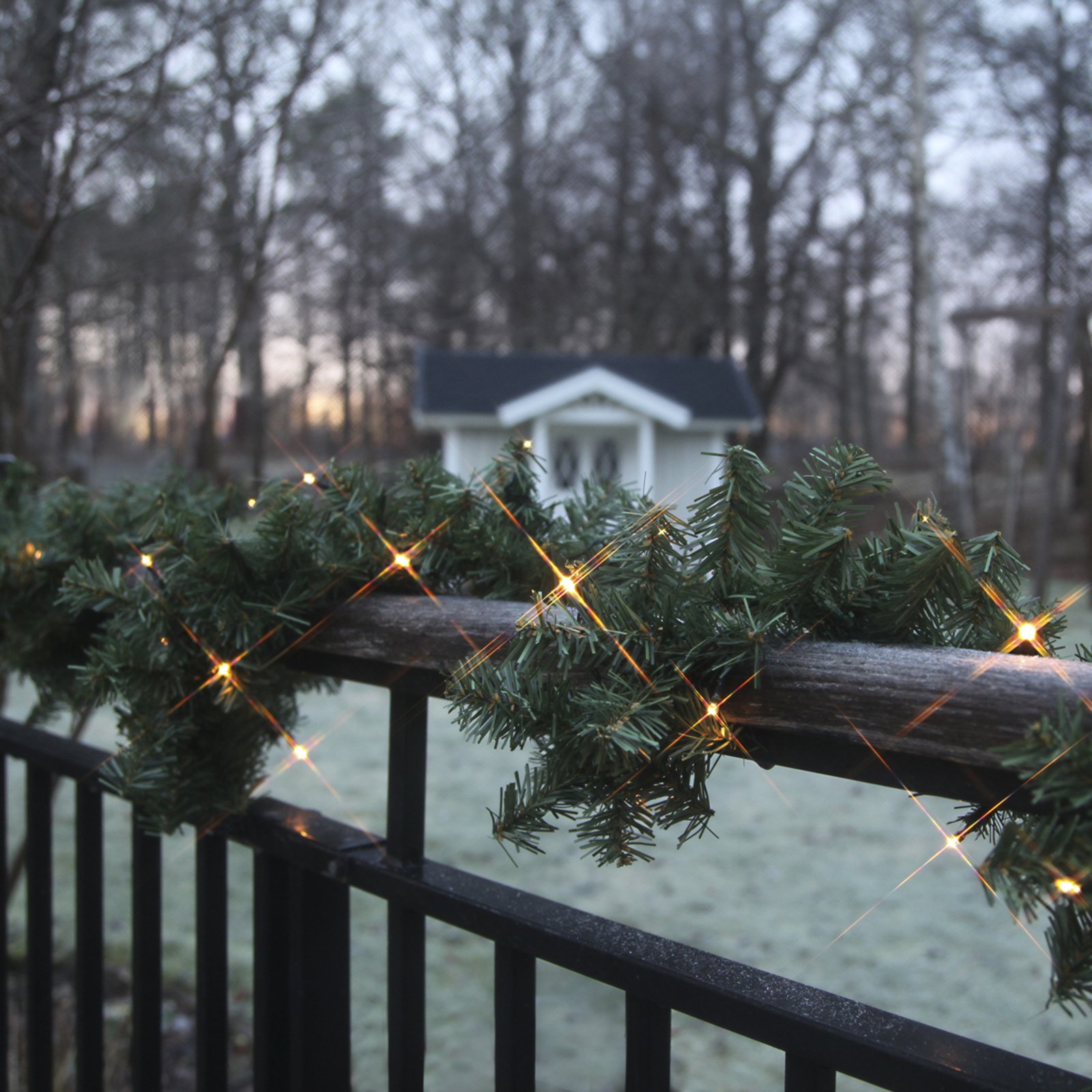
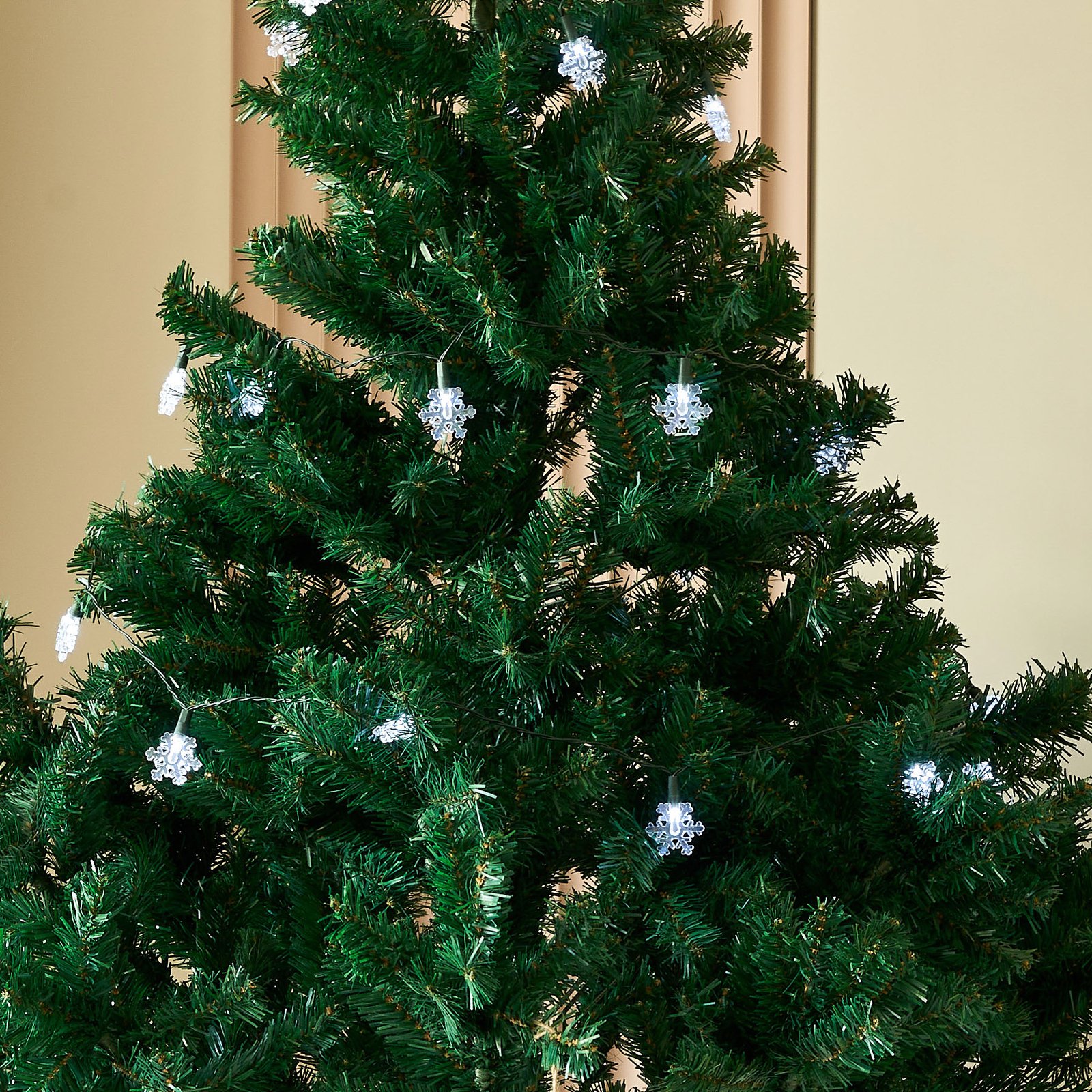
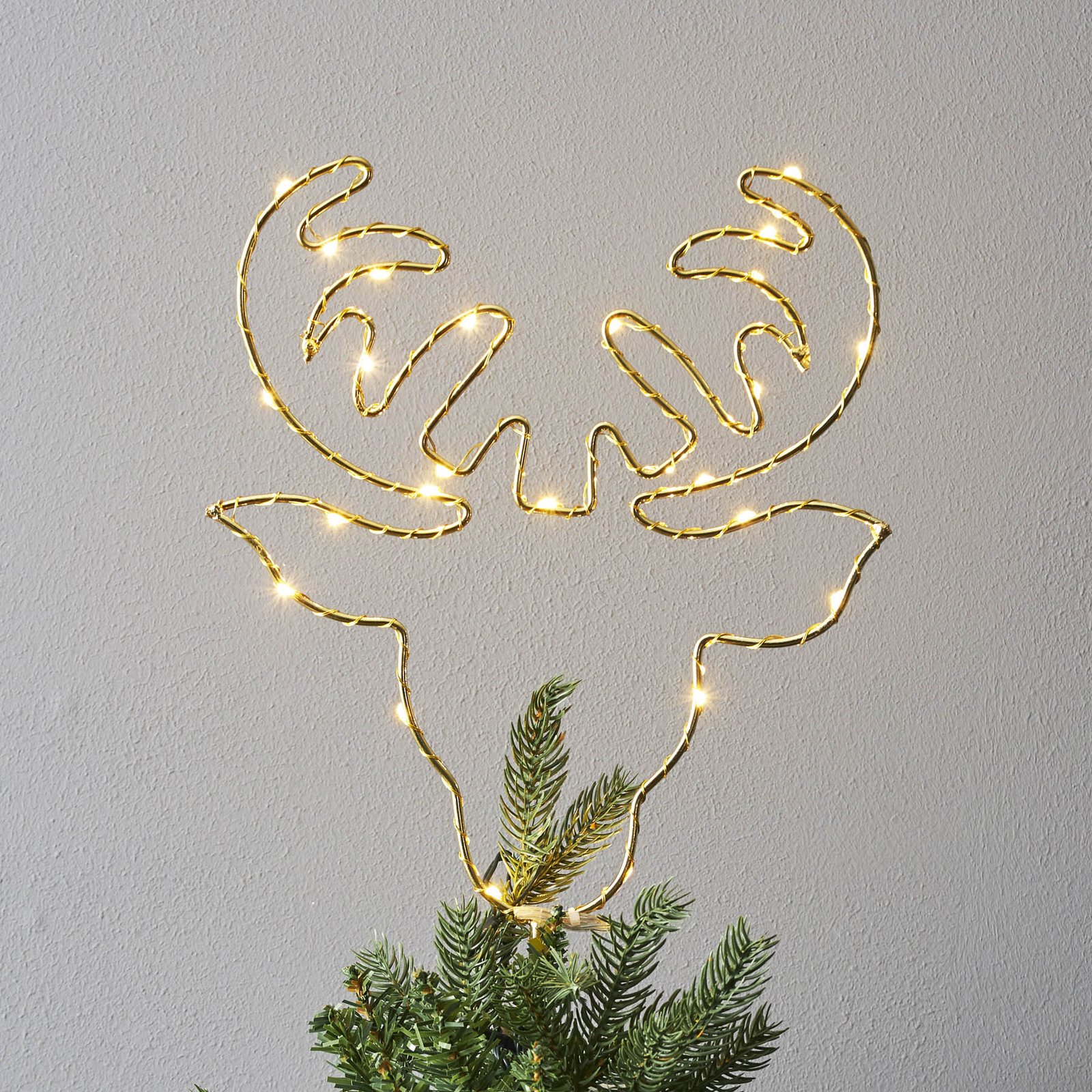
For trees and larger shrubs, Christmas tree lighting is useful if branches or the entire tree shape should remain visible. For large trees, the required length of the lighting is especially important to ensure the lighting is not concentrated only on the lower area.
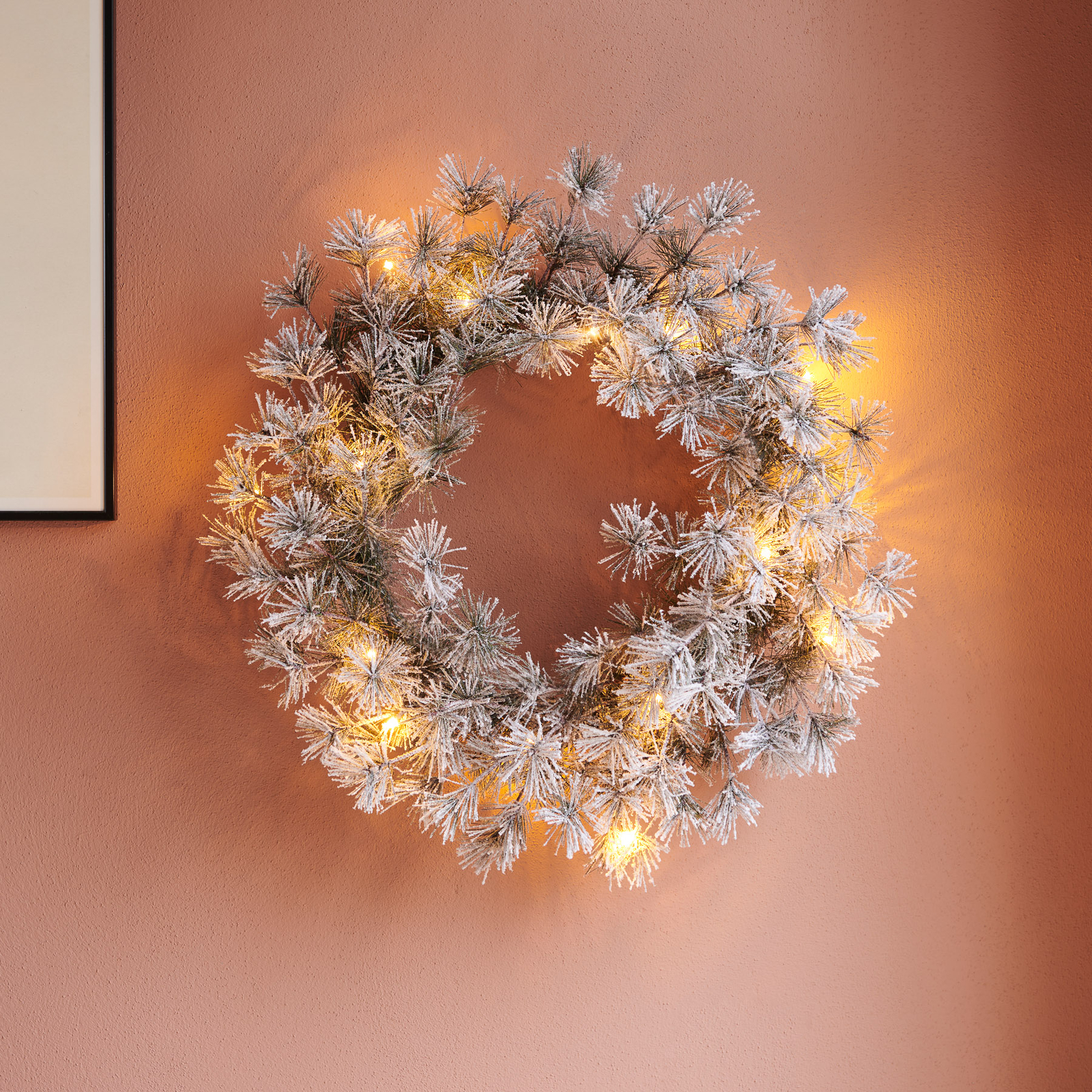
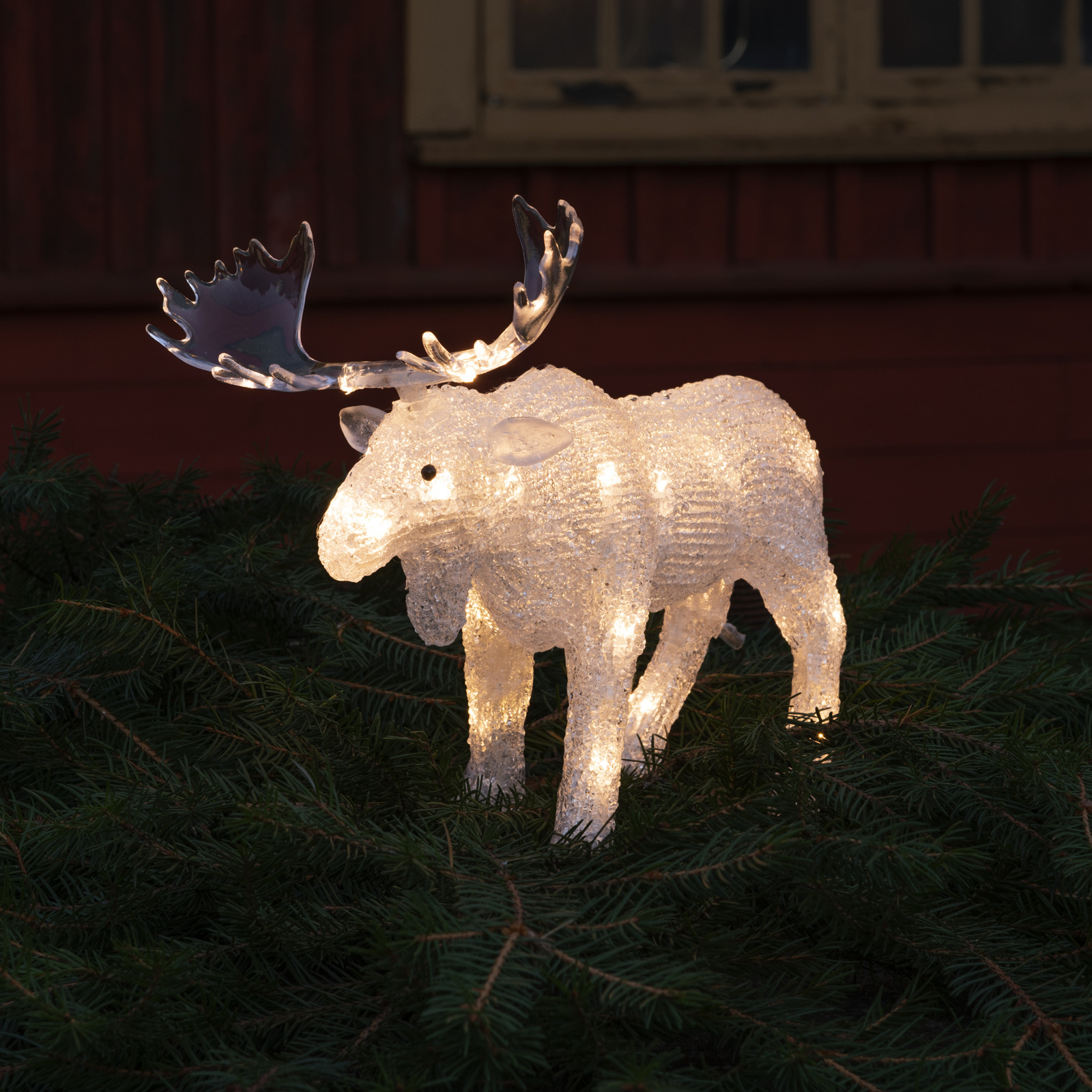
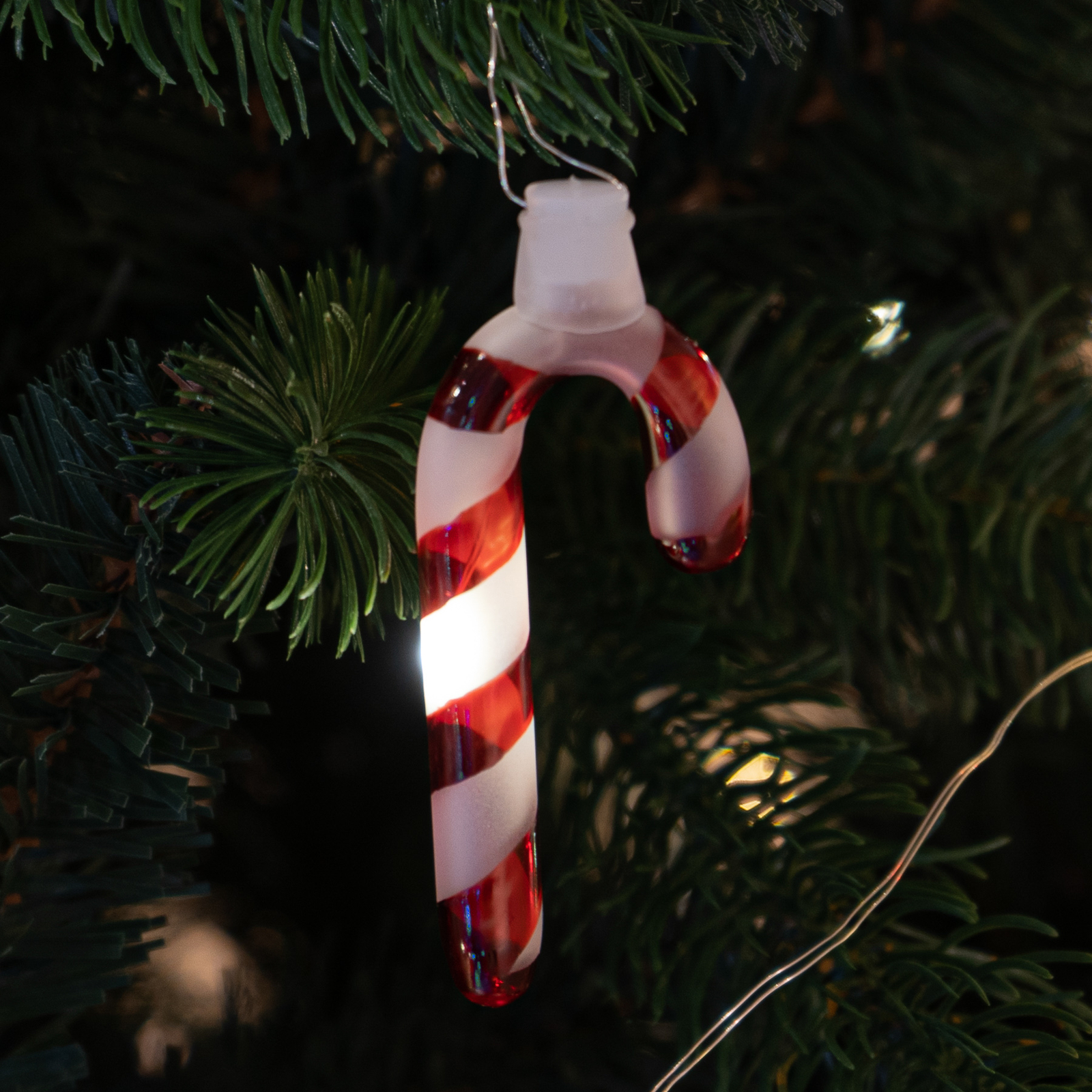
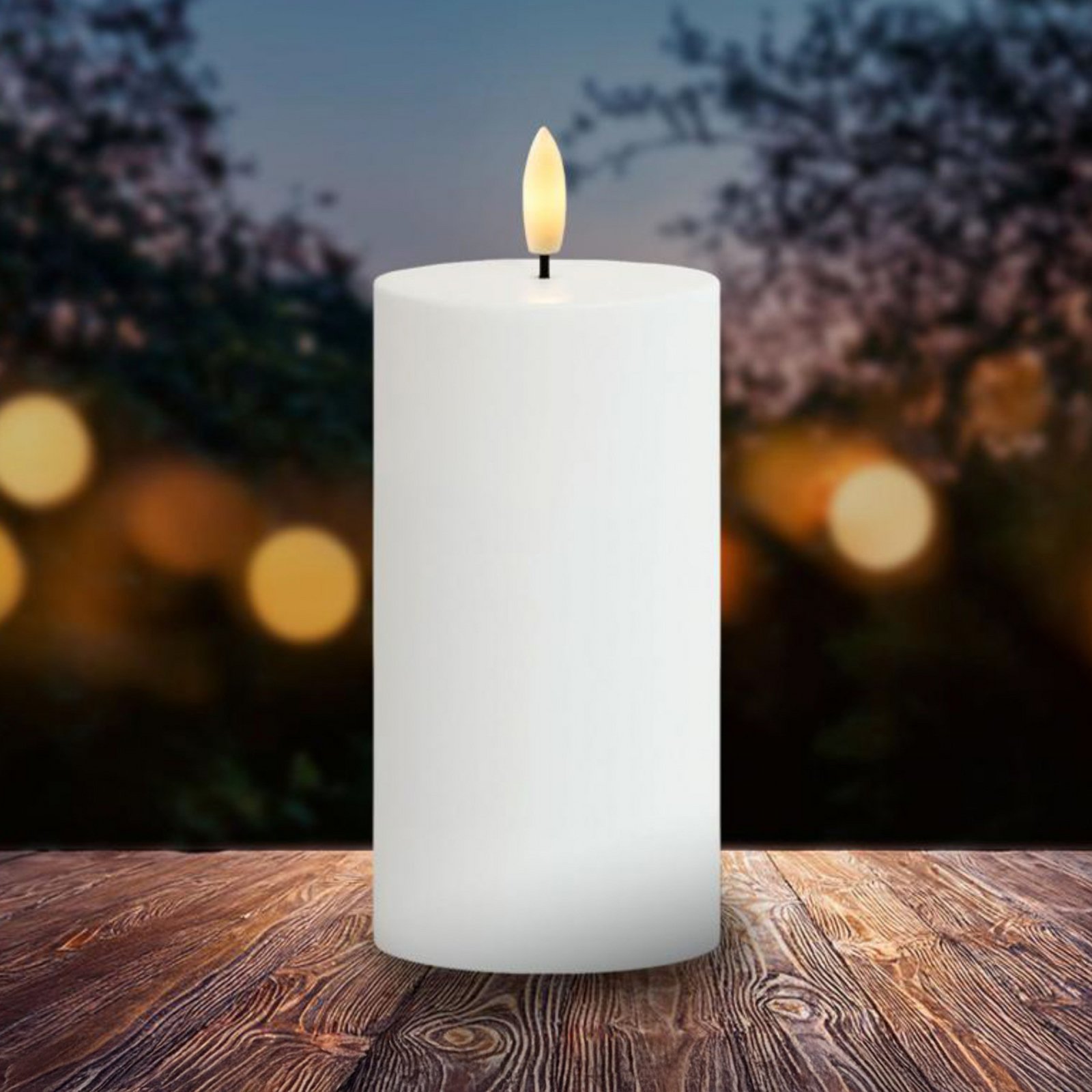
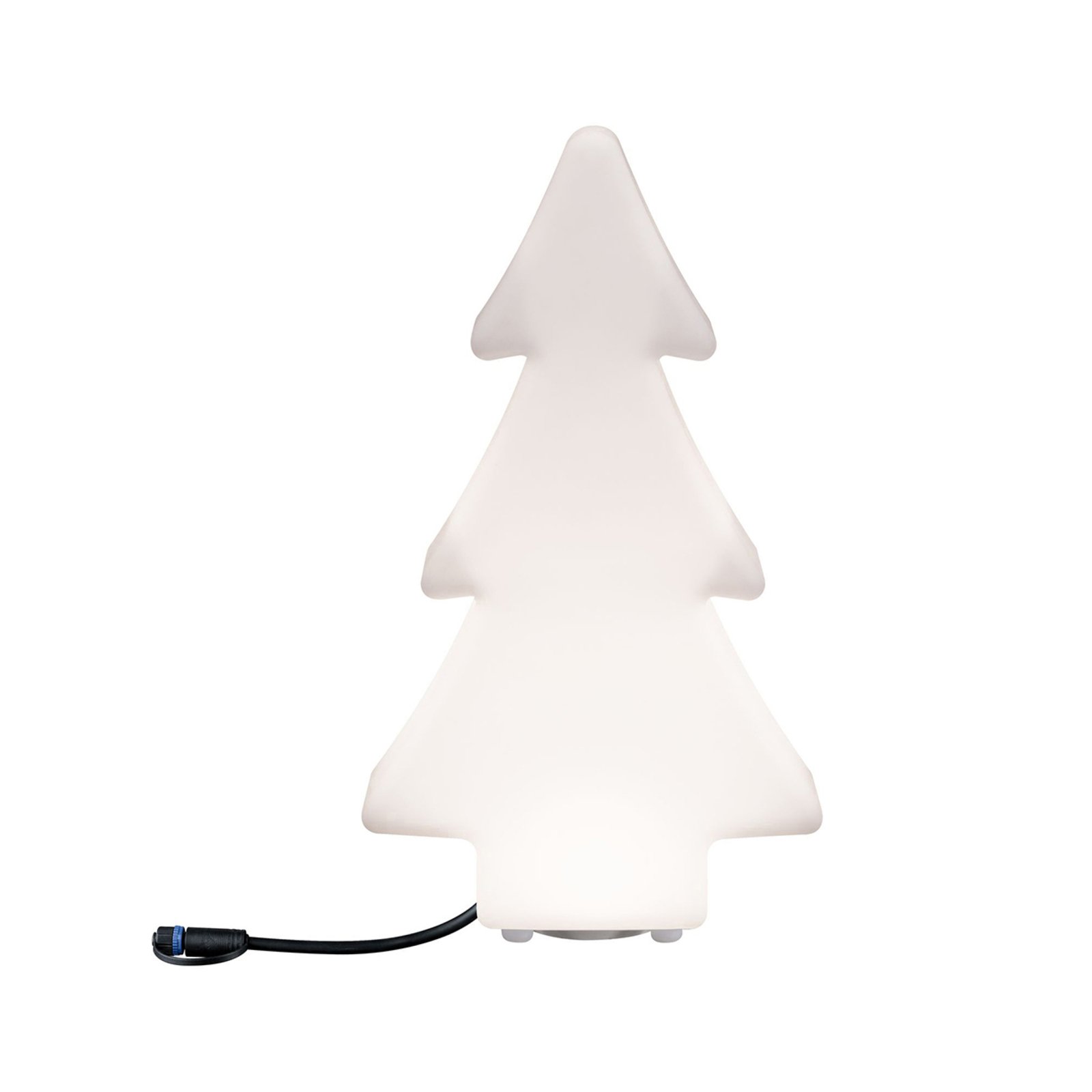
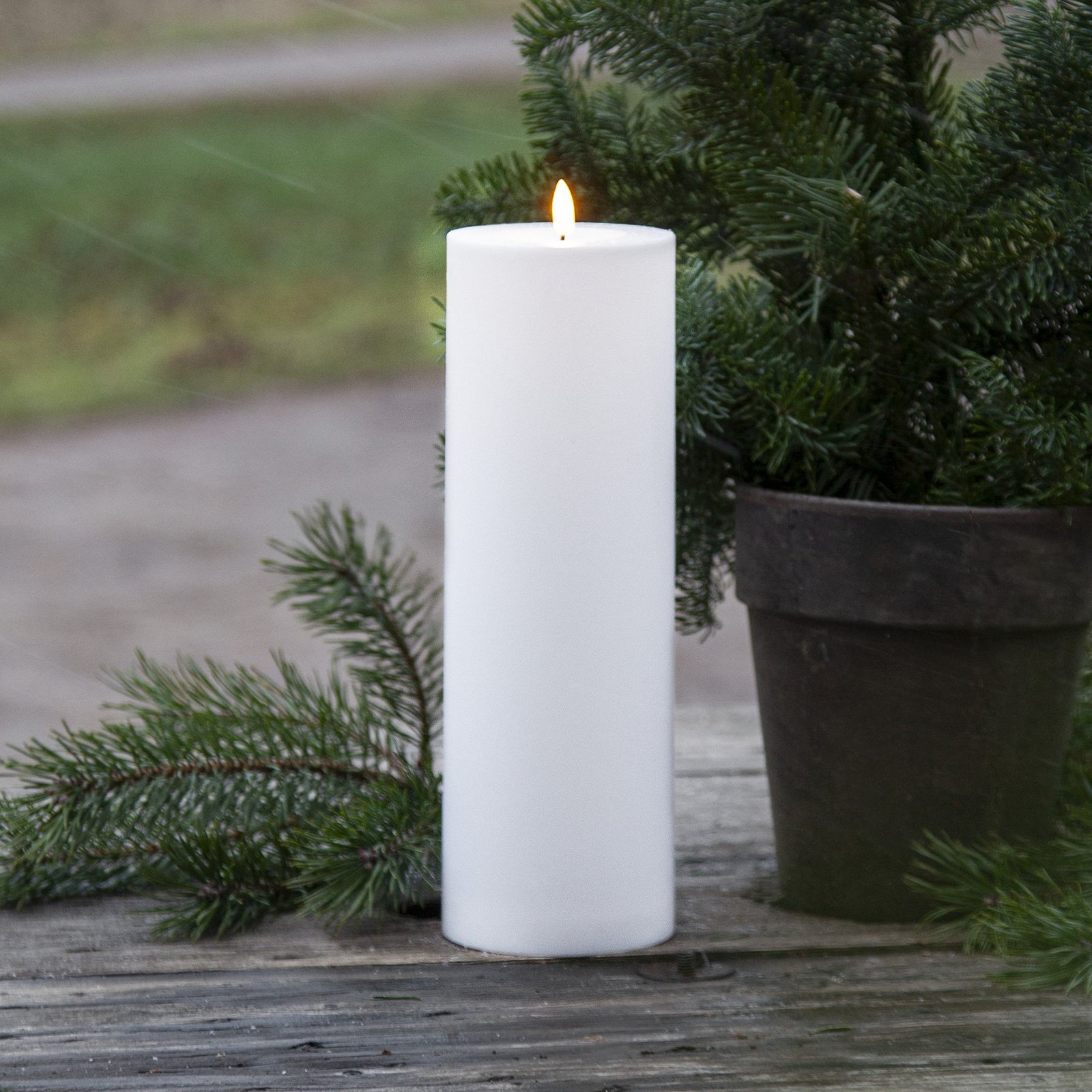
Spotlights and projectors work differently from light chains. They are not guided along a contour but direct light onto a surface. This makes them suitable for a house wall or facade. Illuminated figures and other Christmas decorations with integrated lighting, by contrast, form independent elements that can be placed on an open garden area or near the entrance.
LED is a common lighting technology for Christmas lighting and is used in light chains, light trees, figures, and other forms of outdoor lighting. For the visible effect, it is crucial which light color is chosen and how evenly it is used.
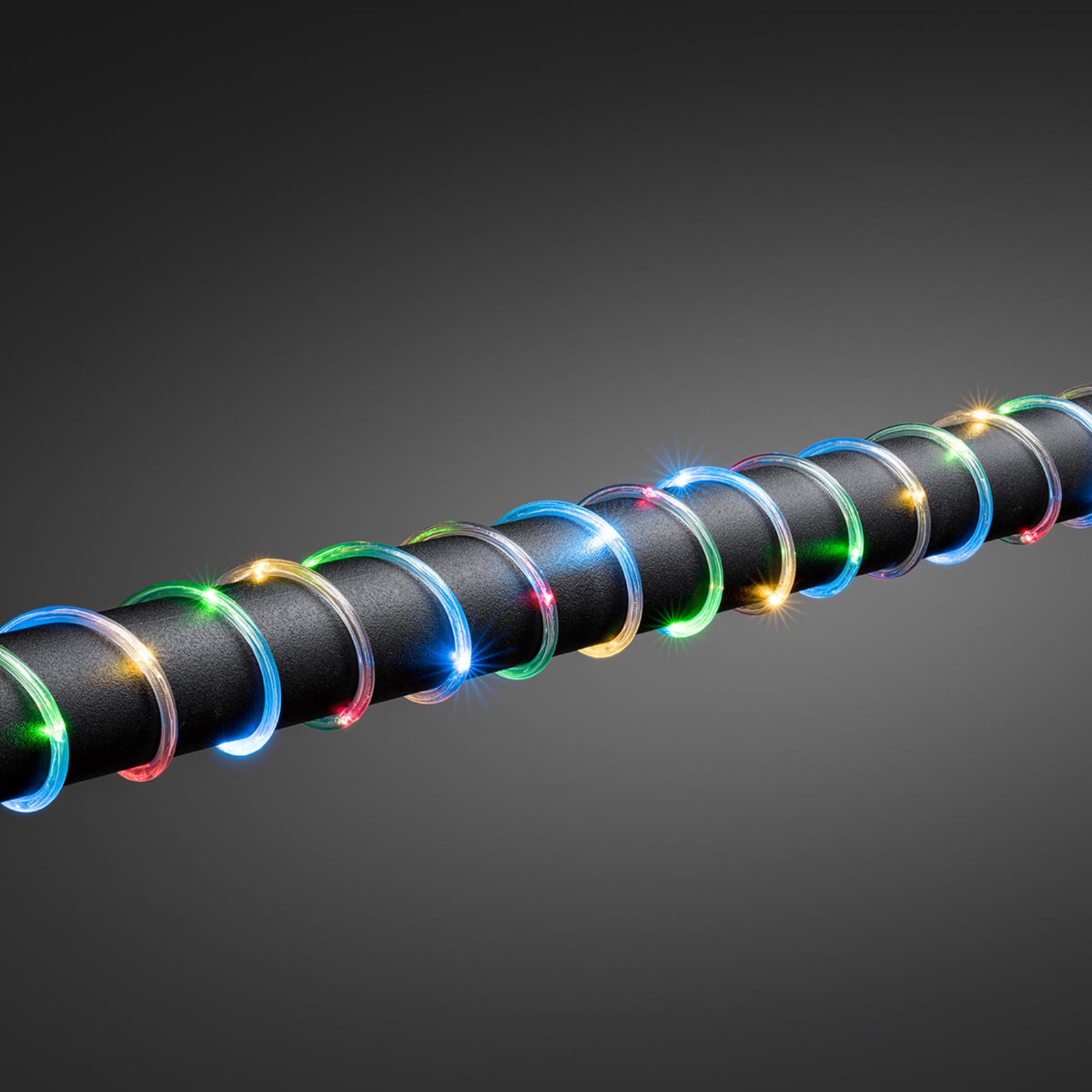
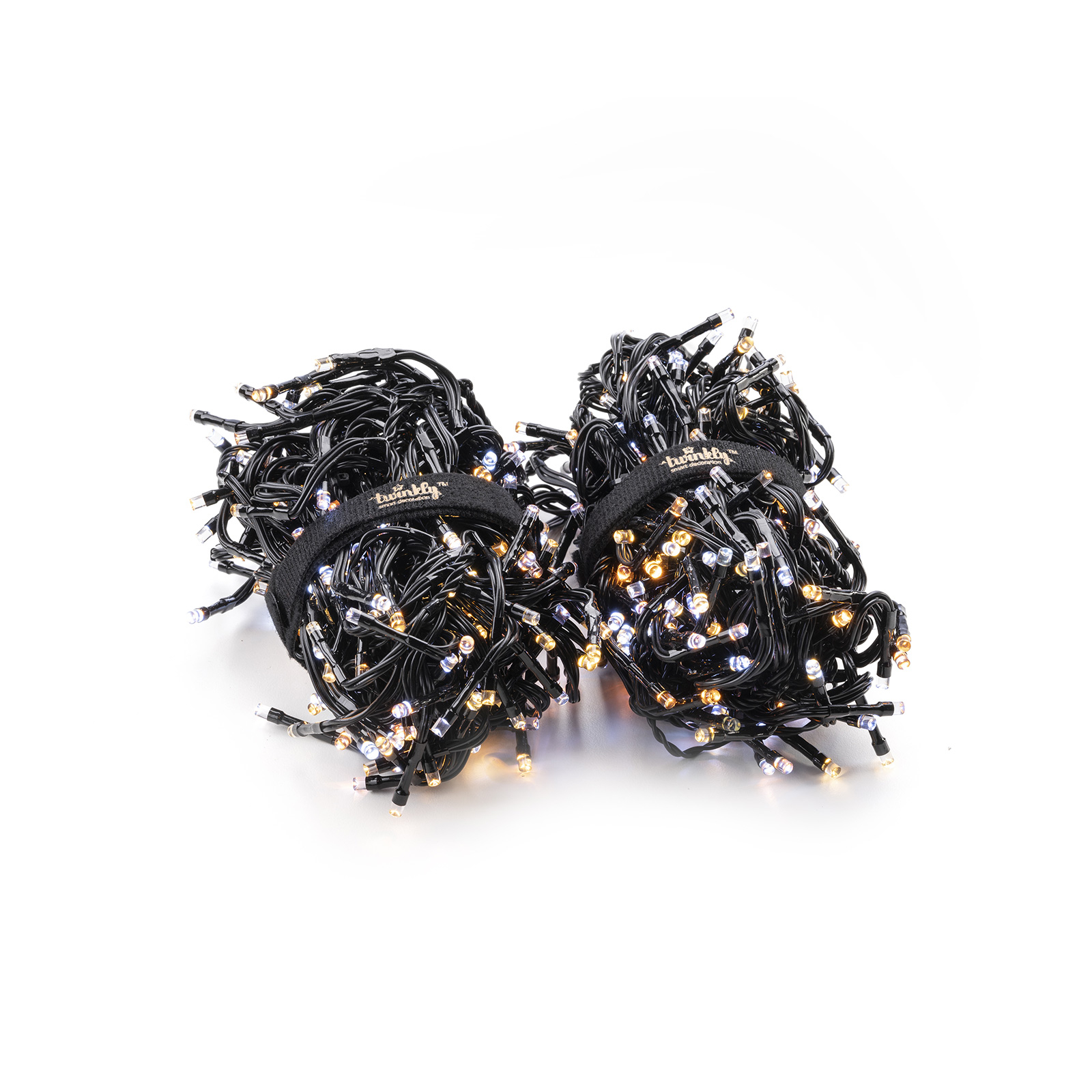
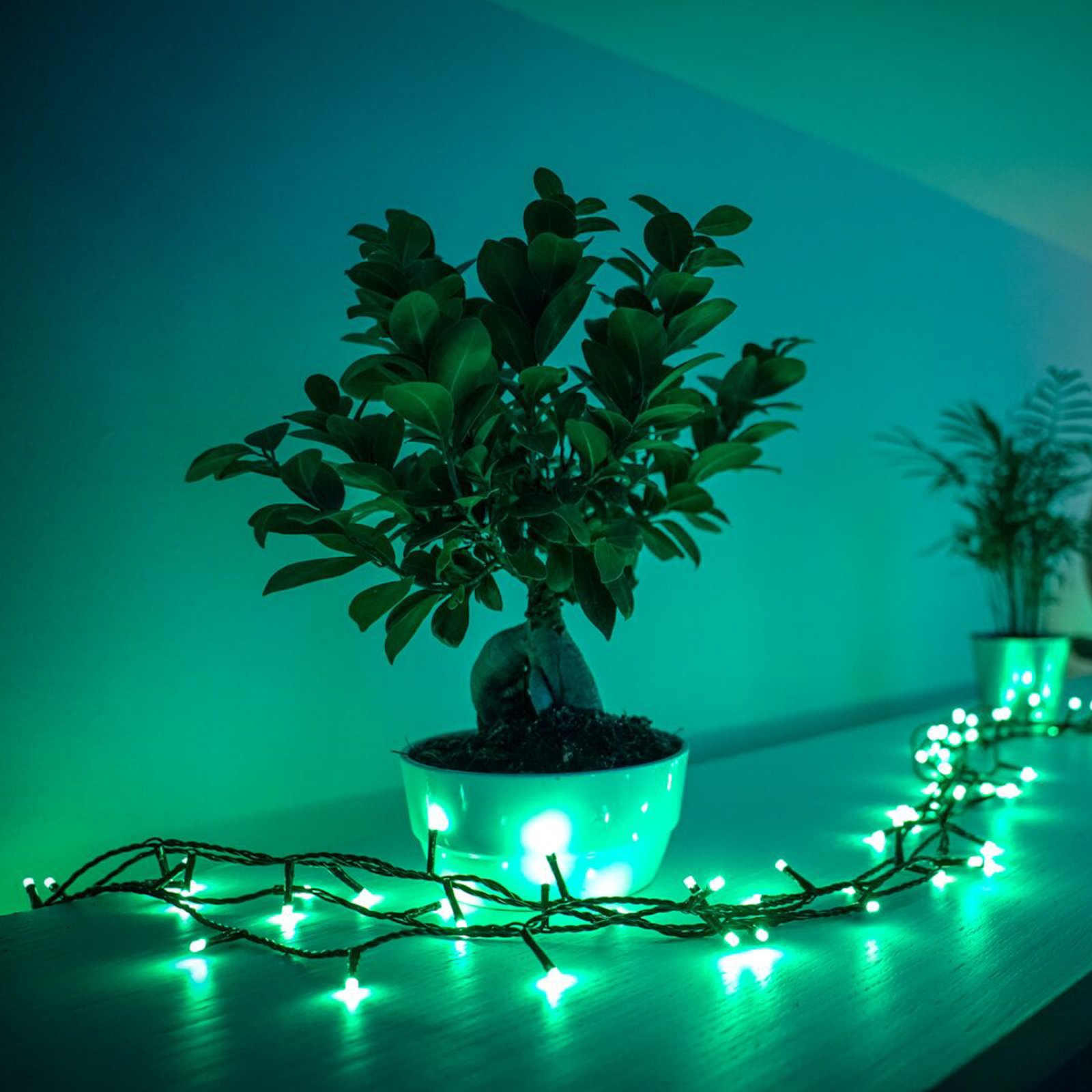
Warm white light appears more subdued and is ideal when several illuminated areas around the house and garden should visually belong together. Multicolored LEDs, on the other hand, create a significantly more lively effect. When different light colors are used simultaneously, stronger contrasts emerge between individual areas. For a larger Christmas display in the garden, a uniform light color can visually connect the various illuminated areas.
The density of the light points also changes perception. Closely spaced LEDs result in a more compact illuminated area, while larger distances make individual light points more visible. The distance and density of the LEDs are especially significant in an LED light chain on the Christmas tree, on a railing, or on a larger exterior surface. The light effect depends not only on the form of the lighting but also on the color, distance, and arrangement of the LEDs.
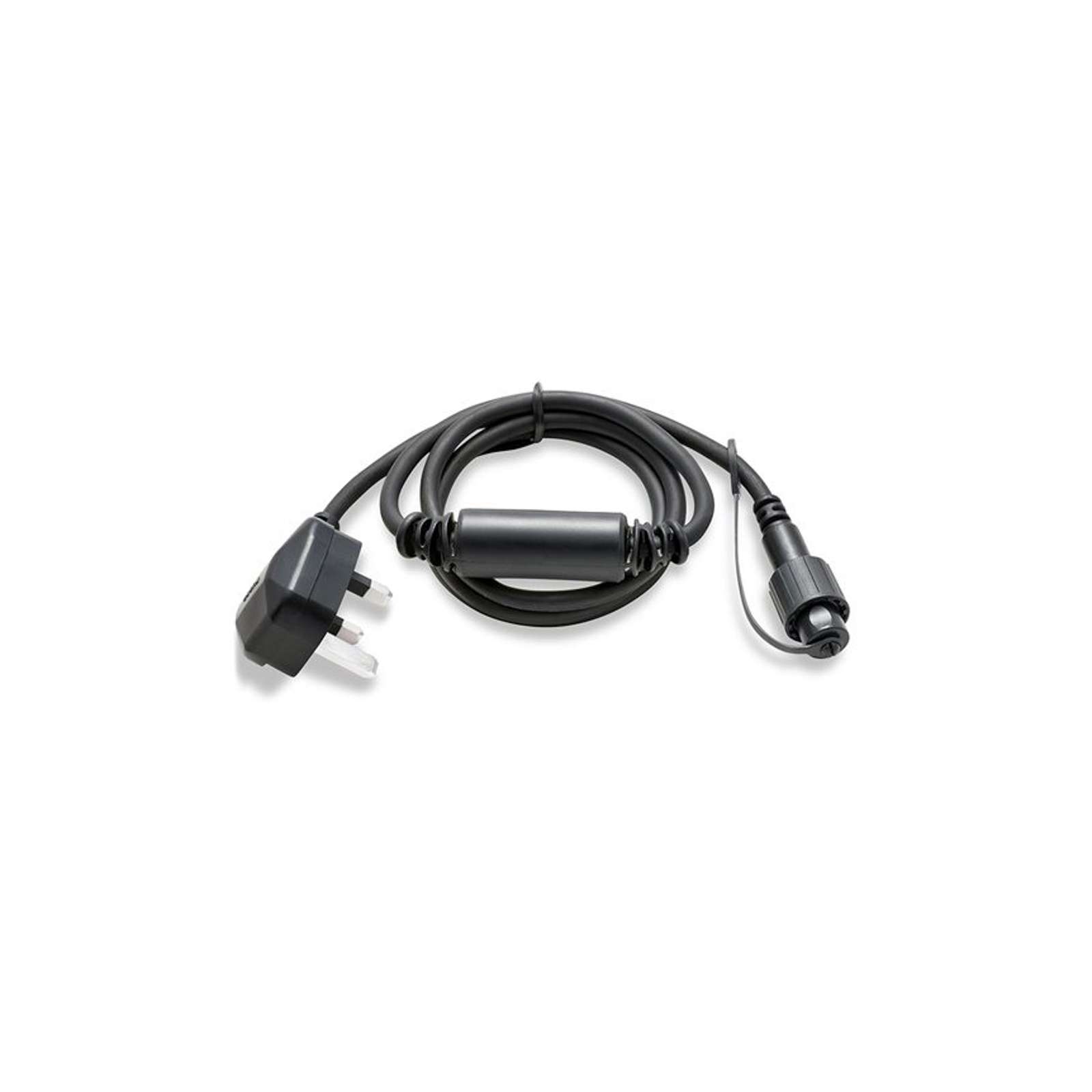
The power supply should suit the planned location. Mains-powered Christmas lighting is most suitable where an appropriate power outlet is within reach. An appropriate power outlet might be present on a terrace, at the house, or in already electrically equipped areas of the garden. For an outdoor Christmas tree lighting with a cable, the distance to the outlet also affects placement.
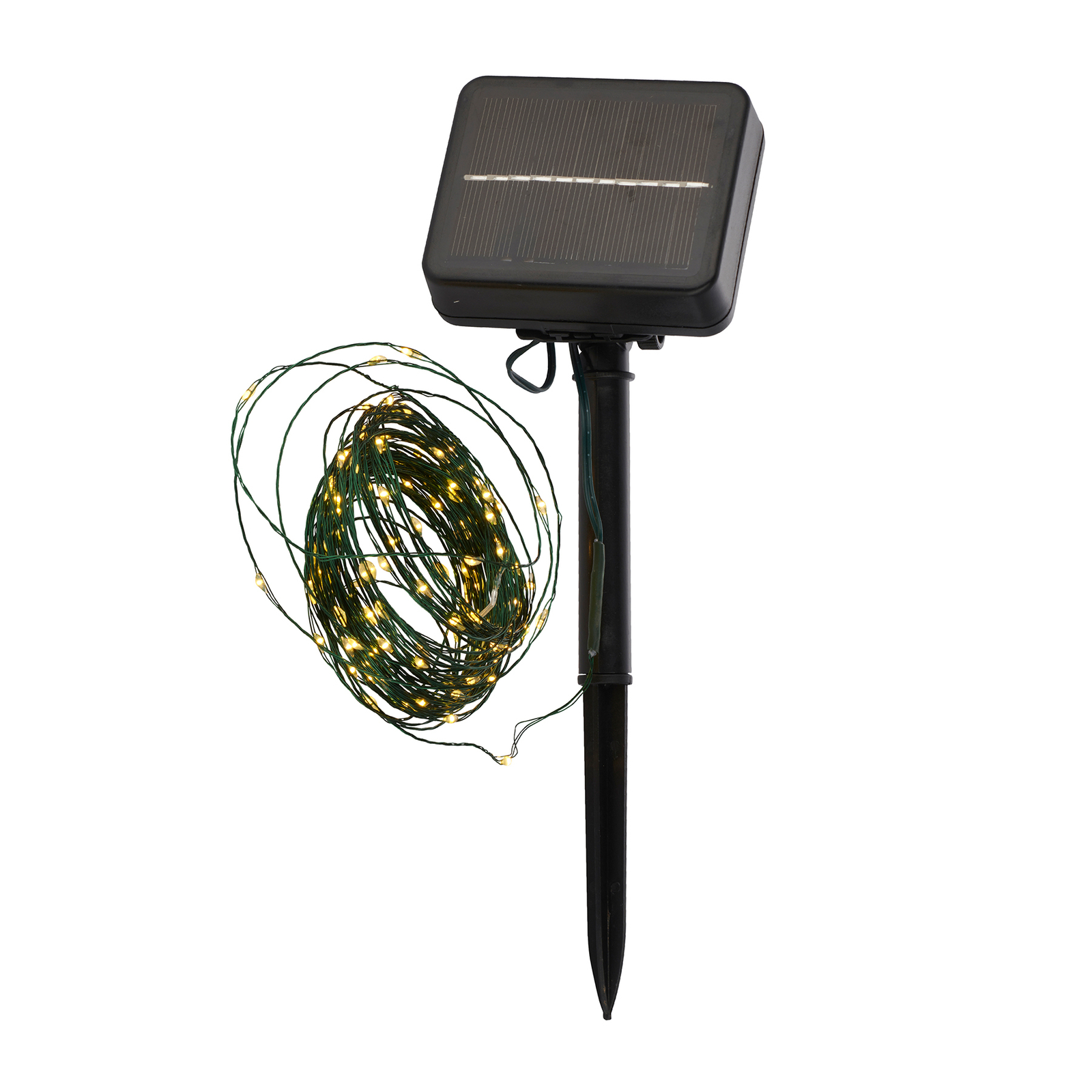
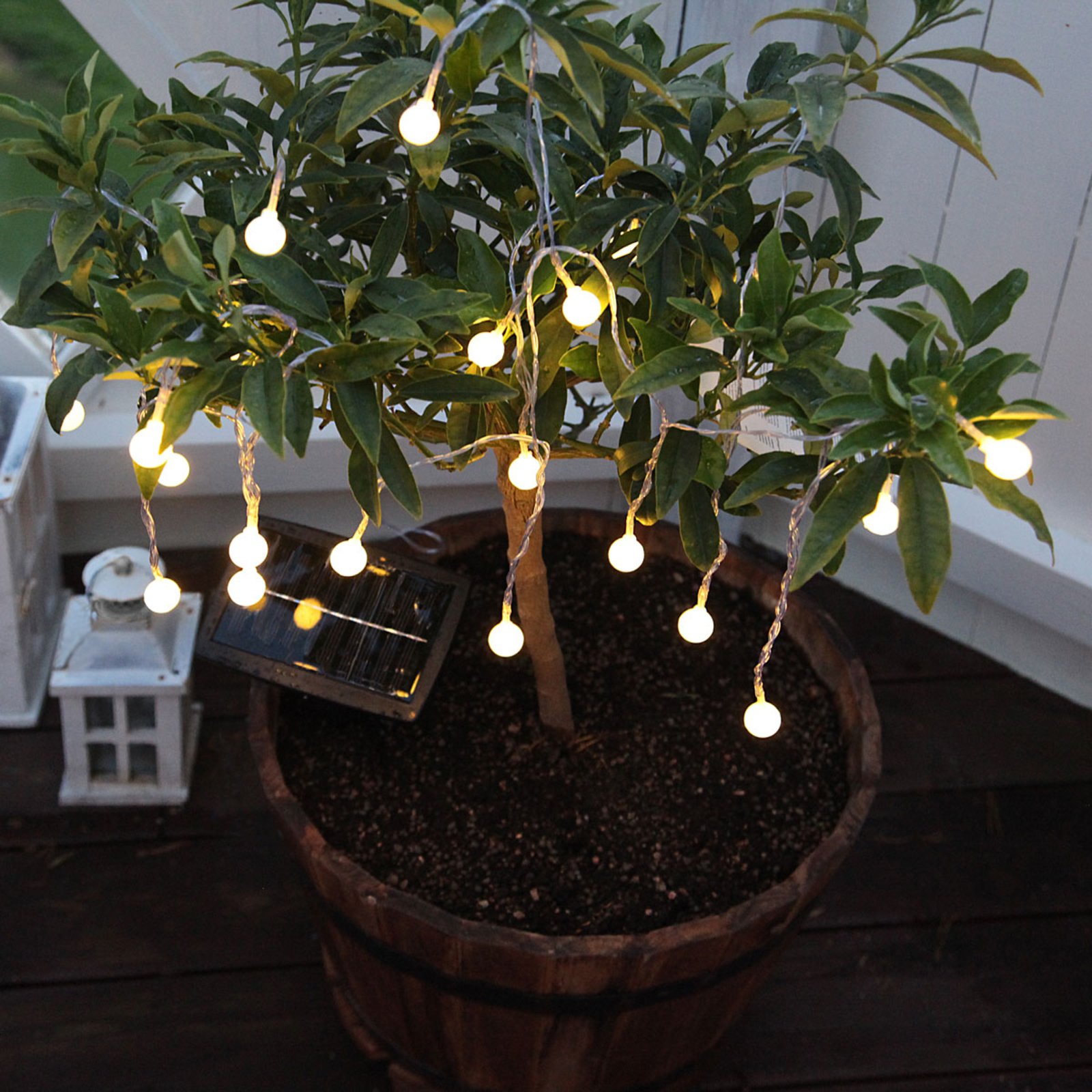
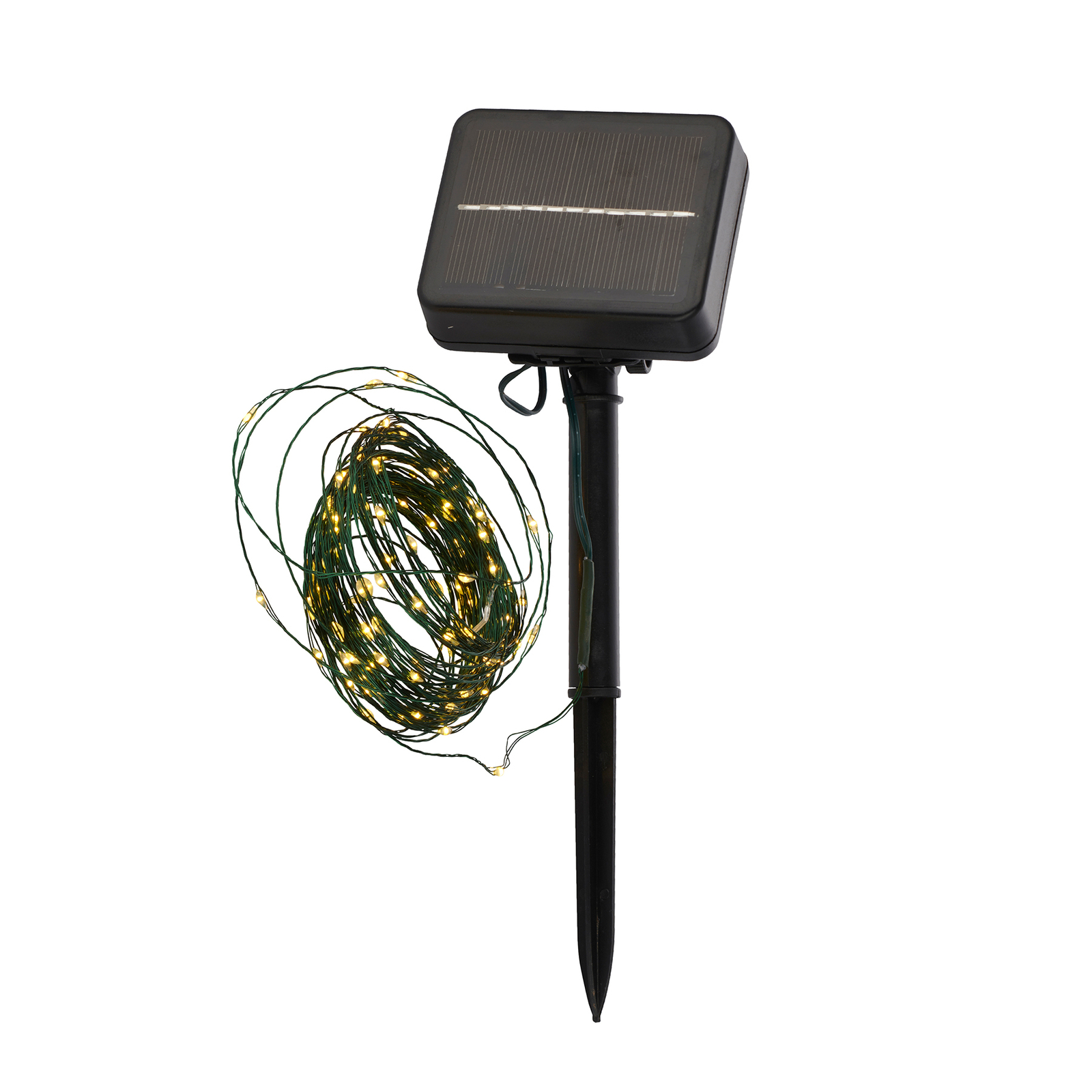
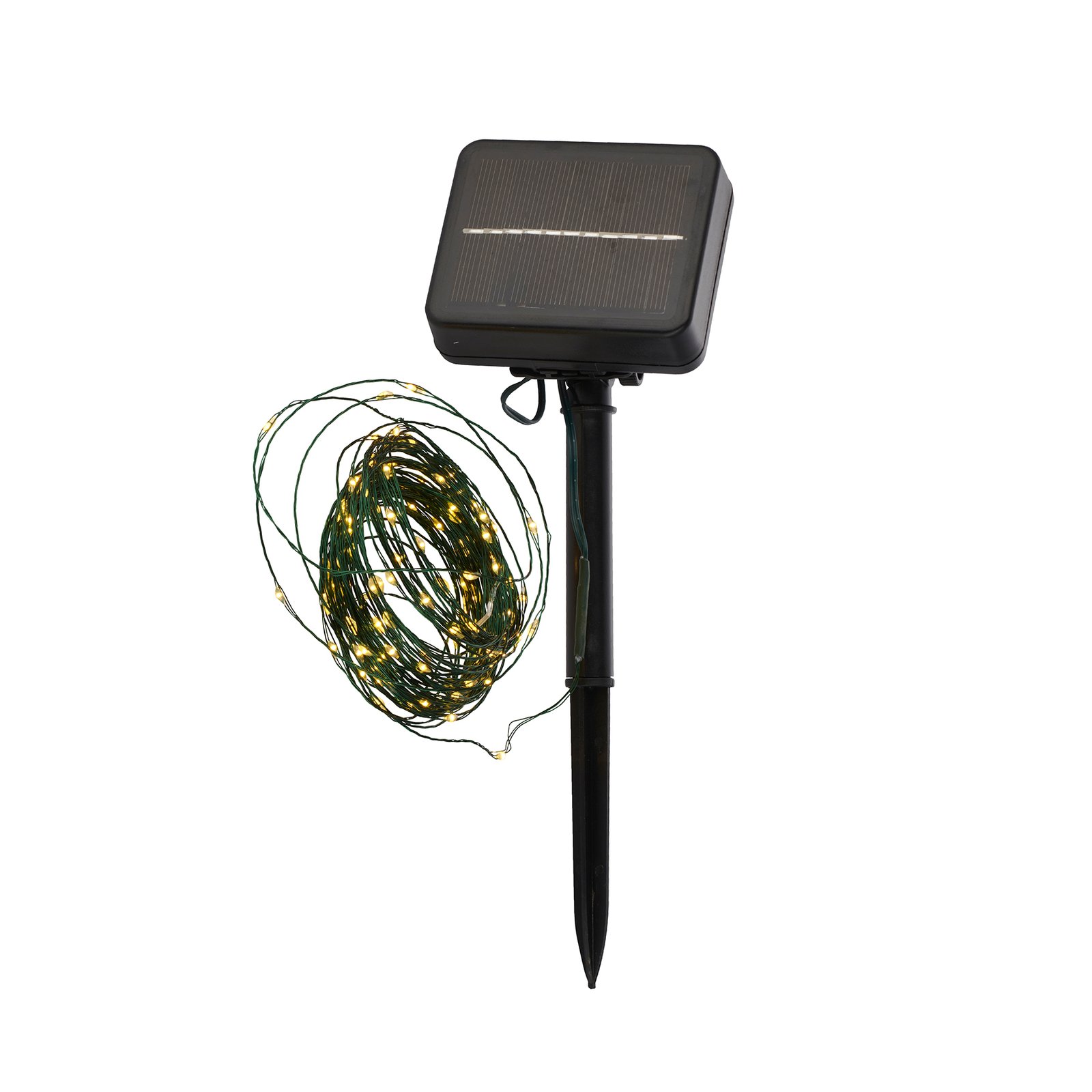
Solar-powered Christmas lighting for outdoors doesn't require a direct mains connection at the site. However, the solar module needs a location where it can receive enough daylight. Therefore, this variant is more suitable for open areas rather than permanently heavily shaded spots.
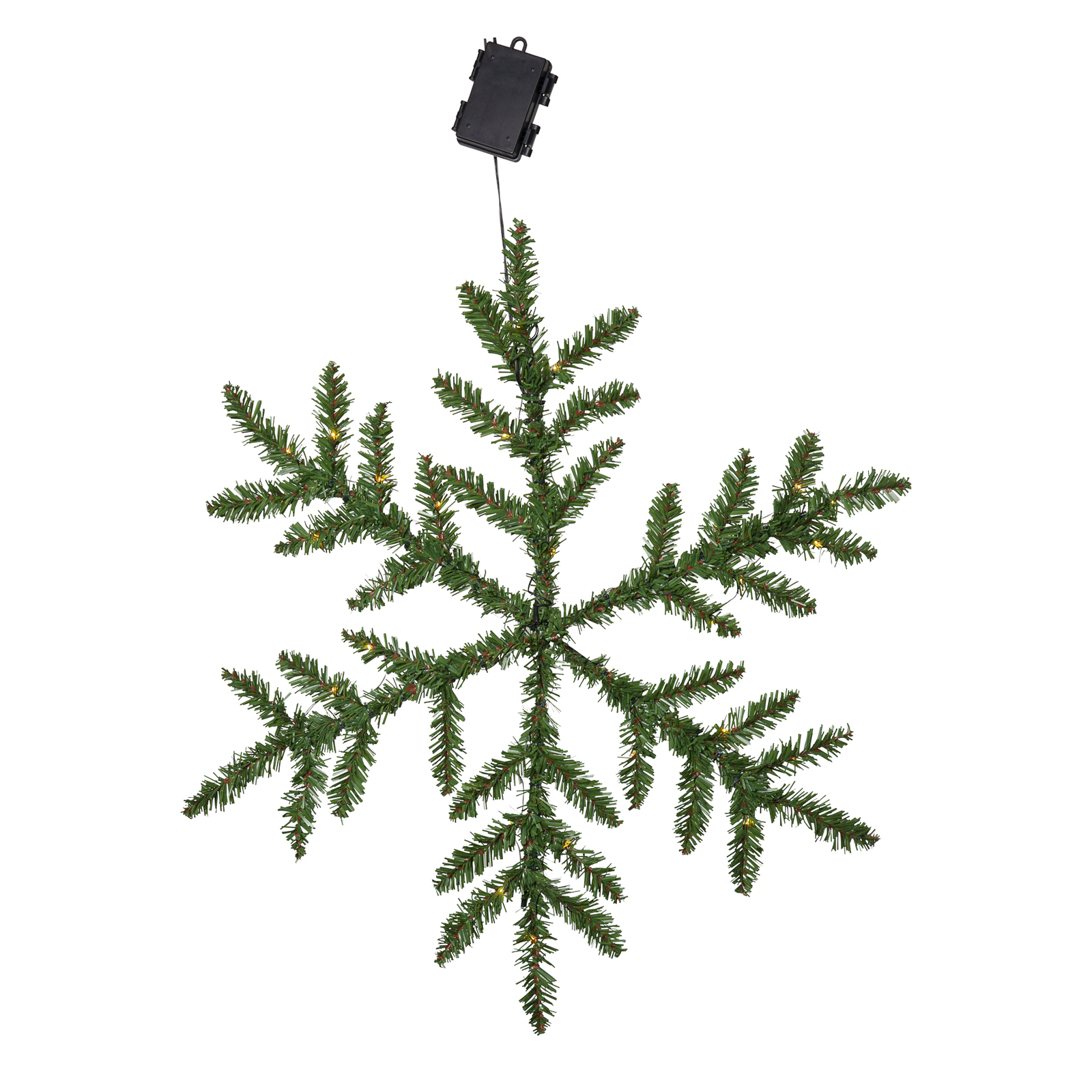
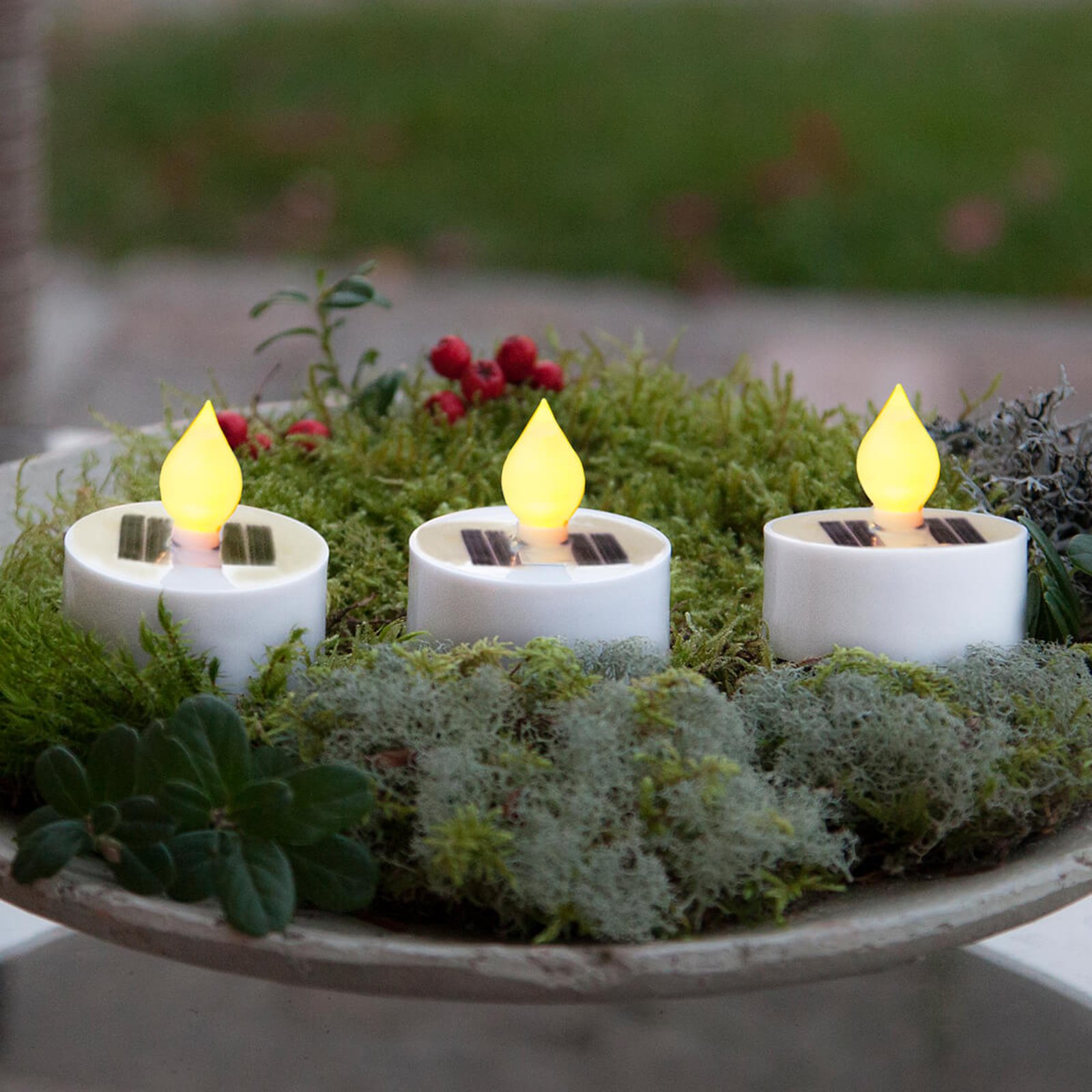
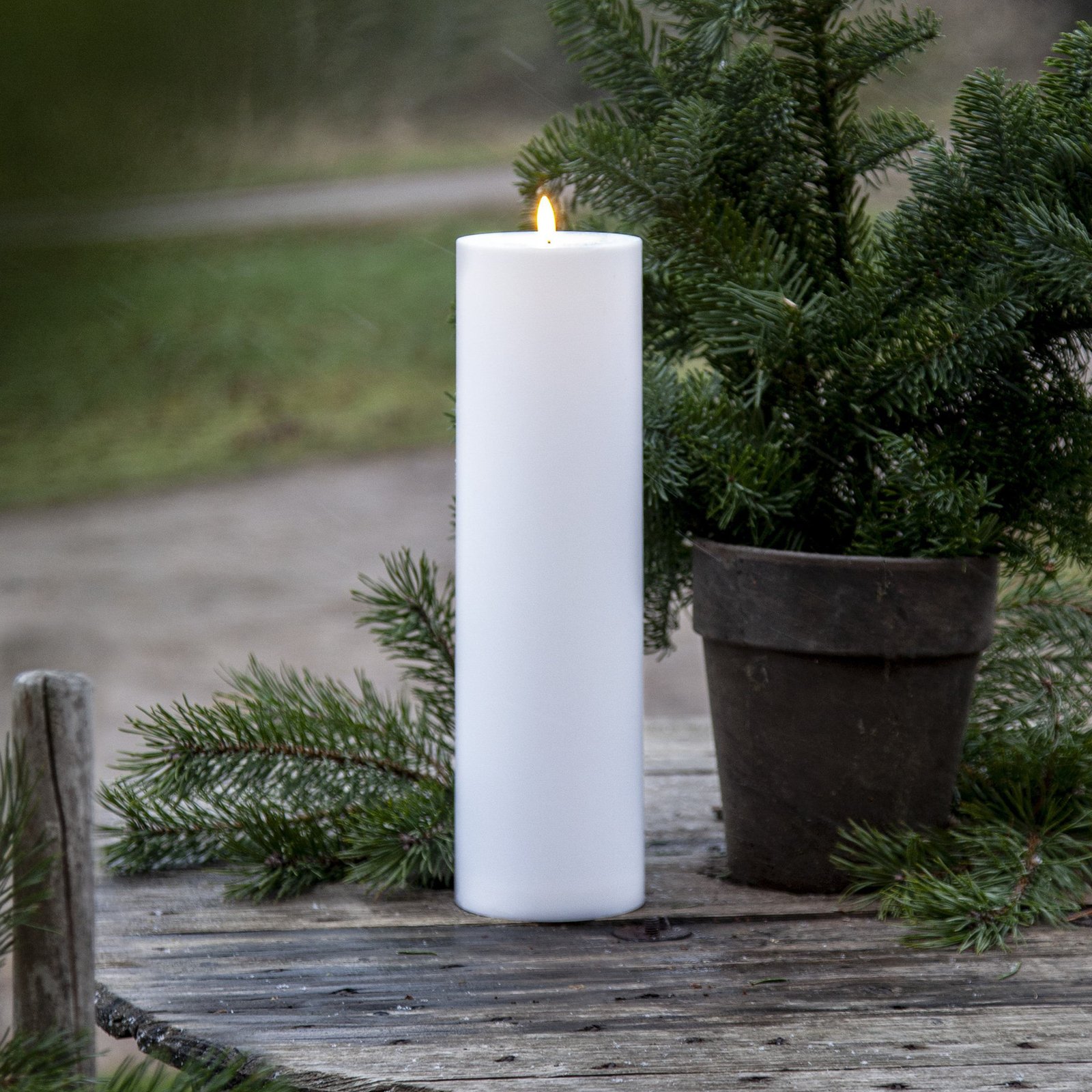
Wireless solutions with batteries or rechargeable batteries offer another option for sites without a nearby power outlet. Wireless Christmas lighting with batteries or rechargeable batteries is suitable for railings, entrance areas, or individual decorative elements. Mains power is suitable for locations with an accessible power outlet, solar for locations with enough daylight, and batteries or rechargeable batteries for areas without a power outlet nearby.
For outdoor lighting, the product must be explicitly suitable for the intended outdoor area. The appropriate IP protection rating depends on whether the Christmas lighting is mounted protected or may come into greater contact with weather and moisture. Christmas lighting meant only for indoor spaces should not be used in unprotected outdoor areas. For illuminated Christmas figures, too, the suitability for outdoor use is an essential selection criterion.
Before installation, it should also be clarified where cables run and how light chains, stars, or other elements can be fastened. Fastenings must not come loose easily due to wind or movement. Cables should be routed in such a way that they do not unnecessarily cross paths or frequently used areas.
Regular operation times can also be considered during selection. Models with timers can automatically handle regular switching on and off. Fastening and cable routing should be adjusted to the respective location and its use, whether at the balcony railing, along a garden path, or near the front door.
The strike-through prices correspond to the manufacturer's RRP.
Included in the price of LED lights/bulbs is a contribution to recycling costs of €0.05. Included in the price of CFLs/fluorescent bulbs is a contribution to recycling costs of €0.15.
All prices include 23% VAT, delivery costs excluded.