



































)
Living room lighting concept
A carefully planned living room lighting concept significantly influences mood, atmosphere and not least orientation in the room. A modern lighting concept uses various harmoniously coordinated light sources to ensure that different areas of the living room are optimally staged and the optimum light is available for every desired activity.
Many living rooms appear uncomfortable or inadequately lit because light sources, light colours or zones are not optimally coordinated. In this article you will find lighting tips for the living room as well as tips on mistakes that you can easily avoid.
The basics of a successful lighting concept
How light works in the living roomA harmonious living room lighting concept is based on three types of light, which together create pleasant, flexible and functional living room lighting. The right lighting for a living room is planned by sensibly combining basic light, zone light and Akzentlicht.
)
The ambient lighting provides uniform light in the room. Typical lights used for this purpose are ceiling lights or multi-bulb ceiling spotlights as well as recessed lights or LED panels. Uniform basic brightness prevents harsh shadows and enables pleasant orientation as well as the performance of various activities.
)
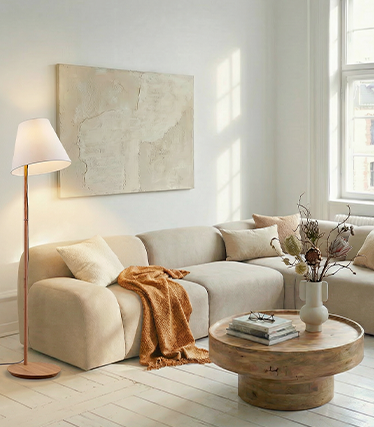
Areas of the living room such as the sofa, reading corner, dining table or a small workstation benefit from additional, directed light. Floor lamps or flexible reading lamps and wall lights with a separate reading arm are typical lighting ideas that illuminate individual zones and give the living room structure at the same time.
)
The accent lighting creates atmosphere and sets the scene for furniture, plants or pictures. Indirect lighting in the living room is often created with LED strips behind furniture or on the ceiling behind profiles. Wall lights with modelled light cones are also an atmospheric design for the living room. Indirect lighting has a particularly cosy effect and creates depth in the room.
Which lamps do I need for complete living room lighting?
For complete living room lighting, you need ceiling lights, floor lamps, table lamps and possibly wall or LED accent lamps. A good lighting concept in the living room includes different types of luminaires and should have at least three light sources to combine ambient, accent and mood lighting.
)
Ceiling lights
A ceiling light that provides glare-free light is suitable above the sofa or in the centre of the room.
)
Floor lamps
A reading corner is ideally lit with a floor lamp. It also structures the room in an appealing way.
)
Pendant lights
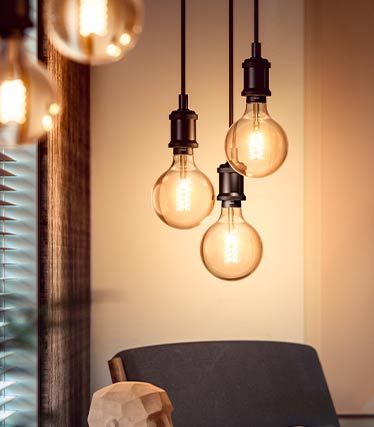
Pendant lights above the coffee table or hanging freely in the room are ideal for an open-plan living area.
)
Table lamps
Small living rooms appear larger and more inviting with additional light sources such as table lamps on sideboards.
)
Wall lights
Dark corners in the living room are optimally illuminated with a wall light that casts indirect light onto the wall.
)
LED strips
LED strips are used behind furniture to create atmospheric accent lighting, adding depth and atmosphere to the room.
Choosing the right colour temperature and brightness
An important part of lighting design in the living room is choosing the right light colour, also known as colour temperature. It is measured in Kelvin, and it is important to ensure that the light colour suits the use of the room in question. Basically, it can be said that a warm white light colour of 2,700 to 3,300 Kelvin is most pleasant for the living room.
)
Warm white light (2,700-3,300 K) has a cosy and pleasant effect and is ideal for relaxing. Warm white is the best choice for the living room.
)
Universal white light (3,300-5,300 K) appears more functional and is ideal for working. Light sources that can change colour temperature are highly recommended.
)
Daylight white light (from 5,300 K) has a very sobering but also activating effect, which is why it is sometimes used for a more energising start to the day.
How many lumens per square metre do I need in the living room? In the living room, you need around 100-150 lumens per square metre as a guide for basic lighting. A living room of 25 m² therefore needs around 2,500-3,750 lumens as a basis. This is extended at appropriate points by zone and Akzentlicht.
The perfect way to set the scene in the living room
Ideas & inspirationThe living room is divided into light zones by using separate light sources for the sofa, dining table, reading corner and passageways. In this way, all areas are optimally illuminated and the living room becomes a living space in which any desired activity can be carried out effortlessly and comfortably.
)
The right lighting is crucial for cosy hours on the sofa or in the reading corner: a modern floor lamp, ideally dimmable, provides pleasant, zoned light. Wall lights also create a soft atmosphere. Reading lamps with a flexibly adjustable head are particularly practical, directing the light exactly where it is needed. In addition, table lamps on sideboards or small shelves can provide additional points of light that not only provide brightness, but also set decorative accents and harmoniously round off the overall look.
)
Gentle lighting is particularly important in the TV area to relieve the eyes and avoid glare. Indirect LED strips behind the TV or soft indirect wall lighting create a pleasant background brightness that makes the viewing experience more comfortable. Small spots or lamps that are specifically positioned provide additional subtle lighting accents. Warm white light with 2,700-3,300 Kelvin or a dynamic colour change are ideal for watching TV as they create a relaxed atmosphere.
)
Pendant lights or multiple pendant lights are particularly effective above the dining table or coffee table, as they provide targeted light on the surface and also act as a decorative element. Cluster lamps set modern design accents and offer the possibility of combining interesting shapes and materials. These lamp ideas can be implemented in almost any interior style, making them both functional and style-defining and giving the living room an inviting, individual touch.
)
)
Indirect light for atmosphere & design
You can plan different lighting moods in the living room with flexible, indirect lighting as well as dimmable lights, RGB LEDs or modern smart home solutions. Indirect lighting in the living room is one of the best ways to create an individualised ambience. She can:
- Making rooms look more atmospheric
- Visually enlarge walls and ceiling
- Create decorative highlights
How can I control multiple light sources via dimmers or smart home systems? Dimmers or smart home systems can be used to adjust the living room lighting to suit the mood. The first step towards a smart lighting concept in the living room is to replace bulbs in existing lights. If you're really into technology, you can also equip your living room with smart lights with permanently installed LED technology and functions ranging from RGBW colour change to voice control.
Avoid common mistakes
These faults often occur with lighting in the living room:
Too few light sources make the room appear gloomy and unevenly lit. If the living room seems too dark, add additional floor, table or wall lights. When planning the lighting, you should avoid using just one central ceiling light. In addition, dark walls and furniture absorb light - here you can go well beyond the recommended number of lumens.
If the living room looks uncomfortable and cold, this is usually due to the light colour of the individual light sources being too cold. You can create a cosy living room with warm white lamps. The quickest way to create more cosiness is to replace old bulbs with LEDs with a warm white colour temperature.
Glare in the living room is often caused by the incorrect positioning of light sources, for example spots that are aimed at the sofa and cause glare when lying down. A pendant light hanging too low can also be the reason. In addition, reflective surfaces such as picture frames may reflect the light and thus cause glare. Too bright light is best corrected by repositioning or using anti-glare lampshades.
Conclusion & inspiration
A harmonious lighting concept for living room lighting creates the ideal mix of function, atmosphere and design. The interplay of direct and indirect light sources creates a lighting concept for the various areas of the living room that is flexible, pleasant and stylish.
Good planning ensures that the lighting in the living room matches the mood at all times. Here are a few practical tips for implementation:
- Create a zone plan for the living room
- Divide the lighting in the living room into direct and indirect light sources. Direct lighting emits light specifically onto a surface, while indirect lighting reflects the light over walls or ceilings
- Use smart solutions such as dimmers or app control
- Select the lights so that they can be flexibly adapted, for example multi-bulb spotlights
 "Retrofit smart home")
 "Minimalist Lamps & Lights")
 "What is Lumen?")
 "Indirect lighting")
 "Feng Shui rules")
 "Lamps with plugs")