

































)
Ideas for patio lighting
Get inspiration for your outdoor living roomThe patio is more than just part of the outdoor area: it is your outdoor living room. With the right lighting, you can transform this space into an atmospheric oasis of well-being for relaxing, eating and socialising. Whether an open terrace, sheltered seating area or a terrace with a wooden or glass roof: well thought-out lighting creates atmosphere, orientation and safety for all individual facets at the same time. Let yourself be inspired by how you can use light in a targeted way to make your patio functional and cosy at the same time.
Top sellers for the outdoor living room
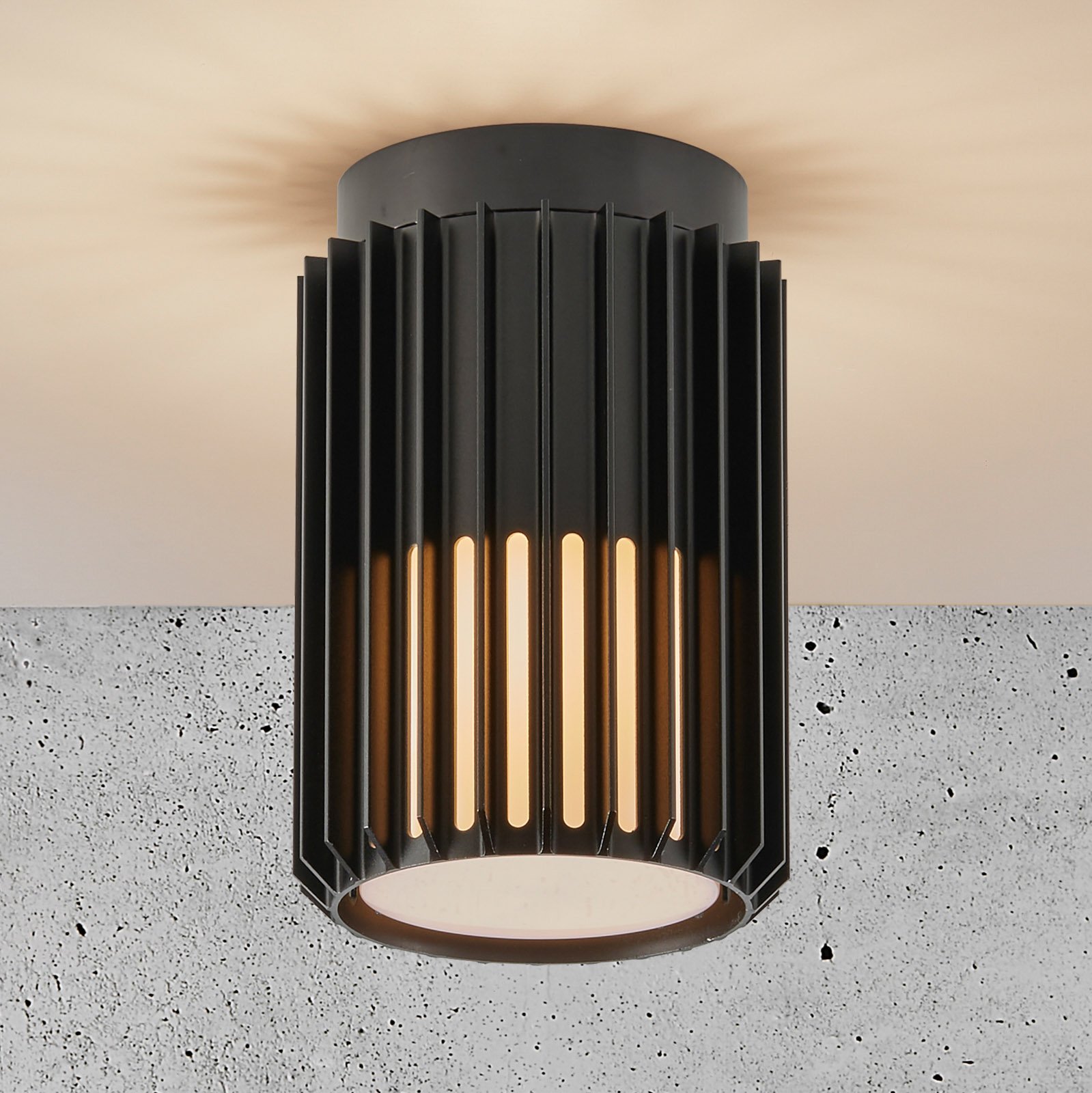
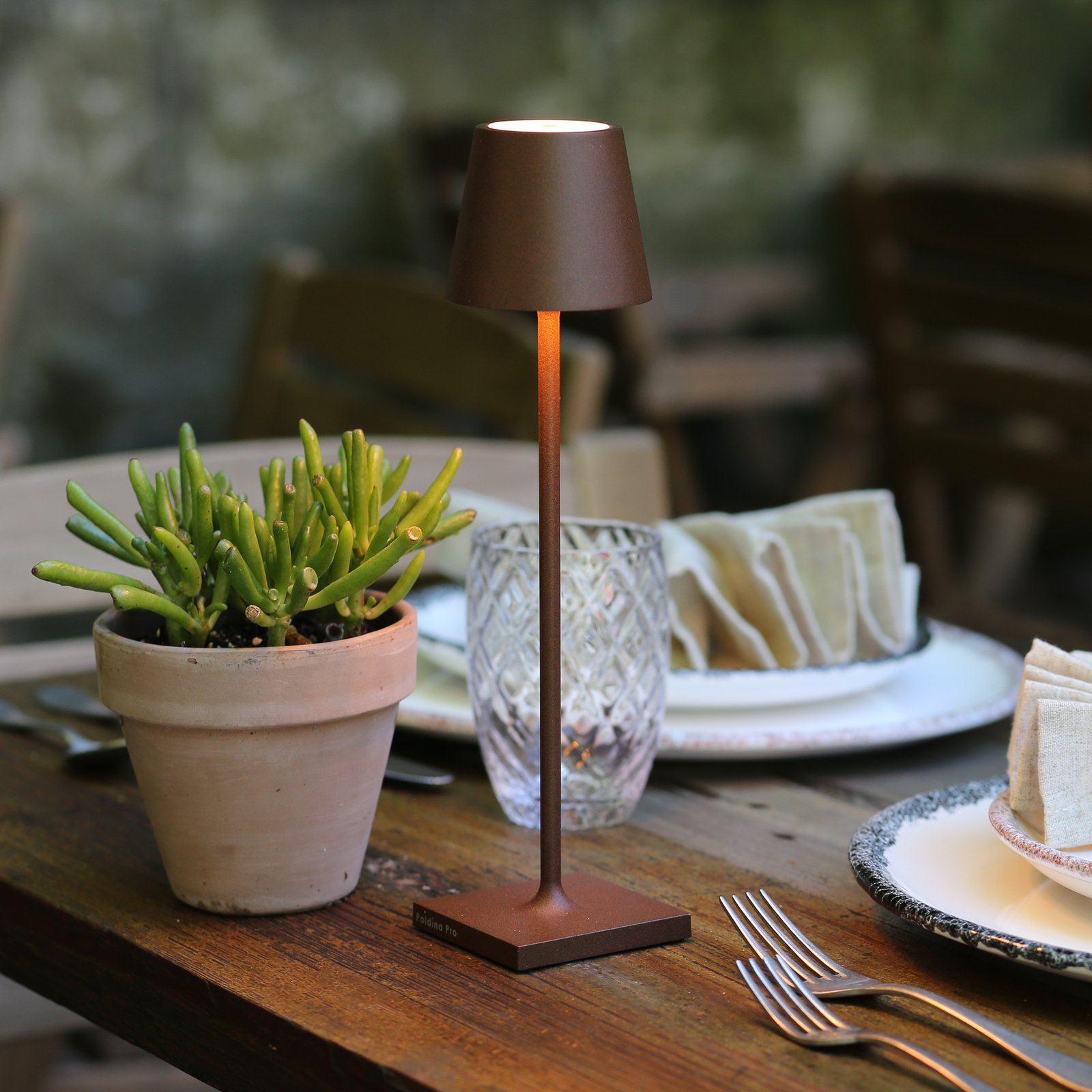
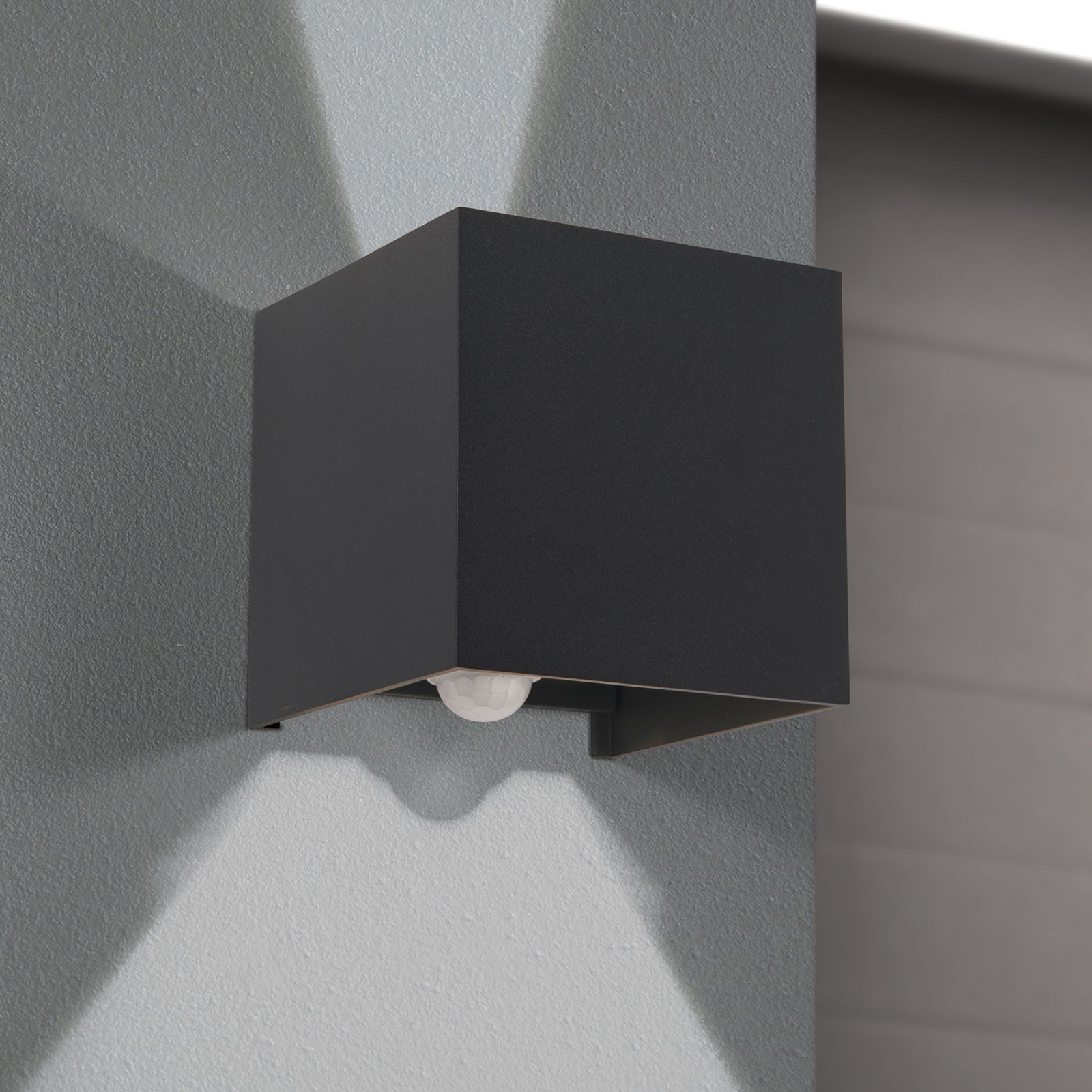
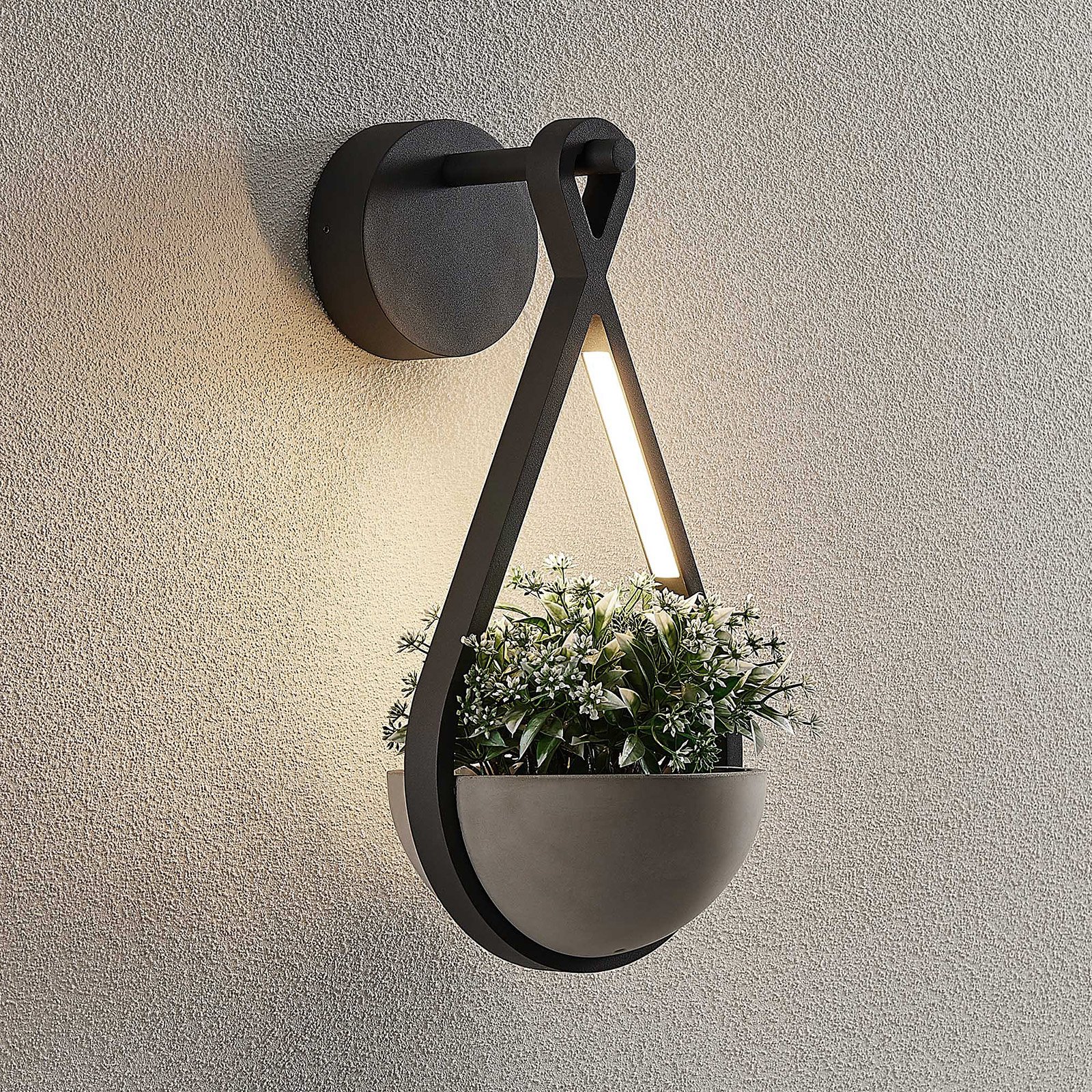
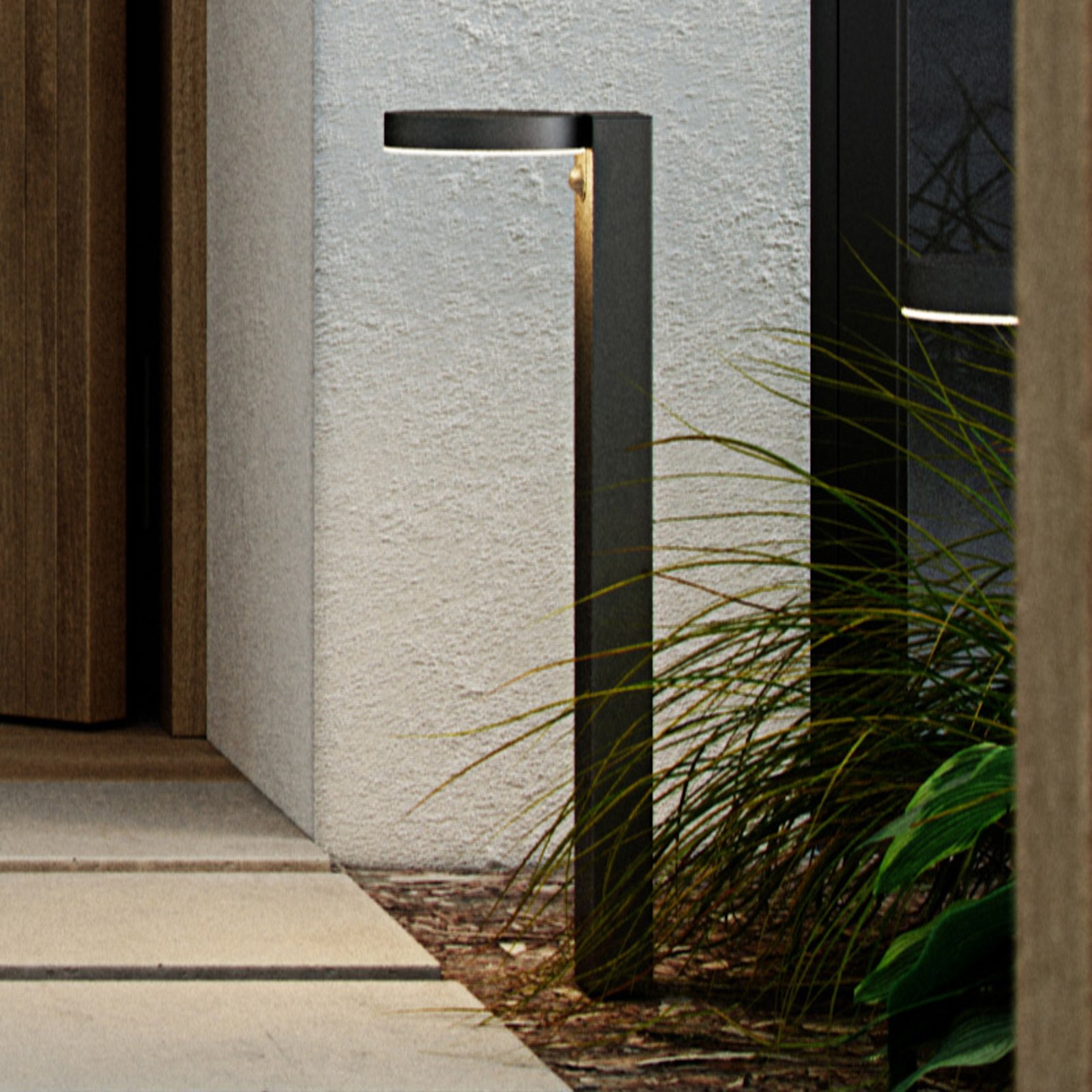
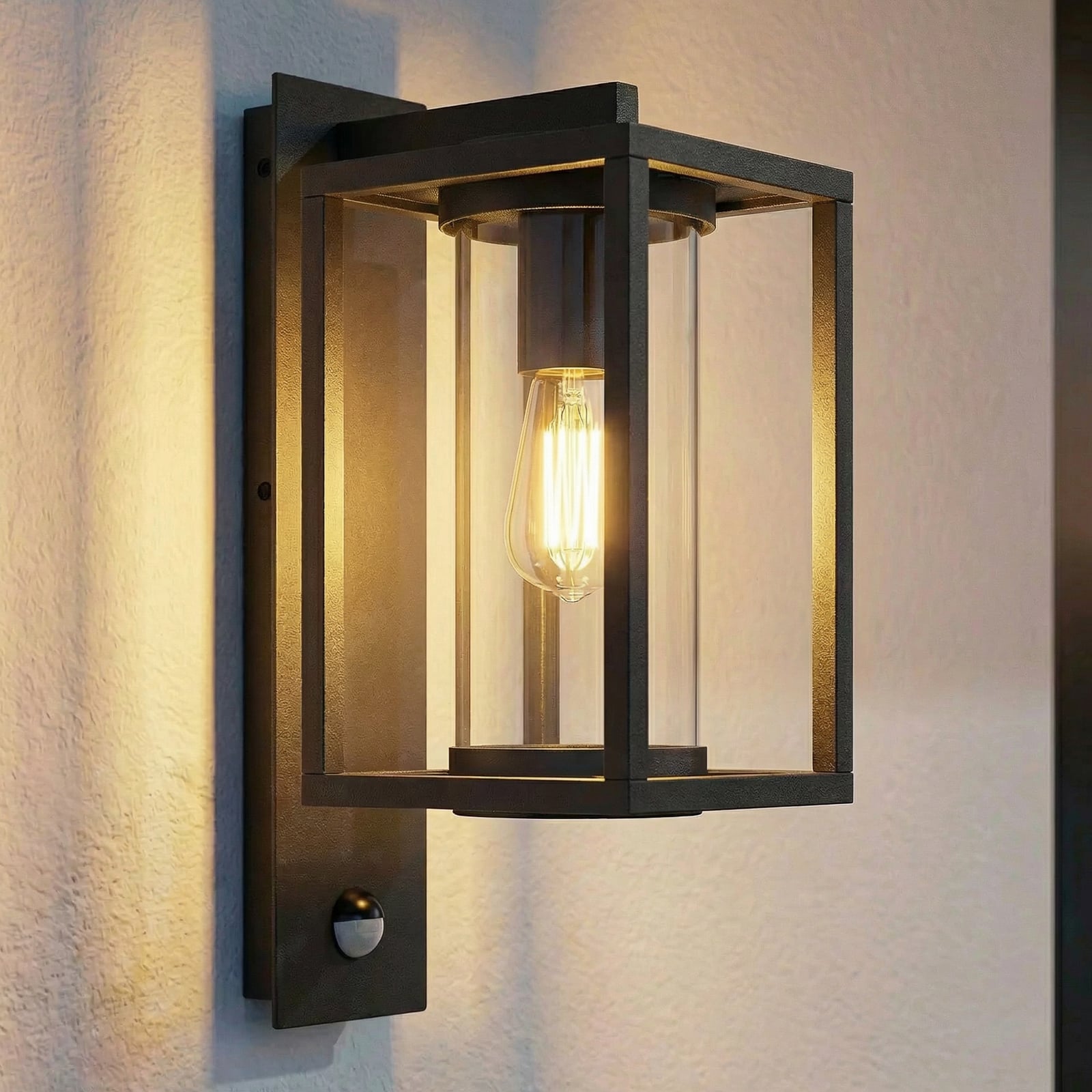
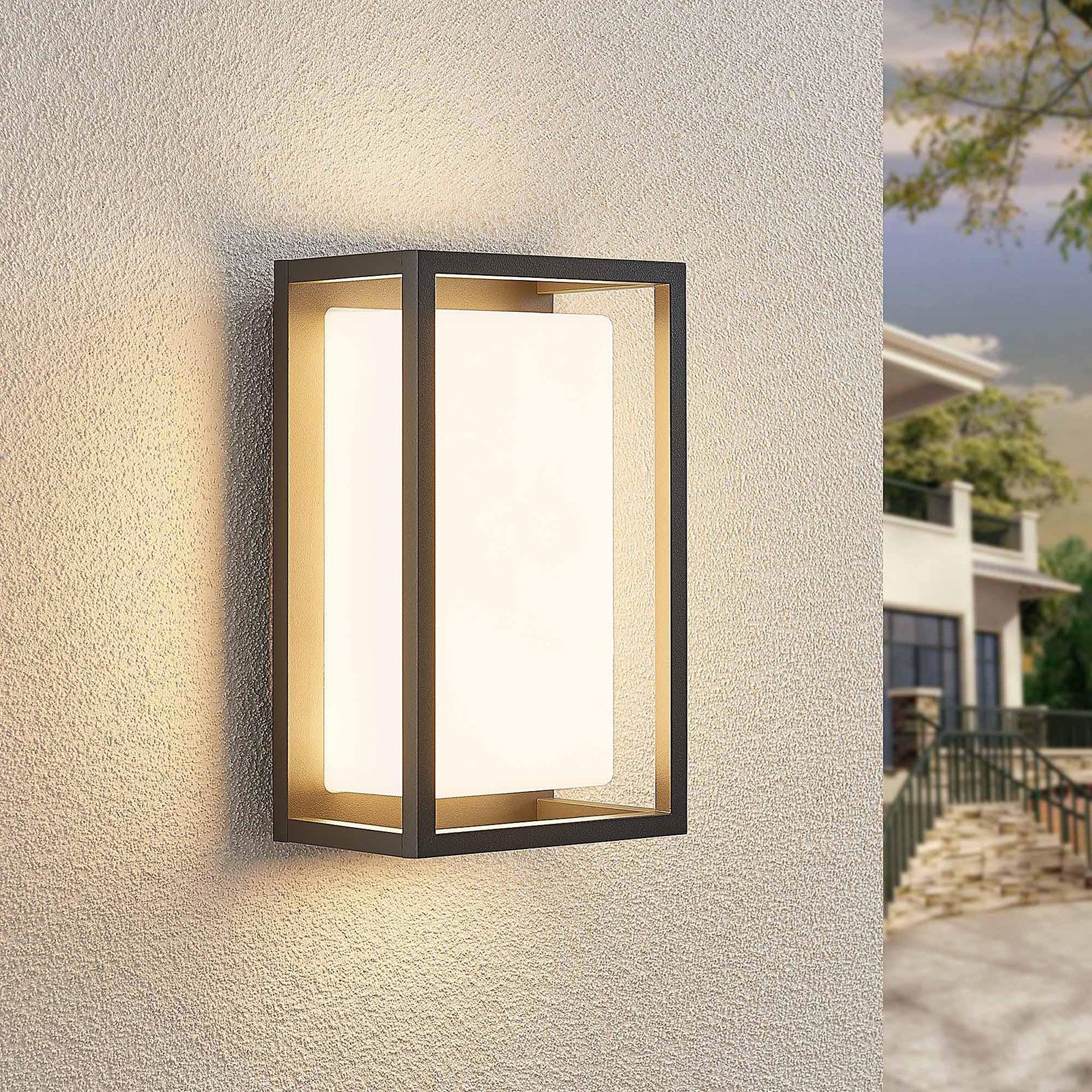
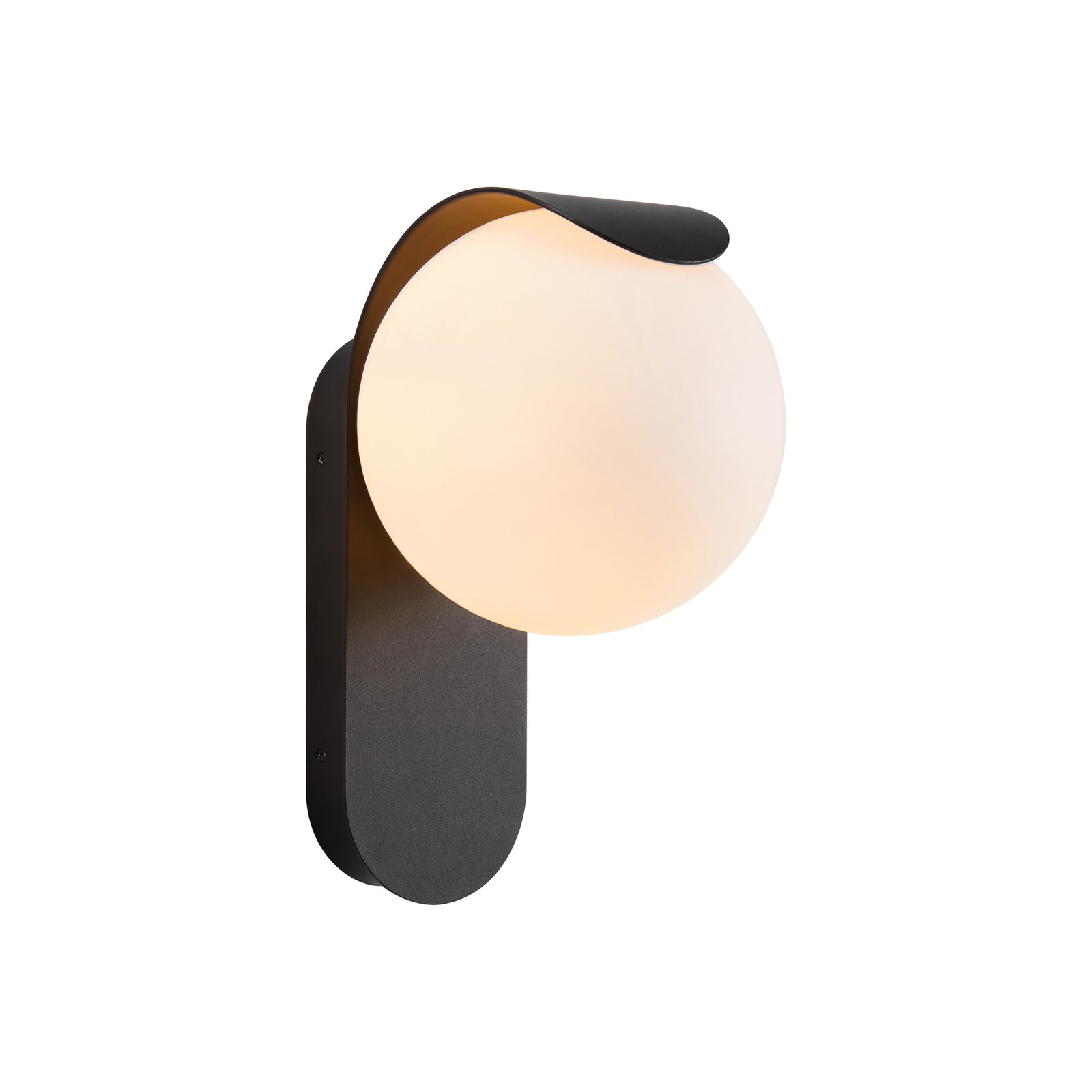
The latest lighting ideas for the patio
)
It is only when the terrace is lit up that it reveals its full potential. During the day, the sun provides light, whilst in the evening, the lighting takes on the role of setting the scene. This creates cosy spaces and retreats that invite you to relax.
)
Well-designed patio lighting combines practicality with an emotional impact. It provides guidance in the dark, ensures safety on the paths and steps leading to the terrace, and at the same time creates a pleasant atmosphere for long summer evenings.
)
Warm white light creates a cosy atmosphere, indirect lighting fosters a sense of calm, whilst targeted lighting accents visually highlight materials, plants and architectural details. Furniture, décor and lighting come together to create a pleasant setting that truly deserves to be called an outdoor oasis.
The basics of patio lighting
What you should knowWith good lighting design for the patio, you can prevent glare or dark corners. Uneven, harsh shadows are also a thing of the past if you take a structured approach to the lighting concept for your outdoor living room.
Think patio lighting in zones
A patio looks particularly inviting when it is divided into functional light zones: This division helps to utilise light in a targeted manner and visually structure the patio.
)
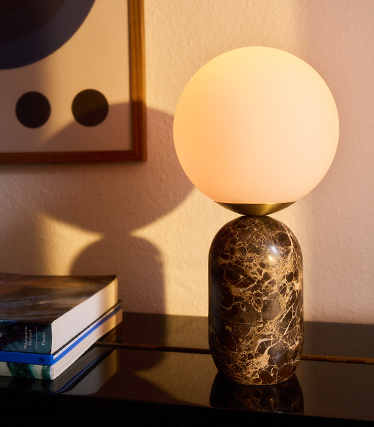
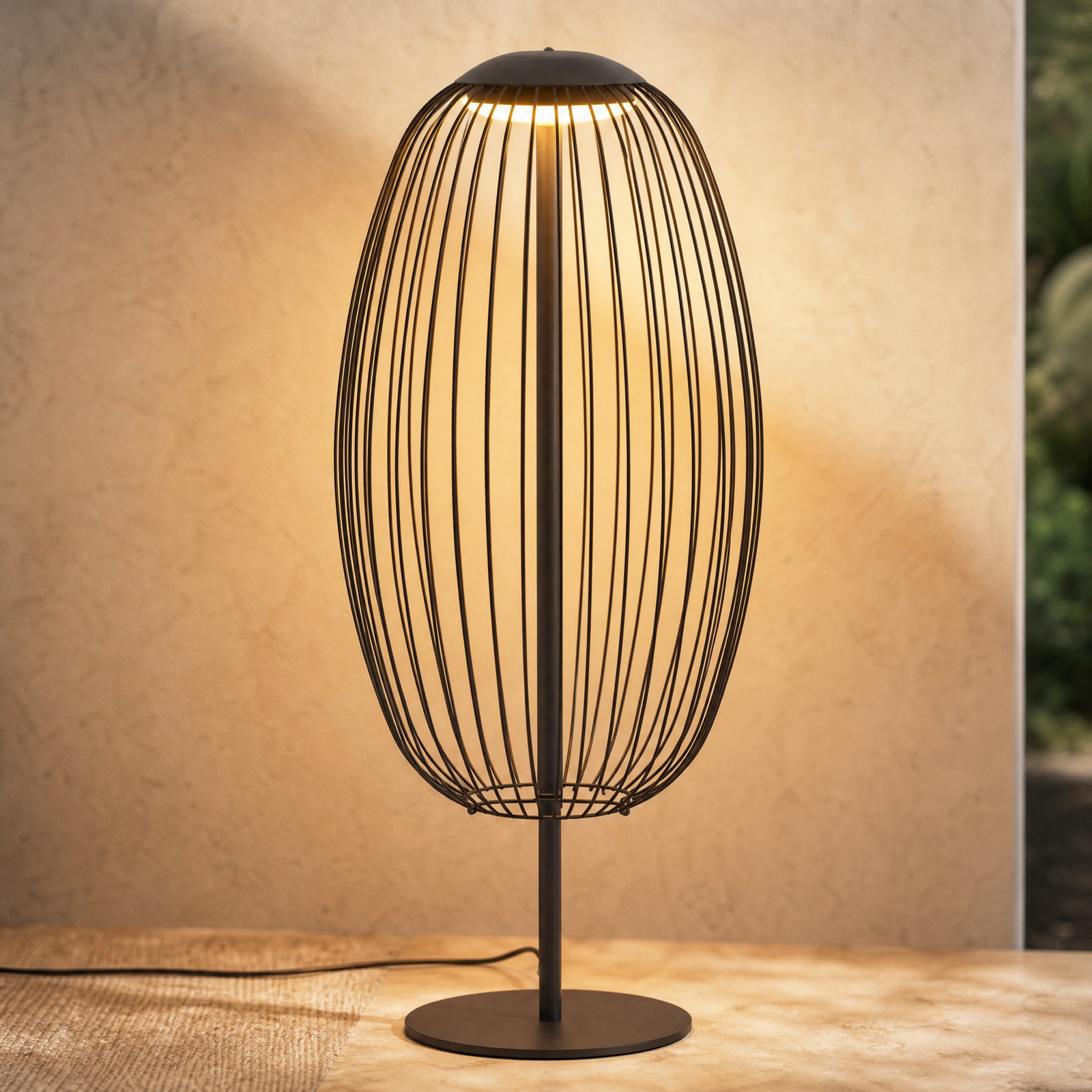
A seating area or lounge furniture can be set off particularly well if they are softly and indirectly lit all round. Rechargeable table lamps on tables and order tables are a trendy, design must-have. If you have a covered terrace, you can also create a cosy dining room atmosphere with pendant lights above the table.
)
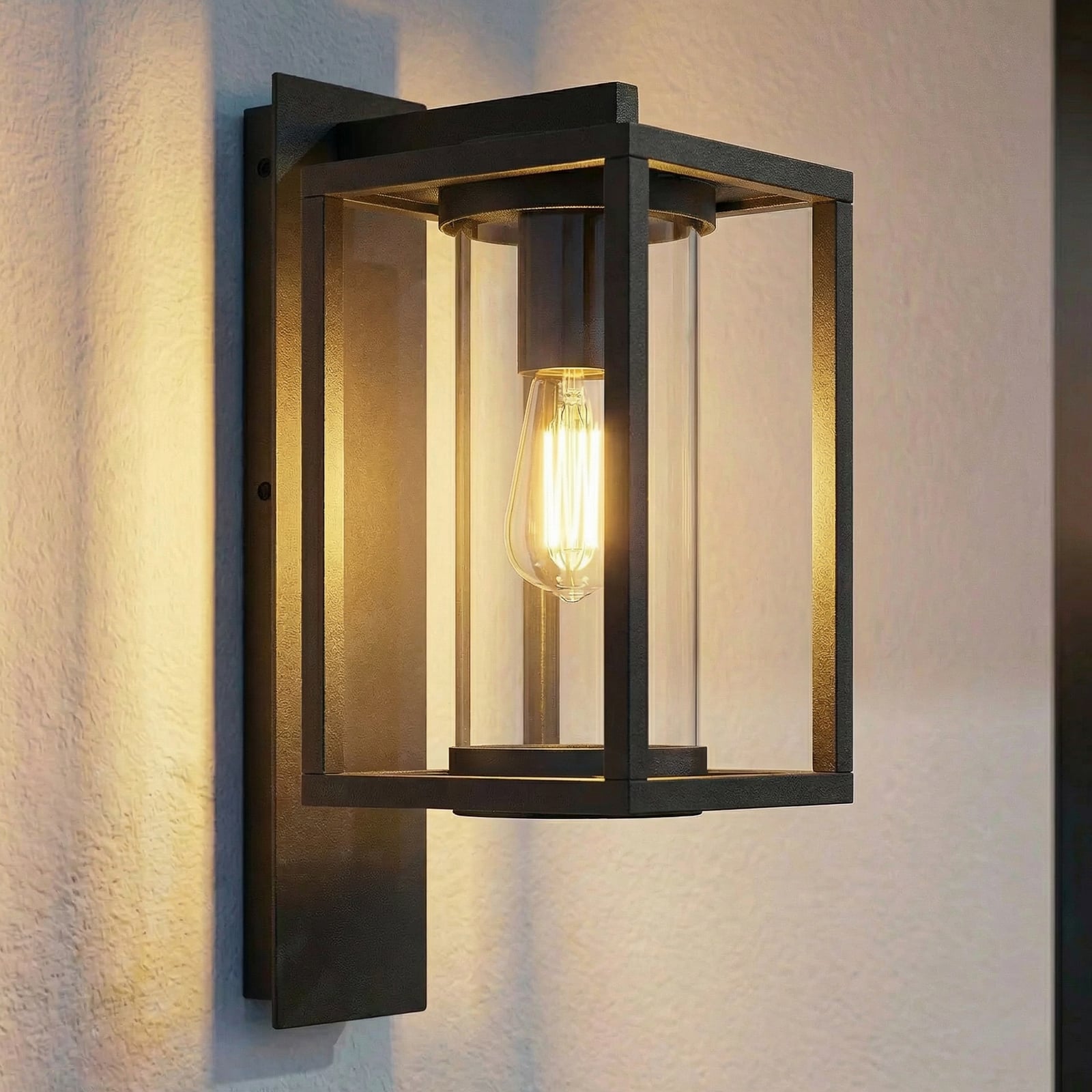
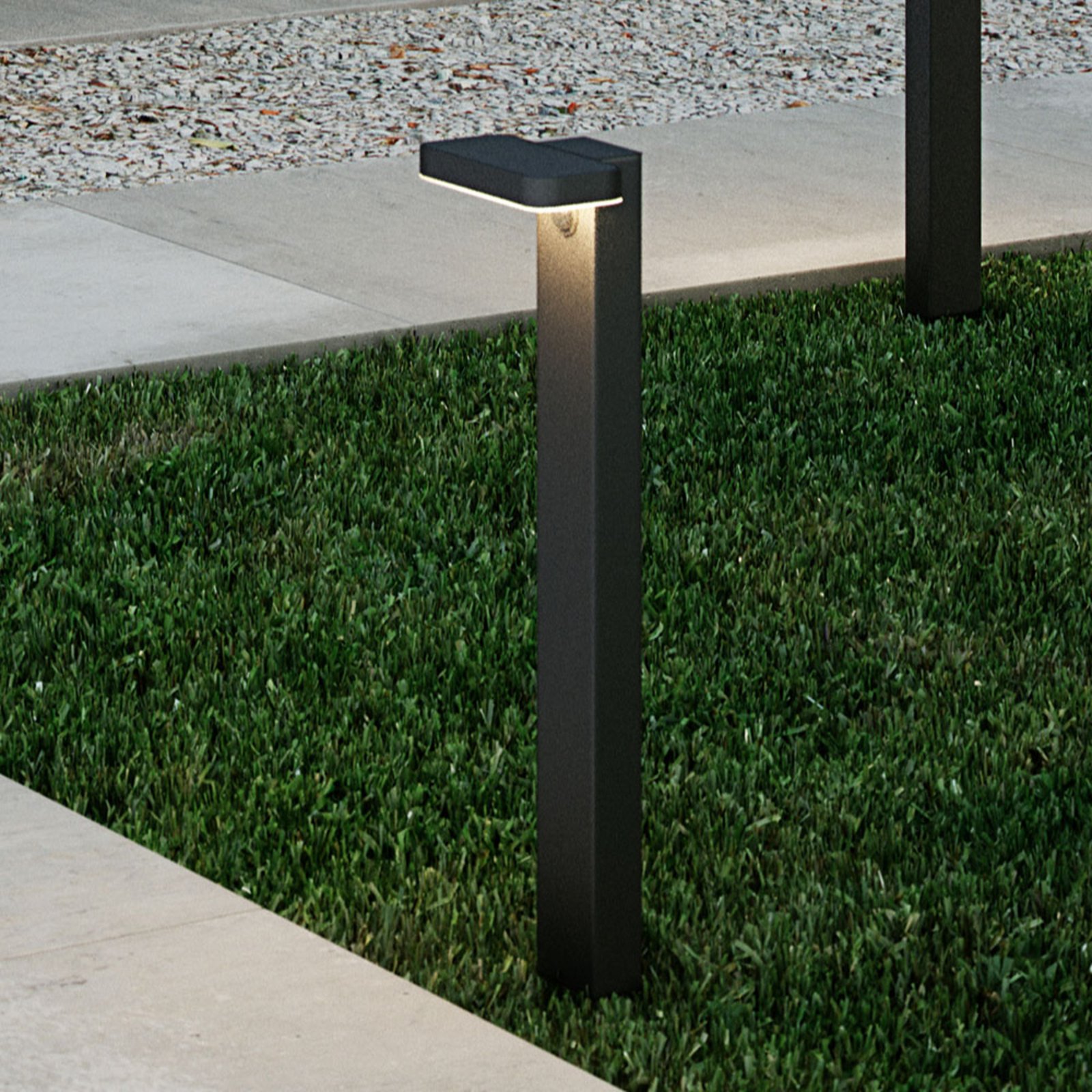
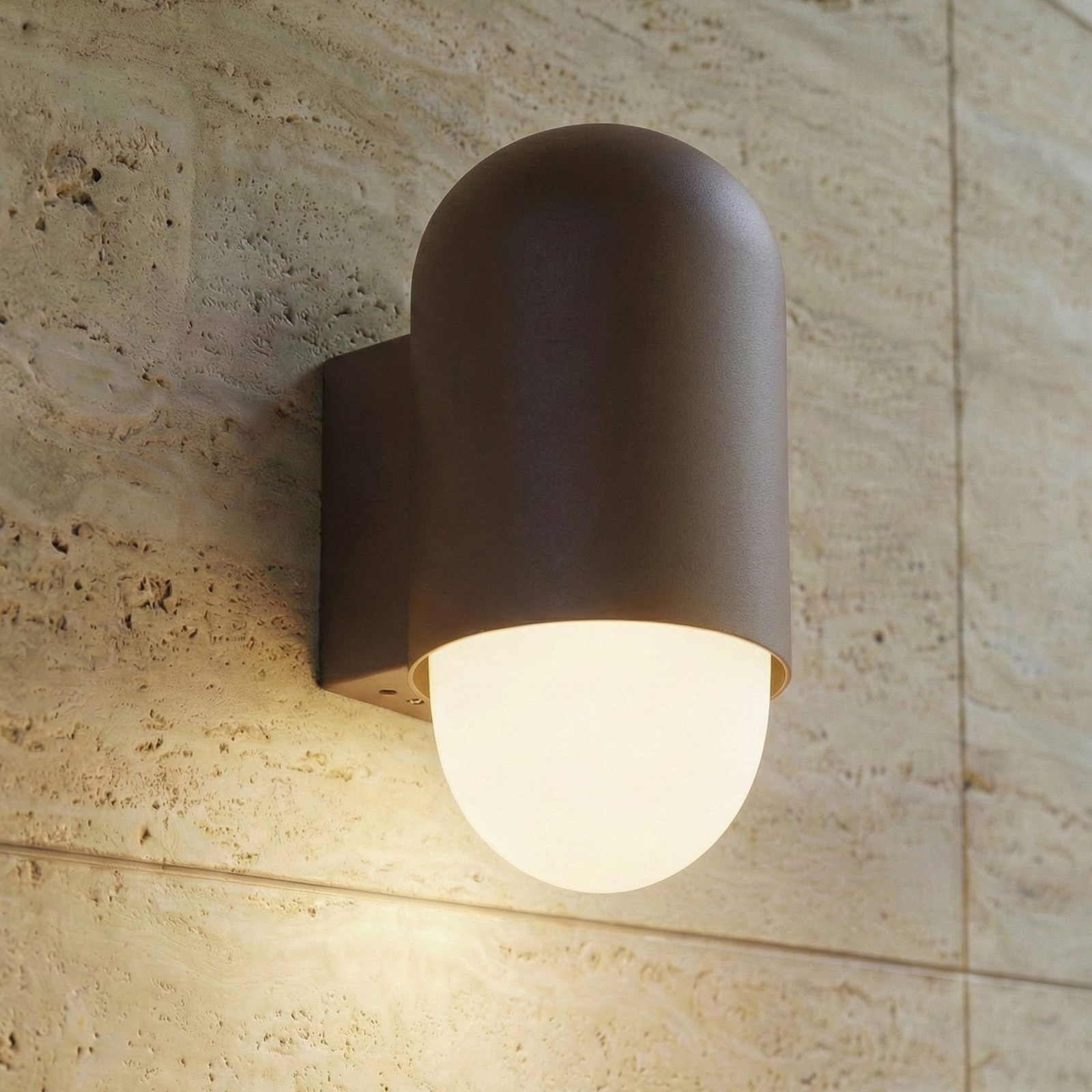
Stepping stones that lead across the lawn to the patio, steps and transitions from paths to the patio require uniform lighting: in addition to path luminaires, pedestal luminaires that emit light every few steps are also suitable here. In addition to batten luminaires, external wall luminaires can also be installed on stairs - glare-free and at regular intervals.
)
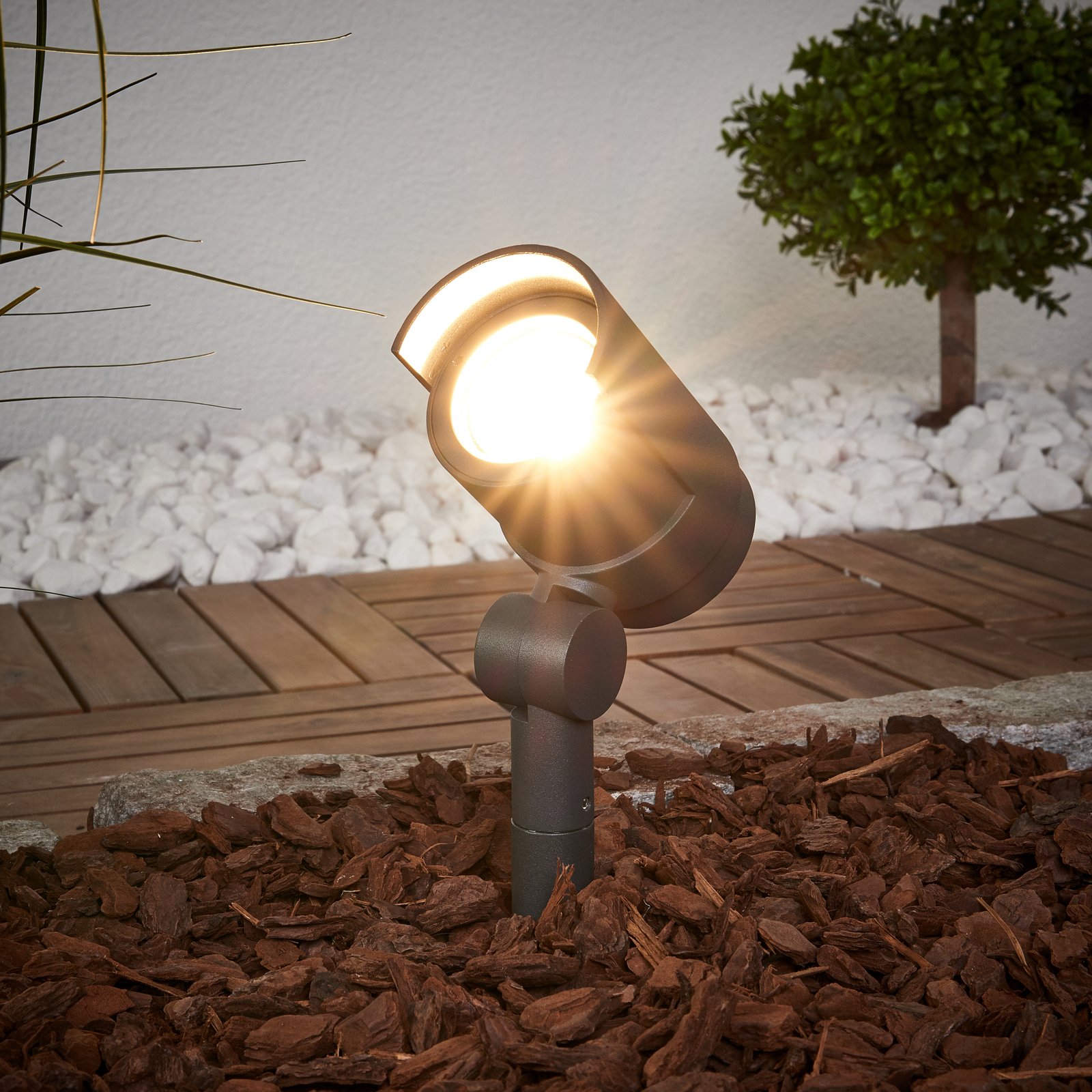
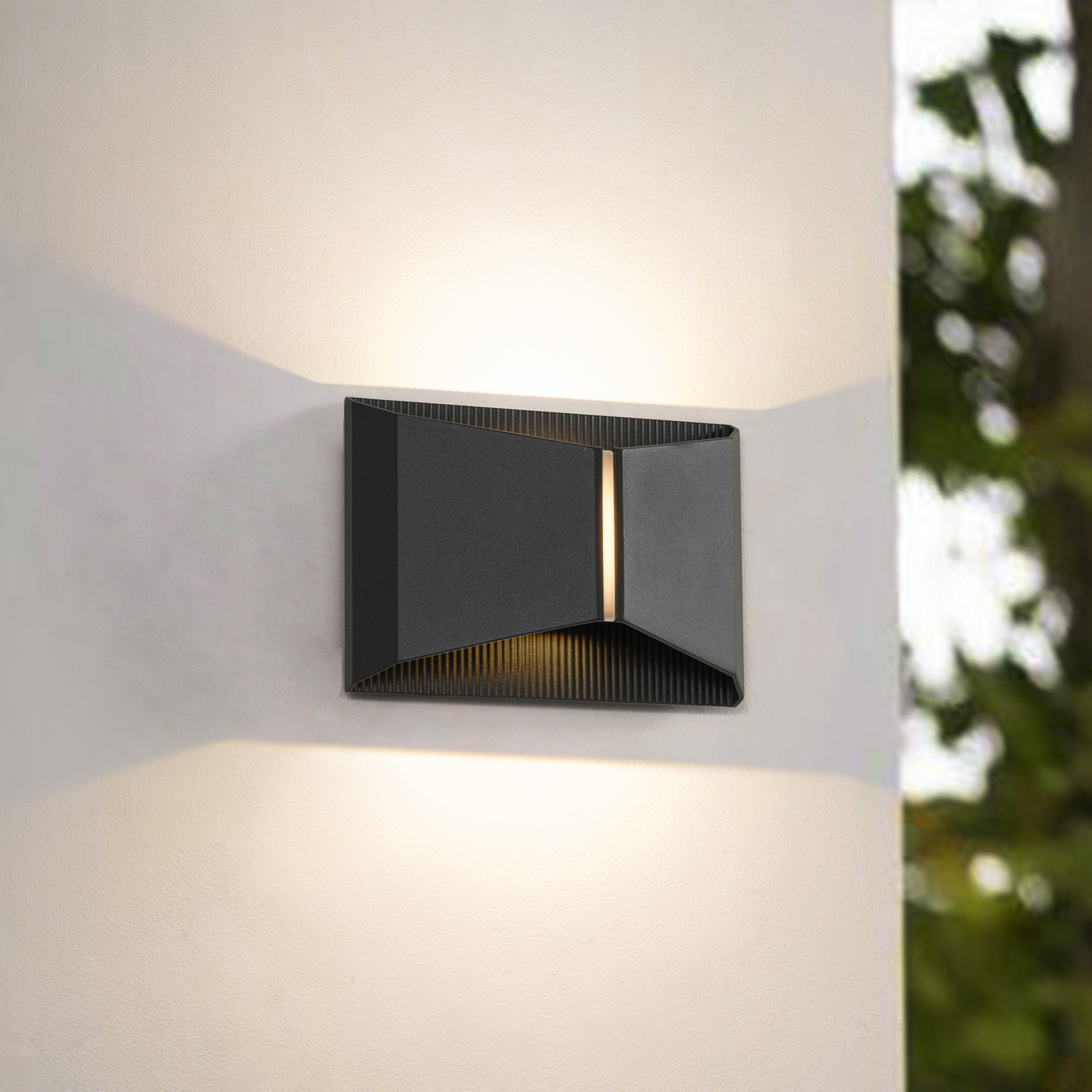
The patio becomes atmospheric in the evening when outdoor wall lights draw soft light patterns on the house walls and large potted plants and shrubs are illuminated warmly or colourfully. Spotlights with ground spikes are ideal for this. String lights and lanterns also create cosy accents when they are draped on shrubs, umbrellas or balustrades.
Multiple light sources instead of a single light
The combination of different types of light ensures a balanced overall picture:
- Basic light for orientation and uniform brightness
- Zone light for emphasising areas, structures and plants
Mood lighting for cosy details and romantic focal points
Combine direct and indirect lighting sensibly
We use direct light quite functionally to illuminate certain areas, for example a shrub or a path. Indirect light brings mood and atmosphere to the garden and provides gentle brightness and visual calm. Indirect lighting is a must on the patio if the focus is on cosiness, as it creates a pleasant lighting ambience without glare.
)
)
)
Lighting for seating and dining areas
Pleasant brightness for conversations and meals is essential in the dining area. The light should be bright enough without being harsh. Pendant lights under a canopy or warm white LED battery lights for recharging create ideal lighting conditions for communal meals. Glare-free light ensures that faces look natural and a relaxed atmosphere is created. Indirect light sources or dimmable luminaires are particularly suitable for this purpose.
)
)
)
Lighting for paths, steps and transitions
To ensure that the patio is perfectly embedded in its surroundings, the lighting concept around it should also be harmonious. Functional yet atmospheric lighting solutions are the first choice for this purpose.
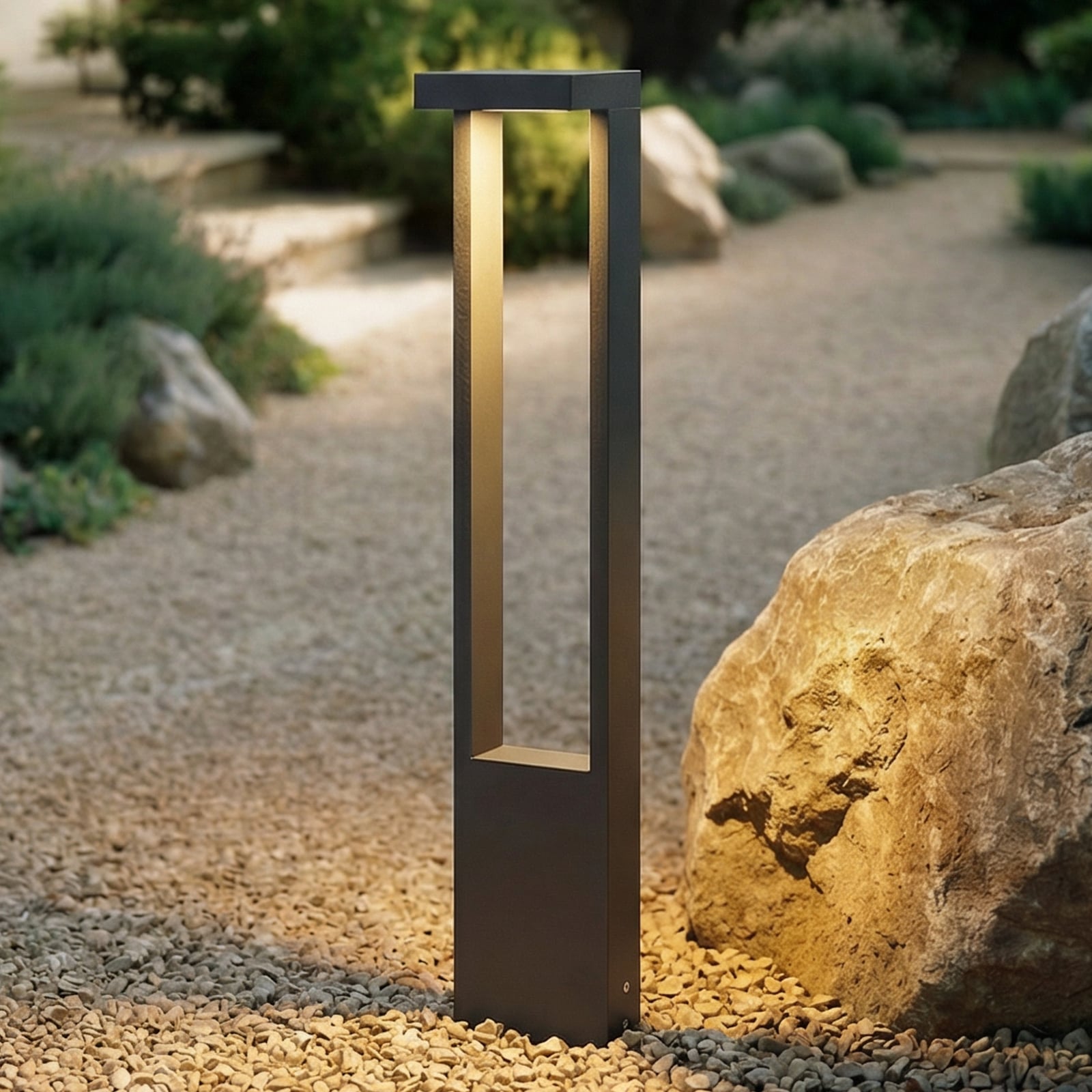
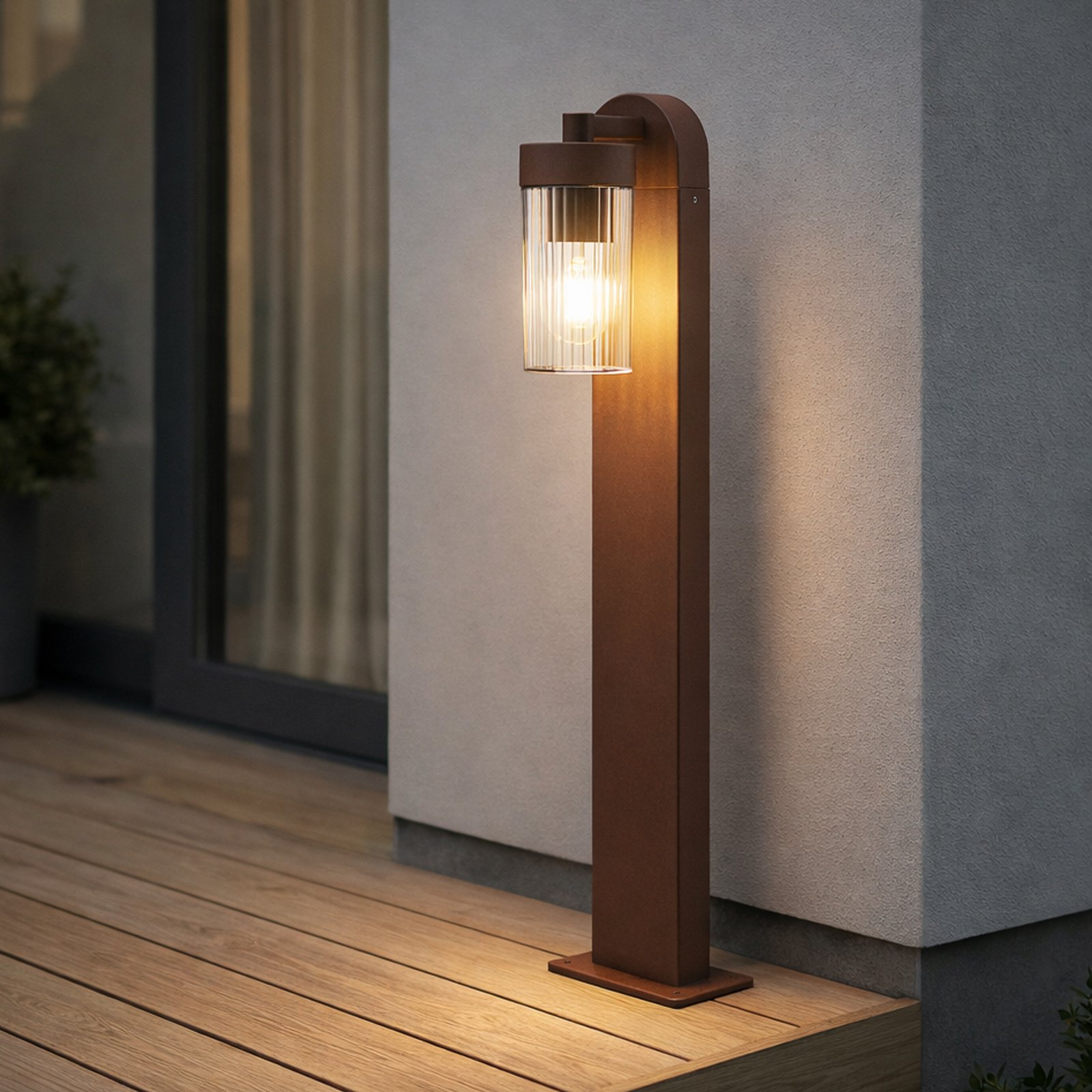
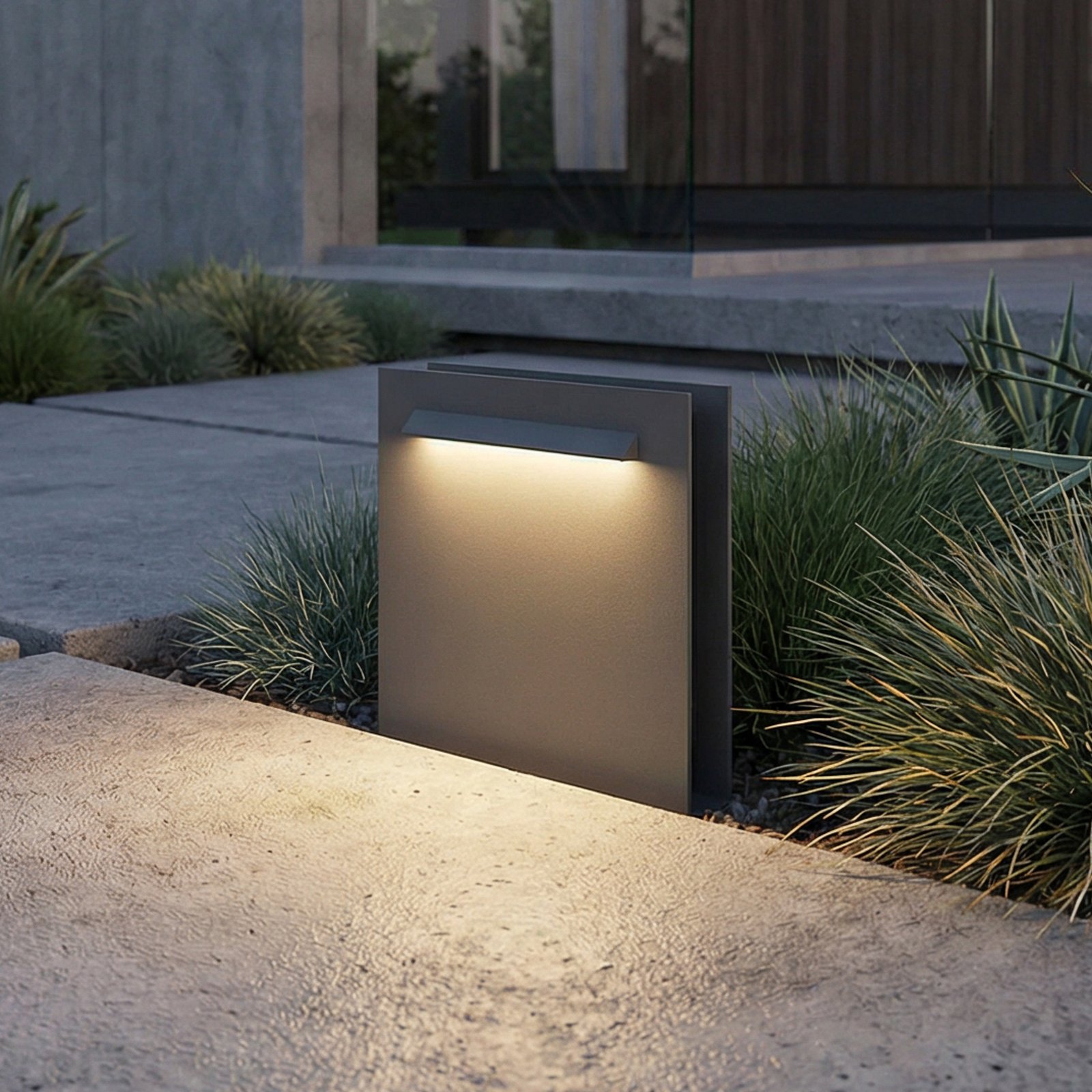
Orientation in the dark Well-placed path lights, recessed spotlights or recessed wall lights make orientation easier at night and structure the outdoor area. Stairs leading to the patio are best illuminated with recessed wall luminaires, while path luminaires are best used to illuminate level paths through the garden to the patio. Ground recessed spotlights around the outdoor seating area can be a good option, as can pedestal lights placed in the neighbouring decorative gravel. What all options have in common is the elegant combination of function and ambience.
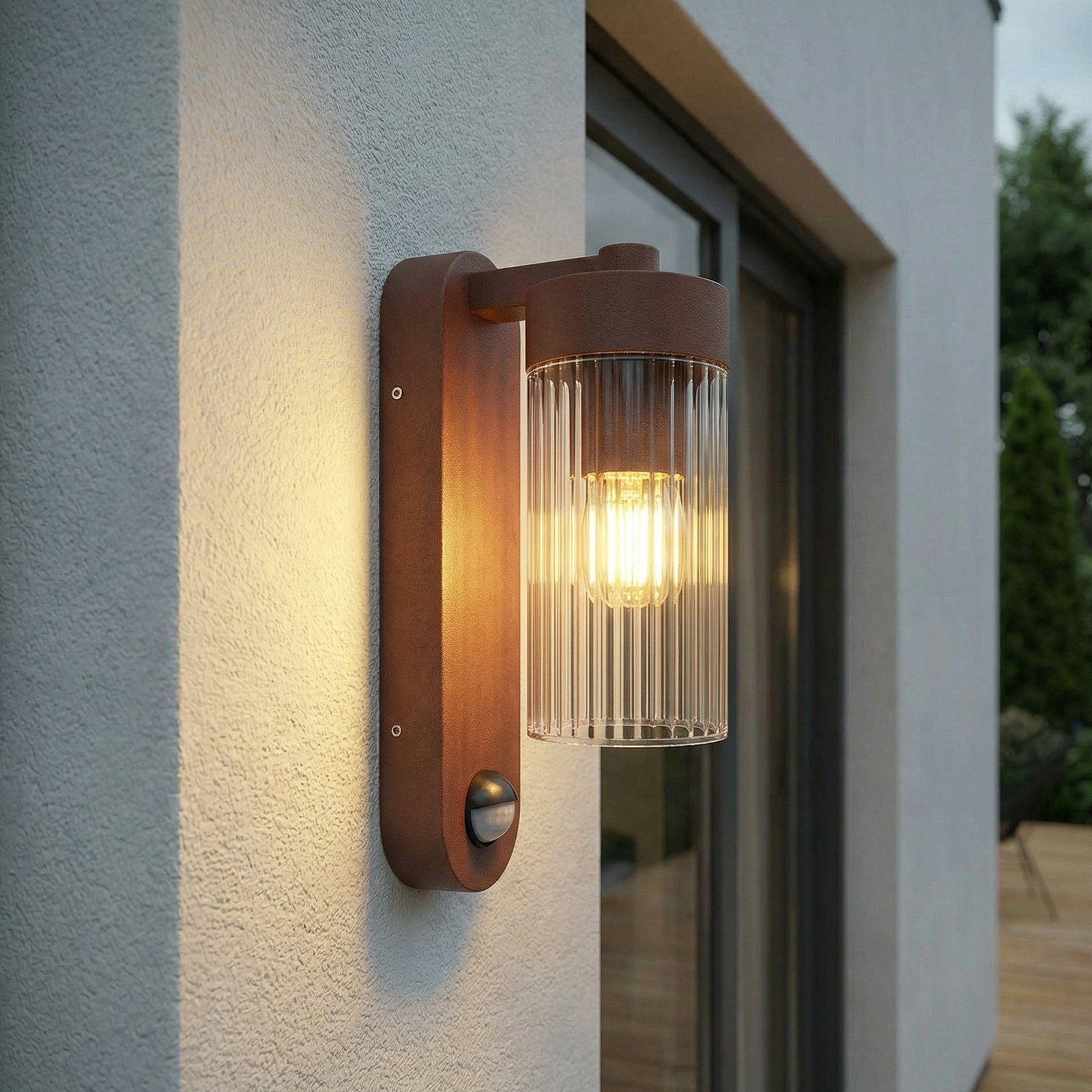
Establish safety and avoid tripping hazards The same applies around the patio as in the entire outdoor area: steps and transitions should always be specifically illuminated. This increases safety and prevents tripping hazards. Luminaires with motion detectors are also perfect for such purposes. Dimmable lights can also be used for this purpose so that the cosy atmosphere on the patio is not disturbed. This means that the warm, cosy atmosphere is retained despite all the functional safety aspects.
)
)
)
Accent lighting for walls, plants and other details
The cosiest decoration, the most graceful façade and the most beautiful shrub become even more effective in the evening with the right light.
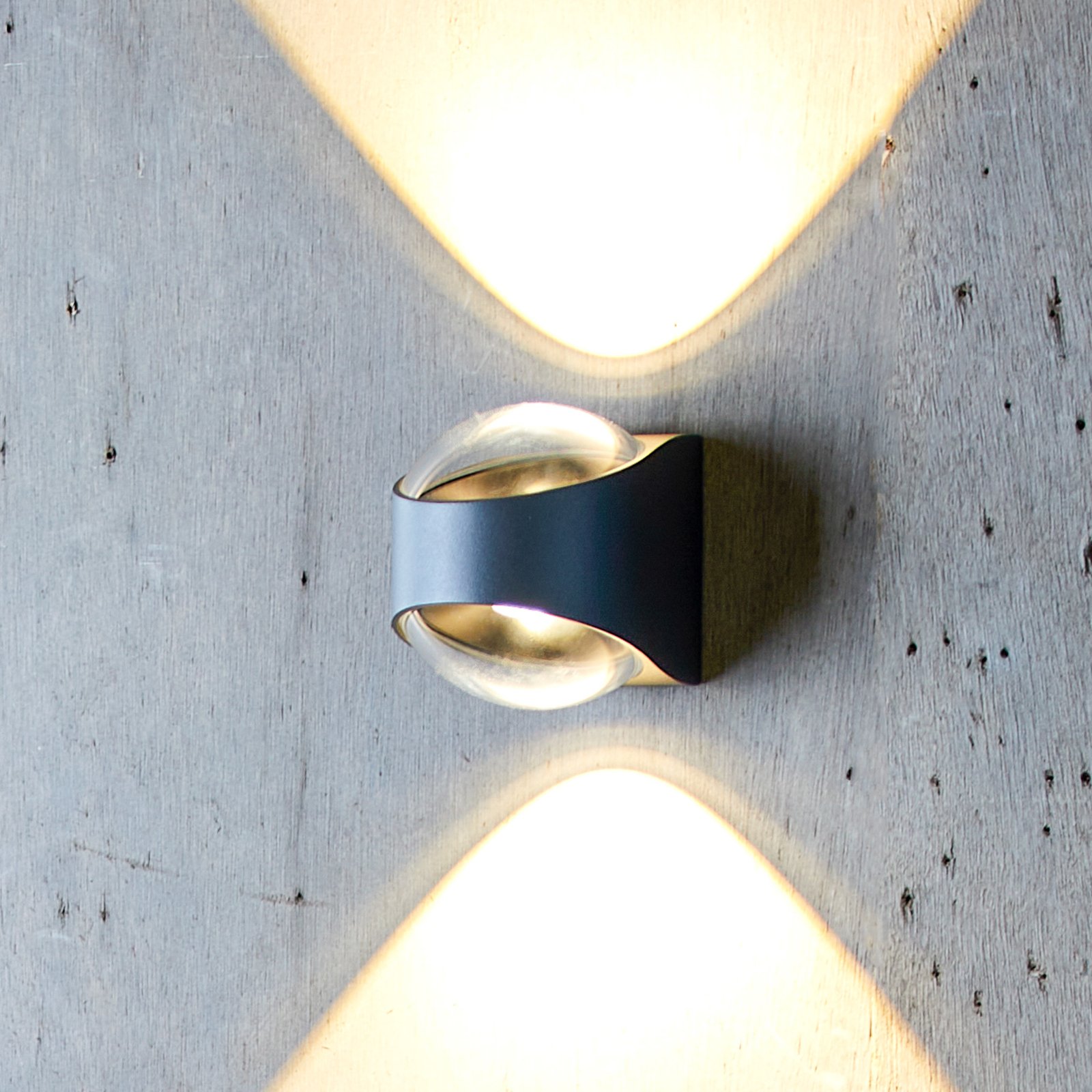
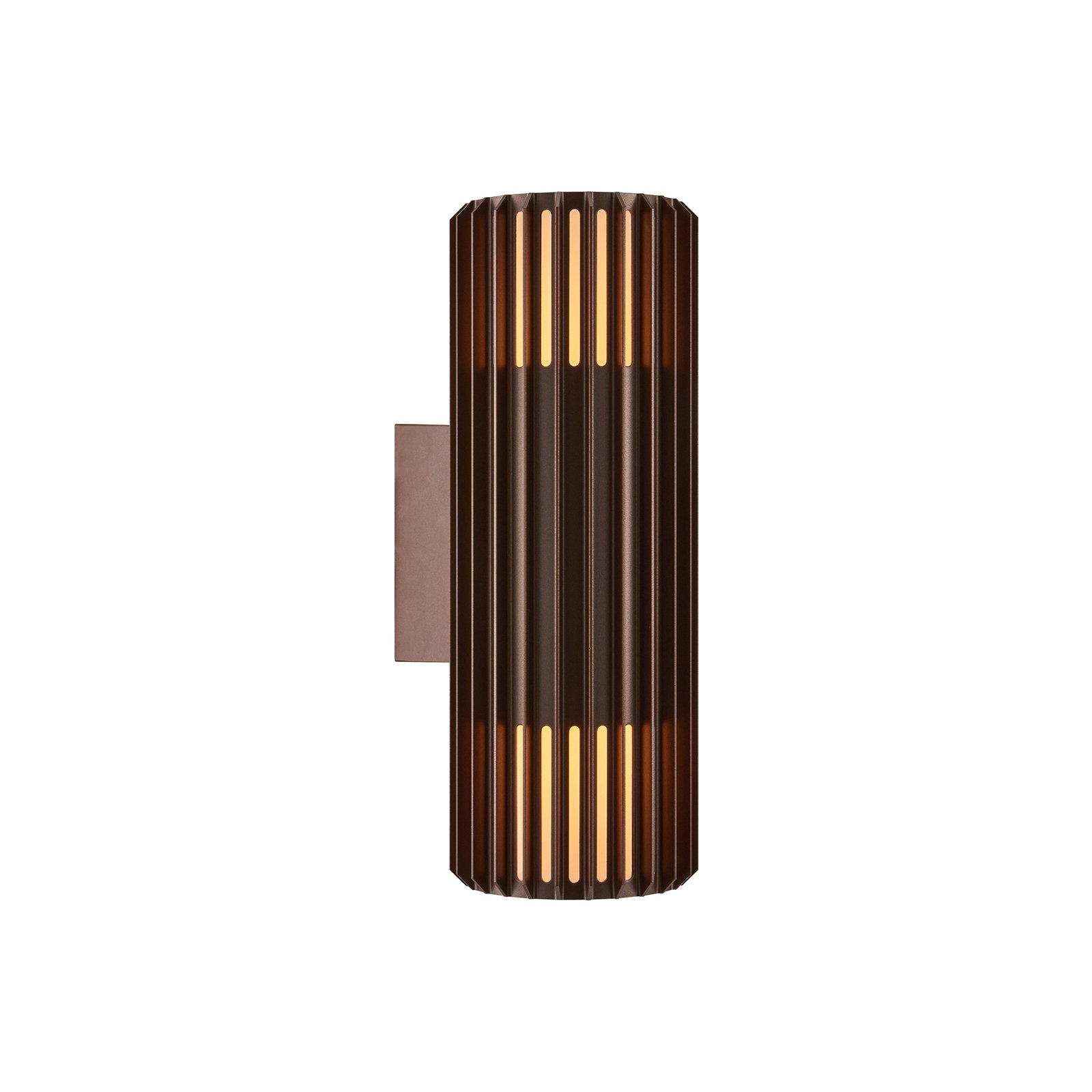
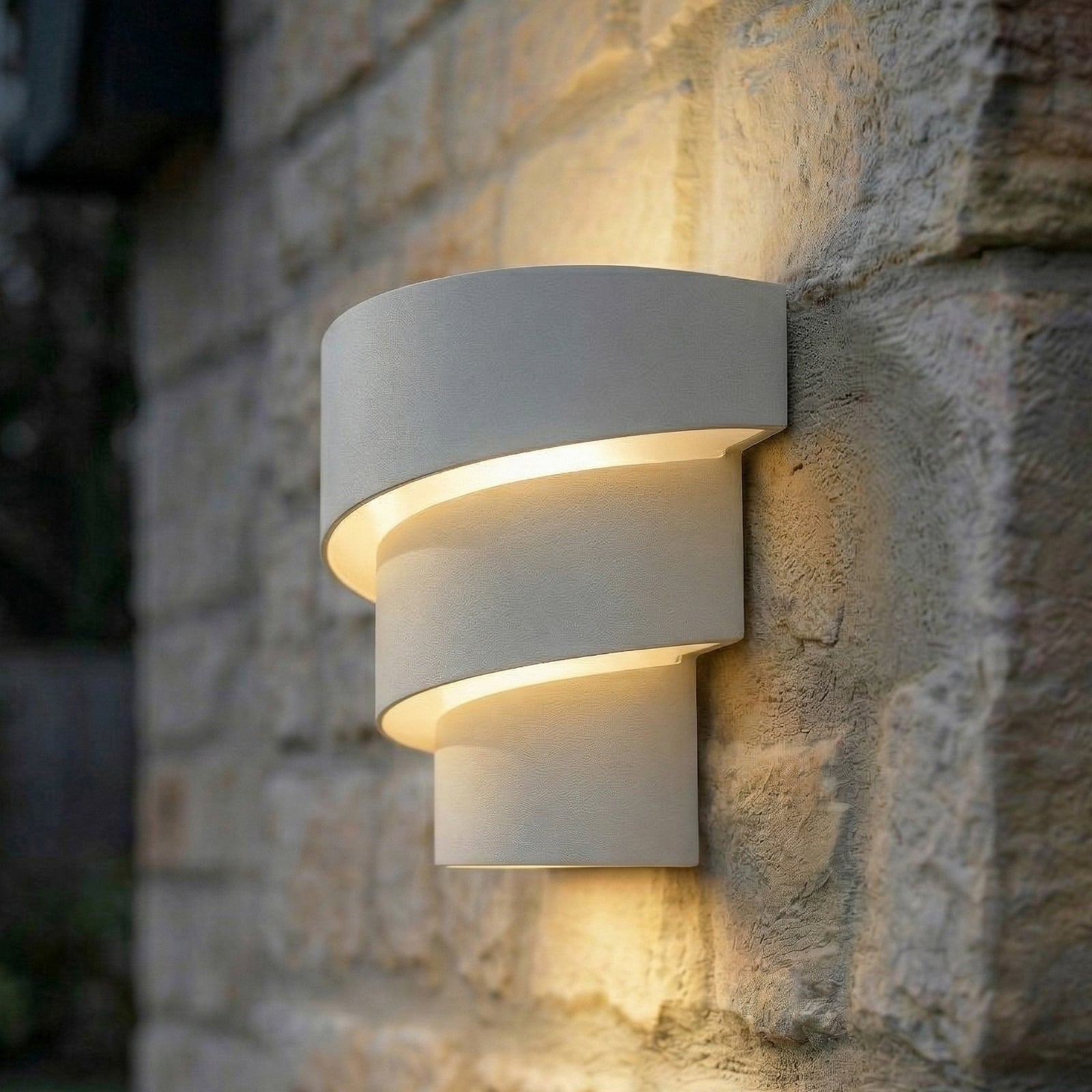
Emphasise structures and materials Light brings out textures and adds depth to the outdoor area. Depending on the nature of the wall on the patio, warm light can create calming and grounding effects: for example, when a warm up & downlight emphasises wooden structures or a wall light with direct light gently highlights natural stone.
Creating depth and tension through light Targeted lighting accents create an exciting interplay of light and shadow and give the patio design a high-quality effect. Potted plants, palm trees or shrubs around the outdoor living room can also be incorporated into the lighting concept. Spotlights from below give branches and leaves an atmospheric effect and create a graceful cosiness.
)
)
)
Atmospheric lighting for patios with roofing
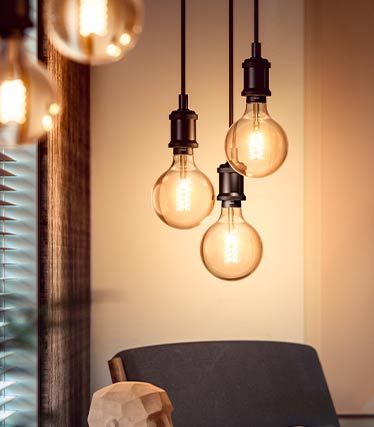
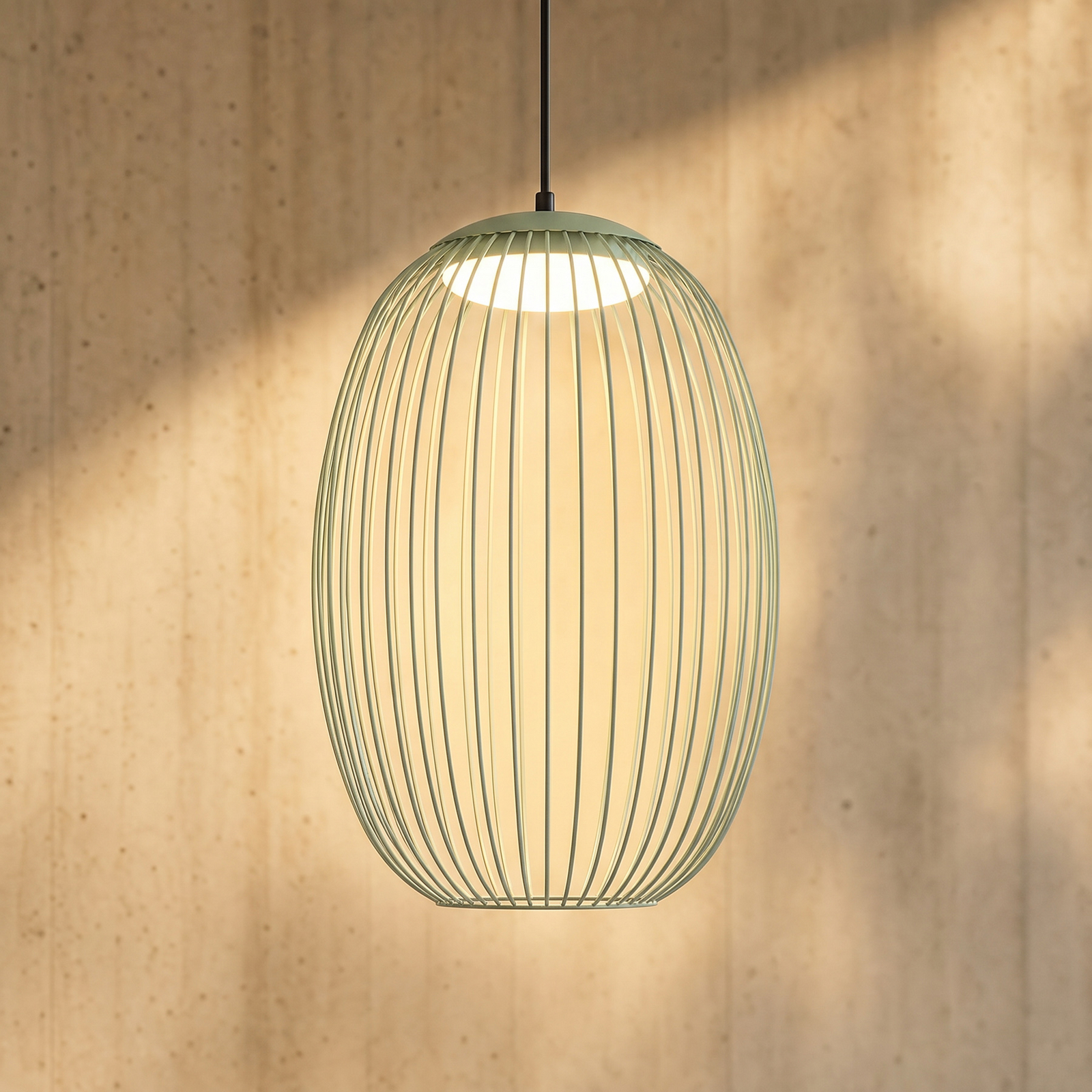
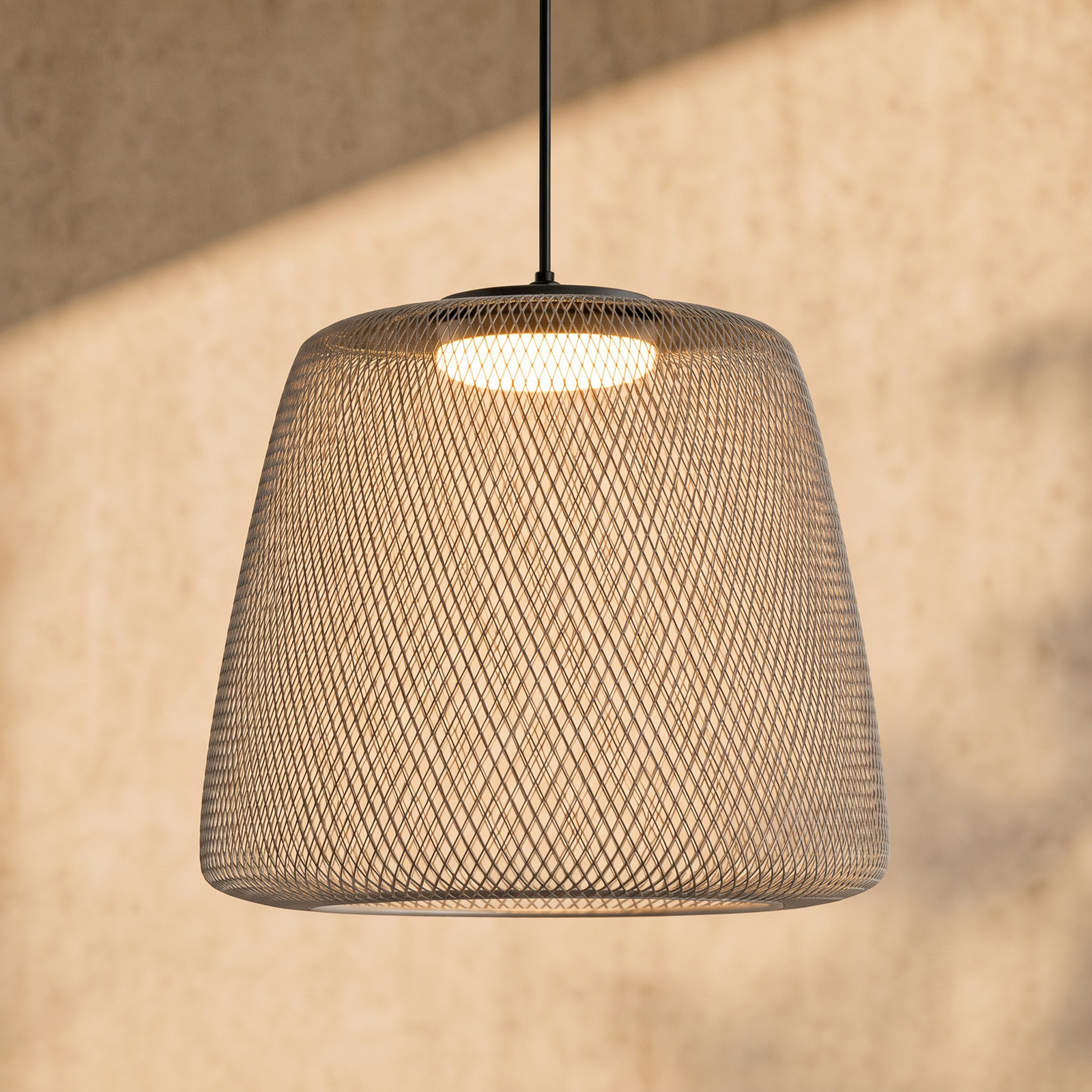
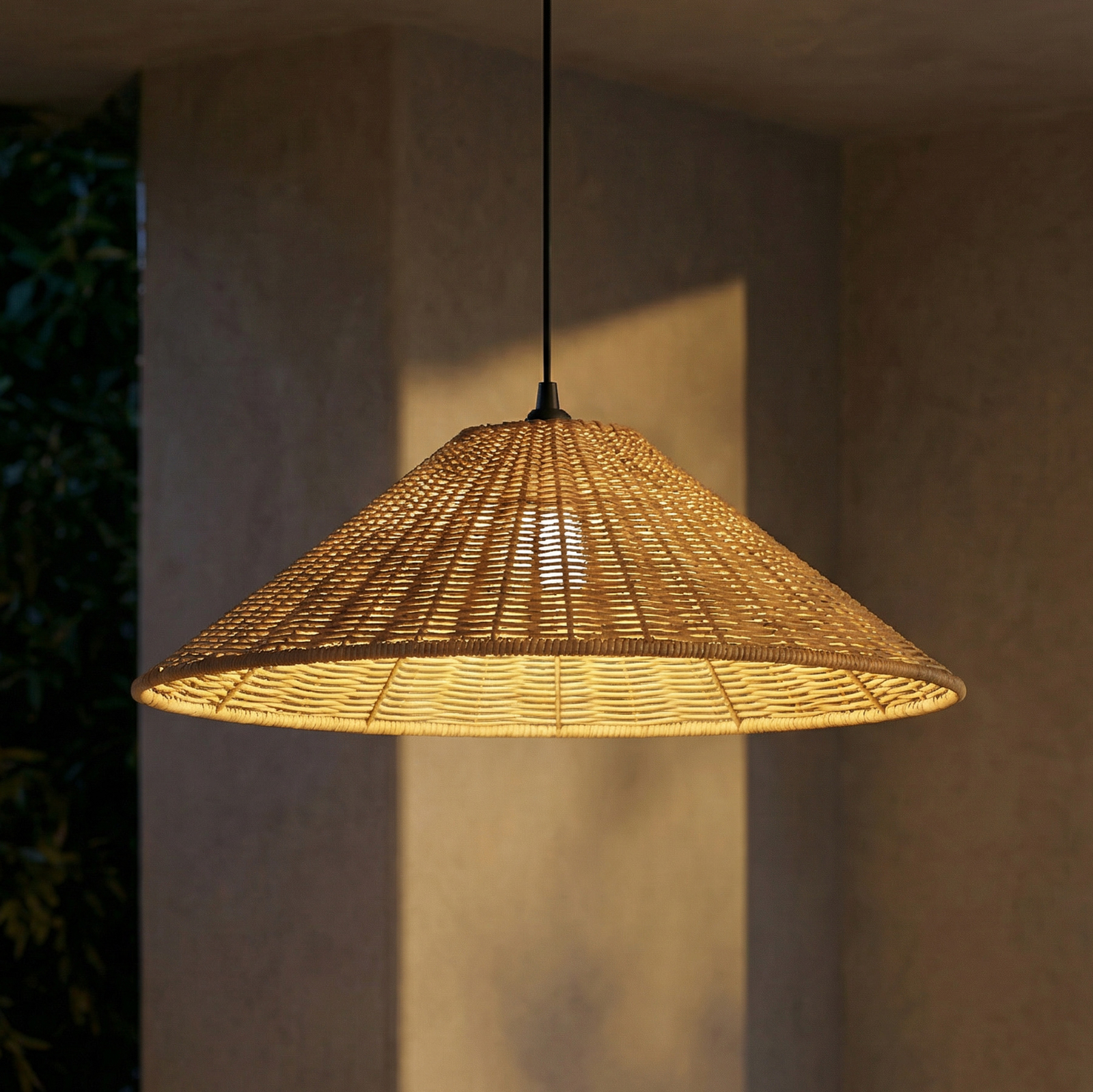
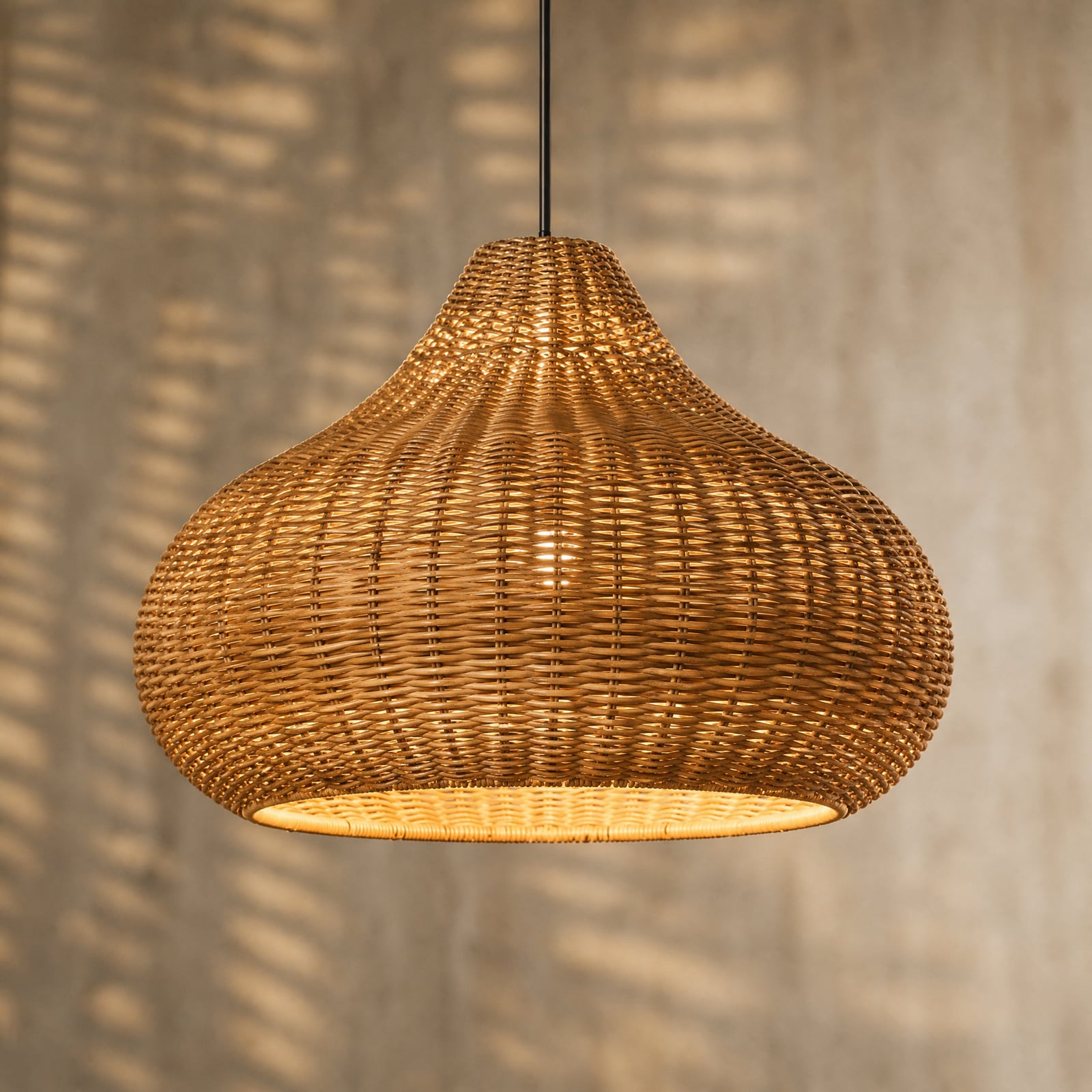
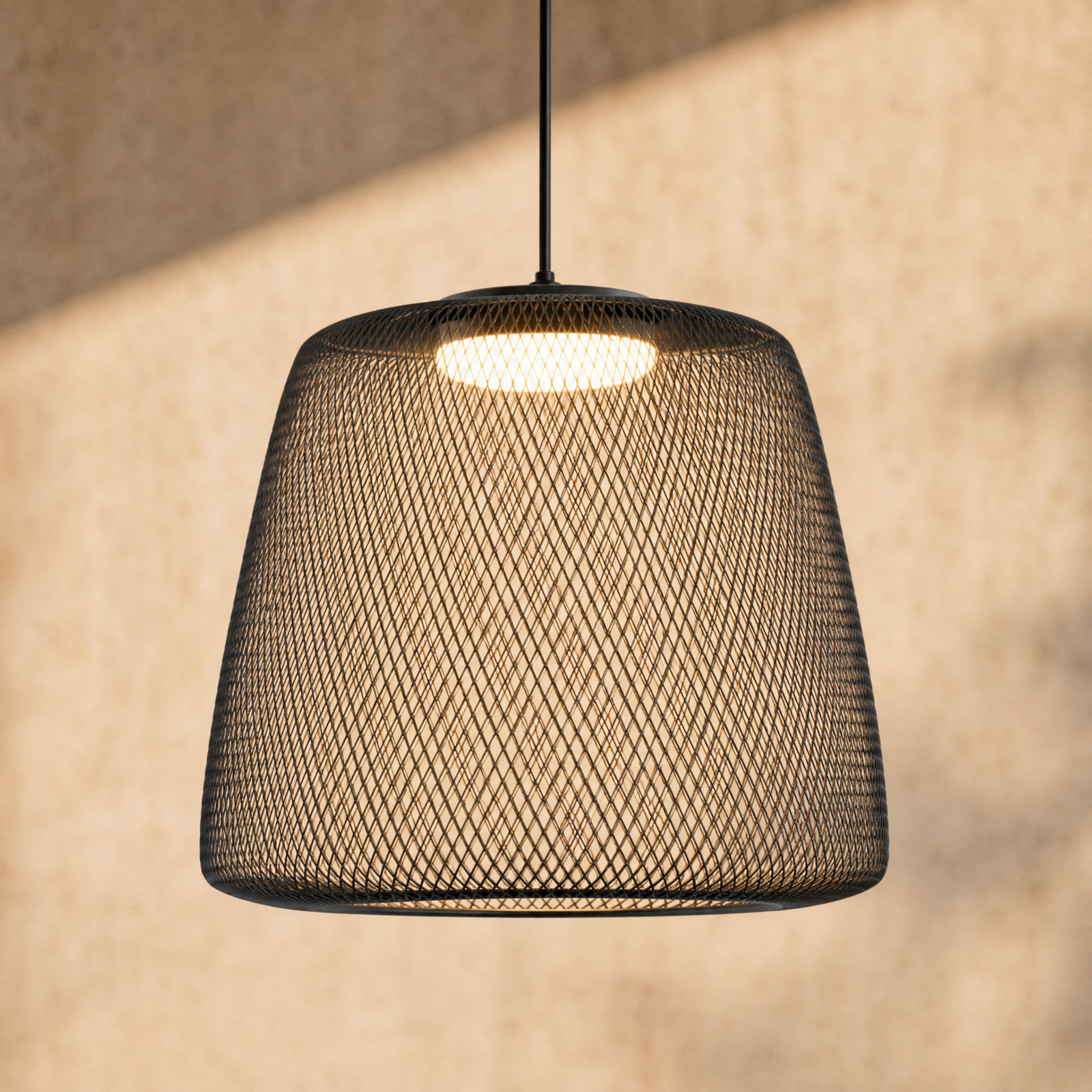
A covered terrace offers ideal conditions for versatile lighting solutions. You can achieve the most living room flair with pendant lights. From metal cage to rattan basket look, the choice is huge. Also perfect for patio roofs: ceiling lights and spotlights for pleasant ambient lighting. Recommendation: opt for dimmable models with a warm light colour and ensure even illumination without glare for extra cosiness. The best thing is that a protection rating of IP44 is sufficient for lighting solutions in protected areas.
)
:format(jpeg) "LED Colour")
)
Illuminating patio roofs: Staging materials correctly
If you own a covered patio, you can use light to give different materials such as wood, glass and metal different effects: Wood looks particularly natural thanks to its warm white light, while glass reflects the light and creates a modern elegance. Metal surfaces, on the other hand, enhance modern lighting accents by gently reflecting the light. While closed roofs allow uniform light, open constructions create exciting light-shadow effects. In this way, you can design lighting for the patio roofing to suit your personal application and find ideas for lighting the patio roofing.
)
)
)
Indirect lighting on the terrace
Gentle light along beams, steps and edges brings an absolute feel-good flair to the patio. You can achieve particularly elegant indirect lighting with LED strips. Customised and tailored, you can frame your outdoor seating area with light and gently illuminate steps.
Indirect lighting patio roof LED strips are also a cosy alternative along beams or roof edges. Gentle gradients of light create a calm atmosphere and transform the patio into a relaxing retreat - for long summer evenings to savour.
)
)
)
Flexible patio lighting without fixed installation
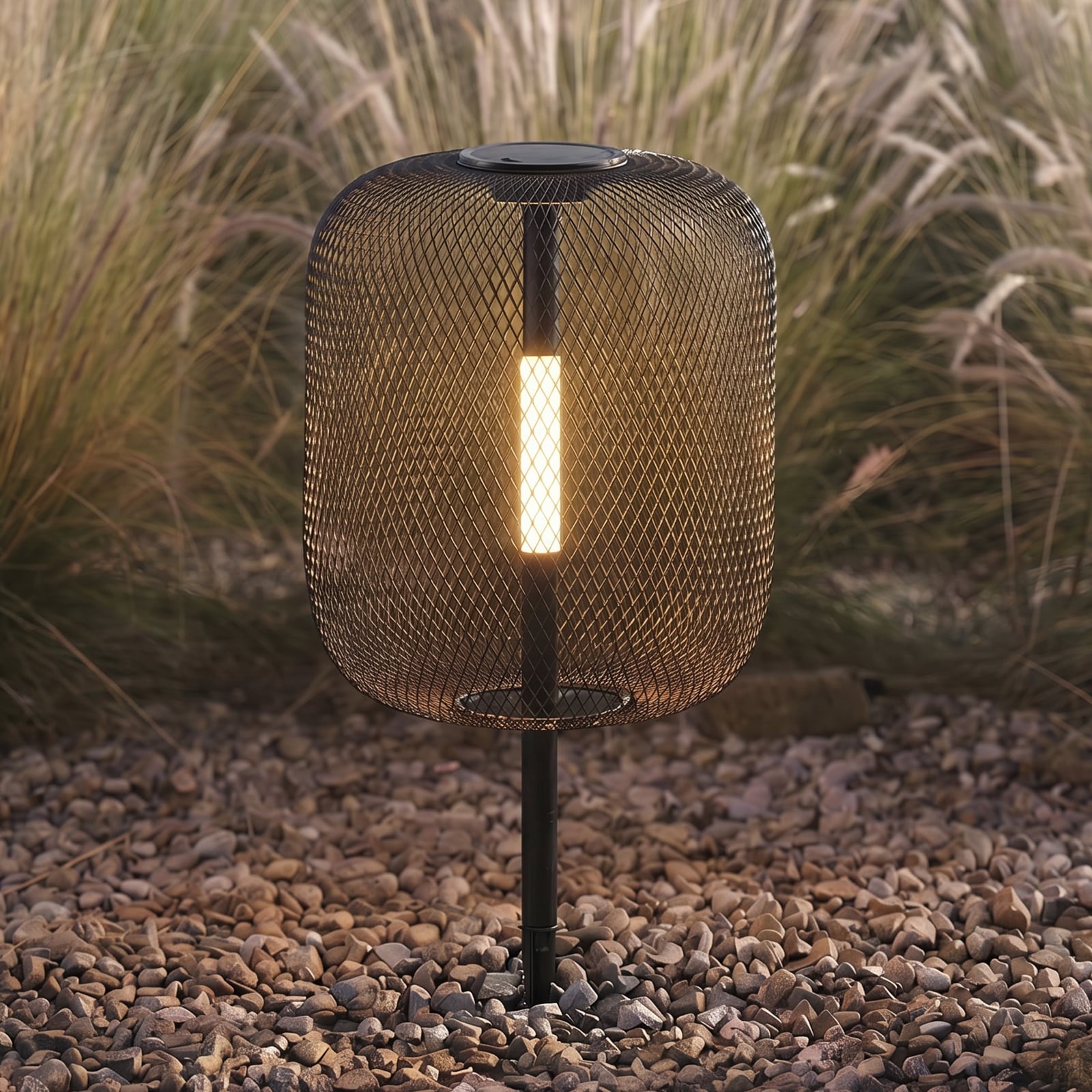
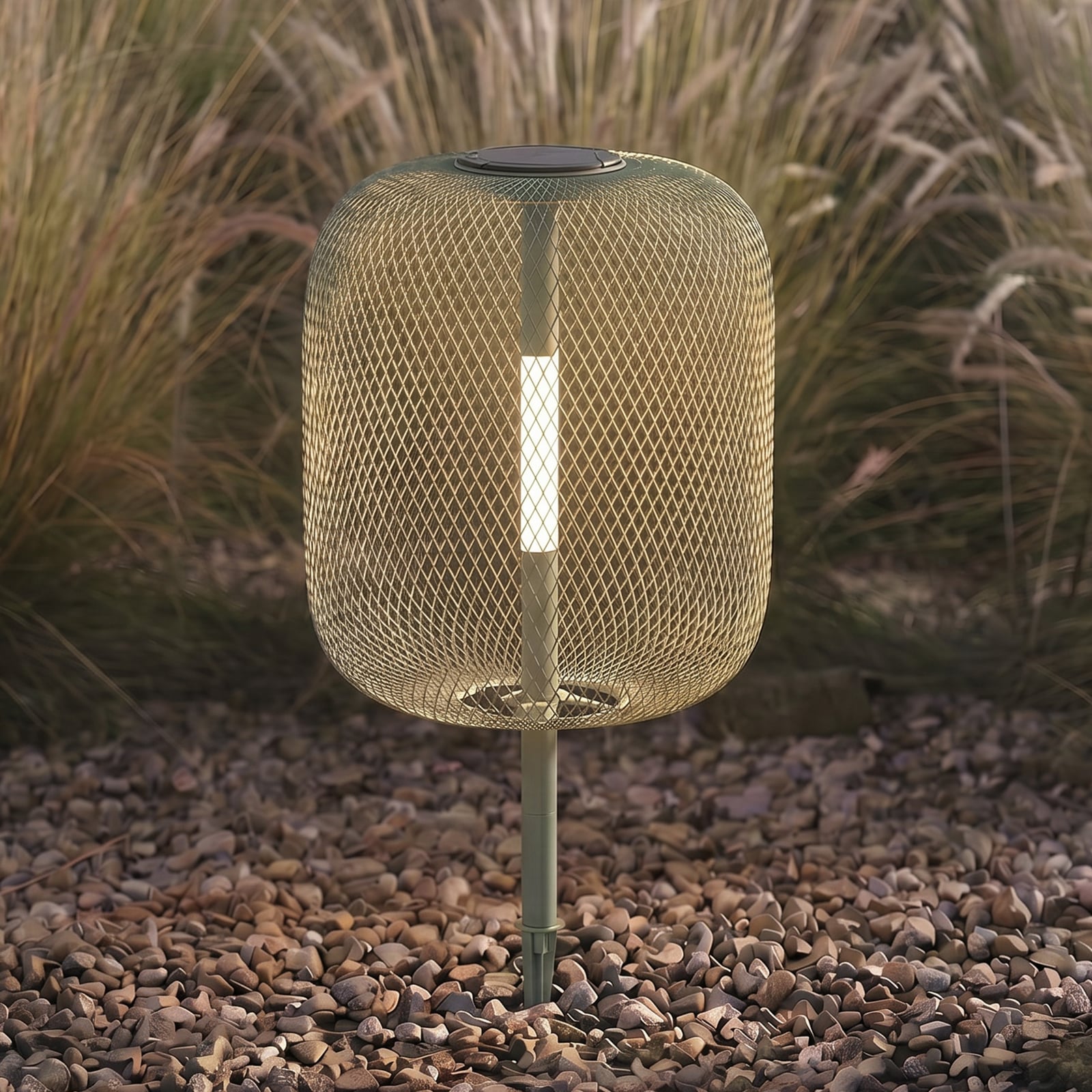
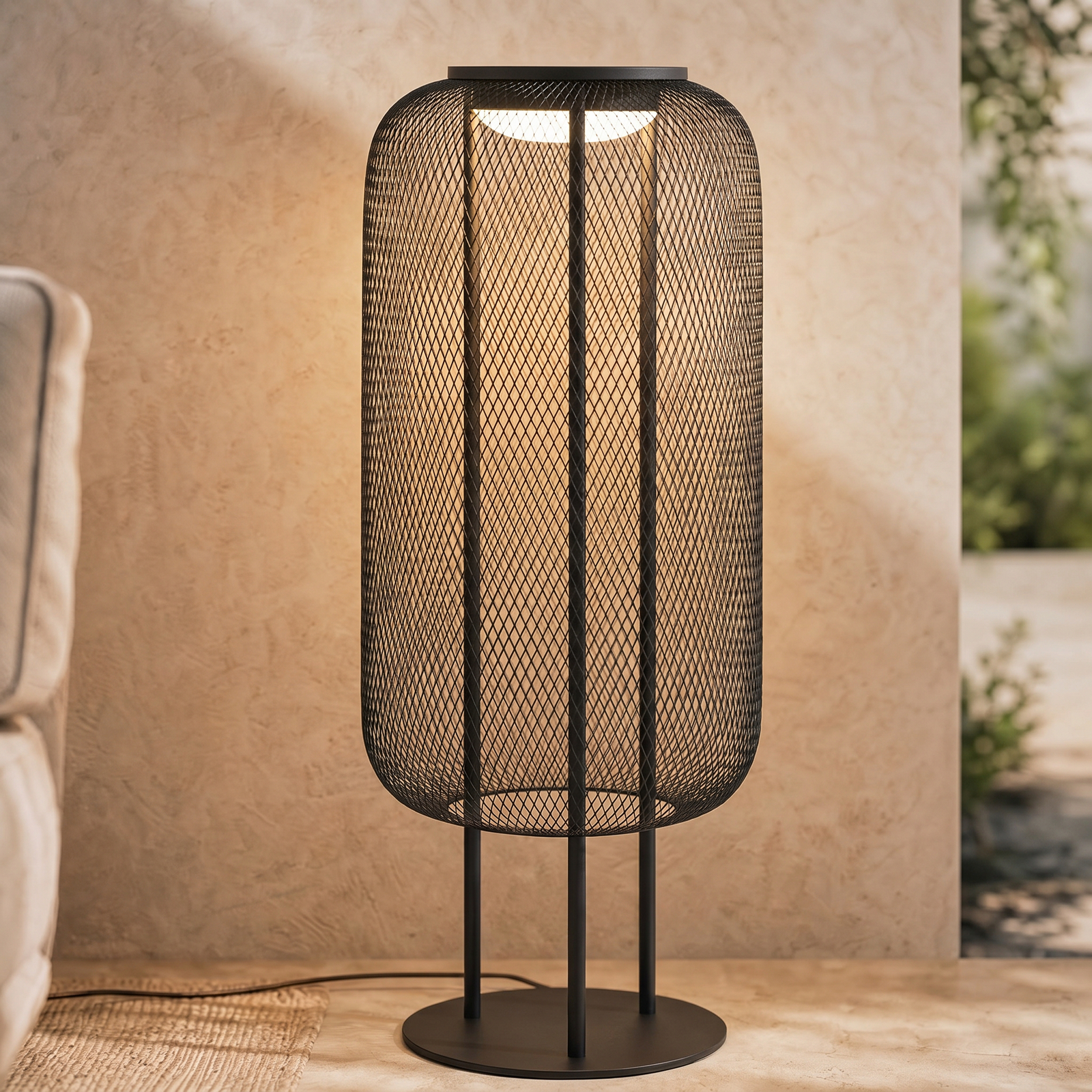
Not every patio has power connections - but there are still versatile solutions. First and foremost, there are solar lights for atmospheric lighting accents. In the past, solar lights were often decorative lights, but today there is already a wide range of functional solar lights. From outdoor wall lights with solar to freely positionable solar floor lamps for the patio, the choice is huge. Important: The solar panels should be able to charge themselves with the sun's energy during the day. So make sure you don't reserve a completely shady spot for the lighting ideas.
Rechargeable luminaires as a mobile lighting solution
Rechargeable battery lights that can be charged via USB also offer a practical solution for cosy patio lighting. They usually come as table lamps, but are also available as pendant, wall and floor lamps. What both solutions - solar and rechargeable by electricity - have in common is that they are also ideal for rental properties. This means that the lights can simply be packed up and taken away without having to be uninstalled. The lighting solutions are also a real game changer for fans of spontaneous remodelling. Because time-consuming cable laying is now a thing of the past.
)
)
)
Creative patio lighting ideas for special occasions
When friends come to visit and the weather invites you to spend a long evening outdoors, the creativity of the lighting concept is crucial for bright eyes and enthusiastic looks. Fairy lights, decorative lanterns or dimmable light sources create a festive atmosphere for sociable evenings.
Decorative lighting ideas for seasonal accents
Depending on the time of year, you can support Easter anticipation, midsummer vibes or early autumn cosiness with creative lighting ideas. Some motif lights can be assigned to a specific festival, while others are eye-catching but simple enough to create an atmosphere on the patio at Halloween or the beginning of spring. Tip: Fairy lights are a must-have for social gatherings, as they guarantee a cosy party atmosphere.
)
)
)
Planning patio lighting: what really matters
Sophisticated patio lighting combines functionality with atmosphere. The decisive factor is how you use your patio: as a cosy retreat, sociable meeting place or extended outdoor dining area. Instead of a single bright light source, a combination of ambient lighting, area lighting and decorative luminaires ensures comfort and atmosphere. This creates a harmonious overall picture that offers both security and cosiness.
Correctly assess brightness, light colour and dimmability
The colour of the light determines the effect of your patio. Warm white light creates a relaxed feel-good atmosphere - ideal for lounge furniture, summer evenings and social gatherings. Neutral white light, on the other hand, is suitable for functional areas such as outdoor kitchens. Dimmable wall lights or smart LED spotlights allow you to adjust the brightness to suit the occasion - from bright family dinners to soft evening light.
How much light is sensible
The amount of light required depends heavily on the size and structure of your patio. Small areas benefit from a few specifically placed light sources, such as a wall light and indirect floor lights. Spacious terraces or angled outdoor areas appear more inviting and safer thanks to several light zones. Path lights along steps or spotlights on plants also improve orientation and set design accents.
Targeted control of different moods
Flexible lighting solutions allow you to create a new look for your patio depending on the situation. Dimmable floor lamps next to the lounge corner make for relaxed evenings, while brighter settings are practical when barbecuing or playing with children. Fairy lights or decorative solar lights create atmospheric highlights and transform the patio into a summery oasis of well-being in no time at all.
)
)
)
Electricity, cables and alternatives on the terrace
Good patio lighting does not start with the luminaire, but with the energy supply. If you plan early on where electricity is needed and how cables are to be safely routed, you can save on later conversions and ensure long-term reliable use. At the same time, modern solar and battery-powered lights offer flexible solutions for areas without a fixed power supply.
Use power connections sensibly
Existing external sockets or wall connections should be specifically included in the lighting design. Firstly, consider which areas should be permanently illuminated - such as the dining area, the lounge zone or access to the garden. An outdoor wall light next to the patio door provides orientation and security, while additional sockets enable the operation of floor or table lamps.
Laying cables safely
Wherever electricity flows, safety plays a central role. It is therefore essential that you leave the installation, including cable laying, to a specialist. This only uses weatherproof cables and connectors suitable for outdoor use with the appropriate IP protection rating and ensures that the cables are laid invisibly and protected - for example along house walls, under patio boards or in special cable ducts.
This prevents tripping hazards and protects the cables from moisture, UV radiation and mechanical stress.
Targeted use of solar and battery solutions
Not every area requires a fixed power supply. Solar lights and battery-powered lamps are ideal for flexible lighting accents or hard-to-reach places. They can be positioned without cabling and can be repositioned at any time if required. Practical tip: Combine permanently installed lights for basic lighting with mobile solar or battery-powered lights for decorative highlights - this keeps your patio lighting flexible and customisable.
Avoid typical mistakes with patio lighting
Stylish patio lighting depends on the right dimensions and harmonious coordination. It is often small planning errors that reduce comfort or disrupt the desired feel-good atmosphere. If you avoid typical design mistakes, your patio will not only look more inviting, but also more professional.
Too bright or dazzling light
Light sources that are too bright or unprotected can dazzle and quickly spoil the relaxed atmosphere. Directly visible light sources or spotlights at eye level are unpleasant and reduce comfort. Instead, opt for indirect light, glare-free covers or warm white light sources that create a soft, cosy atmosphere.
Unfavourable positioning of luminaires
Incorrectly positioned luminaires create hard shadows or uneven illumination. Spotlights directed at the front of seats can cause glare, while poorly lit areas can be problematic in terms of tripping hazards. Better: use light at the side or indirectly, illuminate plants or place floor lights along paths to create depth and orientation.
Lack of coordination of the light sources
Different light colours or strongly varying brightness levels quickly give the patio a restless appearance. Combine luminaires carefully: warm white light creates a cosy atmosphere, while neutral white light can be used specifically in functional areas. Uniform lighting scenes and dimmable luminaires help to create a harmonious overall picture. Tip: Smart options make you particularly flexible.
Protection classes & weather resistance for patio lighting
Outdoor lights are exposed to wind, rain, temperature fluctuations and UV radiation all year round. To ensure that your patio lighting works reliably in the long term and remains visually appealing, the type of protection, material quality and maintenance play a decisive role. Those who use suitable products here avoid premature failures and save costs in the long term.
Which IP protection classes are required in outdoor areas
The IP protection class indicates how well a light is protected against moisture and foreign bodies. At least IP44 should be selected for patio lighting. This protection protects against splashing water and solid foreign bodies. In more exposed areas, such as free-standing lights in the garden or unprotected ground spotlights, higher protection ratings such as IP65 make sense, as they also protect against strong water jets and dust.
Differences between open and covered terrace
Not every terrace is exposed to the same weather conditions. Under a canopy or pergola, lights are much more protected, so models with IP44 protection are sufficient. Open terraces, on the other hand, require more robust luminaires that can withstand rain, snow and temperature fluctuations.
Practical example: While a decorative pendant light provides atmospheric light under the patio roof, a robust bollard light with a higher protection rating is recommended for the open edge area.
Longevity and care of outdoor lights
Weatherproof materials such as stainless steel, aluminium or high-quality plastic contribute significantly to the service life. Powder-coated surfaces provide additional protection against corrosion. Care is just as important: regularly remove dirt, pollen and limescale deposits. You can also achieve a long service life and low maintenance thanks to modern LED technology - a sustainable solution for permanently beautiful patio lighting.
FAQ: Frequently asked questions about patio lighting
More lighting guides for outdoor areas
 "Smart Garden Lighting")
 "Tree Lighting")
 "Portable Lamps")
 "Court driveway")
 "Façade Lighting")
 "House entrance")
Let us inspire you
Tag us on Instagram to share your ideas and inspiration. Your picture could be here soon. You can find more information here.